DOG + CAT HEALTH · LIFESTYLE RISK

Vaccines for
indoor pets.

Why indoor living lowers some exposures without creating a sealed environment—and how veterinarians tailor protection without overgeneralizing risk.
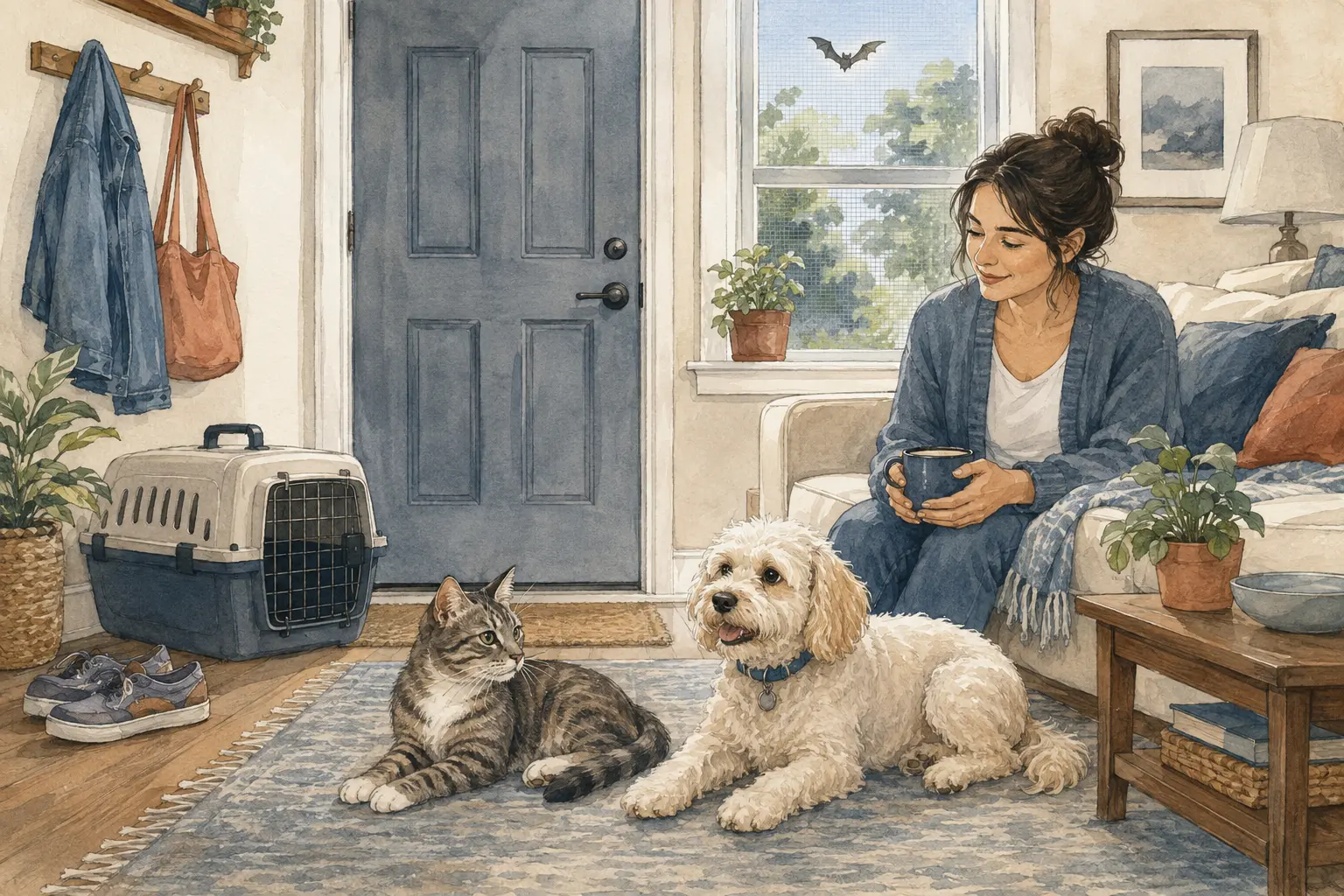
Healthy indoor dog and cat in a calm home near a screened window and closed entry door
Original illustration created for Companion Health Library.

INDOOR IS A LIFESTYLE—NOT A DIAGNOSIS

The safest plan anticipates ordinary surprises.

Indoor living can greatly reduce contact with unfamiliar animals and some pathogens. It cannot eliminate every route of exposure, legal requirement, household change, emergency evacuation, boarding need, or accidental escape. The aim is to match protection to credible risk—not to label every indoor pet the same.

Doorscan be left openBatscan enter homesPlanscan change quickly

Some recommendations are not based on outdoor recreation

Rabies

Indoor animals can escape or encounter a bat inside. Rabies is fatal, affects people, and vaccination is regulated by local law.

Feline core protection

Panleukopenia virus can persist in the environment, and cats may face exposure during evacuation, boarding, veterinary care, fostering, or a household change.

Canine core protection

Distemper, parvovirus, adenovirus, leptospirosis, and rabies are serious enough that current American Animal Hospital Association (AAHA) guidance broadly recommends core protection regardless of a quiet home lifestyle.

The home is connected to the outside world

  • Shoes, clothing, carriers, and objects move between environments.
  • Rodents and wildlife enter yards, garages, patios, and sometimes living spaces.
  • A pet can slip through a door, screen, leash, or damaged fence.
  • Storms, fires, repairs, hospitalization, travel, or family emergencies can make boarding or evacuation necessary with little warning.
  • A new pet, foster animal, visitor’s pet, or move can change exposure overnight.

Lifestyle still changes noncore choices

A truly low-contact pet may not need every available vaccine. The decision should be explicit and revisited rather than based on the word “indoor” alone.

  • Adult feline leukemia virus (FeLV) vaccination depends heavily on contact with cats of unknown or positive status and escape or outdoor potential.
  • Bordetella and canine influenza become more relevant with boarding, daycare, grooming, group training, shows, shelters, or outbreaks.
  • Lyme vaccination depends on tick geography and exposure, alongside year-round tick prevention.
  • Health status, immune-suppressing medication, prior reactions, and age can alter timing or product selection.

Ask four questions every year

  • What has changed in the home, neighborhood, travel, or animal contacts?
  • Which vaccines are legally required, broadly recommended, or specifically lifestyle-based?
  • What does each vaccine protect against, and what is its booster interval?
  • Is there any prior reaction or current illness that changes today’s plan?
Important: An annual vaccine review does not mean every vaccine is automatically given annually. It means the risk assessment is updated and due protection is identified.

Sources behind this guide

American Animal Hospital Association (AAHA)2022 canine vaccination guidelines and subsequent updatesFeline Veterinary Medical Association (FelineVMA; formerly the American Association of Feline Practitioners)2020 feline vaccination guidelines developed with the American Animal Hospital AssociationWorld Small Animal Veterinary Association (WSAVA)2024 global vaccination guidelinesAmerican Veterinary Medical Association (AVMA)Pet-owner vaccination and reaction guidance

Source links are provided so readers can review the underlying guidance. Publication dates and recommendations can change; confirm individual plans with the treating veterinary team.

CONTINUE EXPLORING

Use these connected guides to prepare informed questions for your veterinary team.

Vaccines for DogsDiscuss core and lifestyle-based canine protection.Read resource →Vaccines for CatsUnderstand feline protection and individualized risk.Read resource →Vaccine ReactionsKnow expected effects and when to contact a veterinarian.Read resource →Preventative ComparisonCompare parasite-prevention options separately from vaccination.Read resource →Printable Owner ToolkitBring observations, medication details and questions to your appointment.Read resource →