CHOOSE WHAT YOU WANT TO UNDERSTAND
Start with a parasite—or your animal. Filter the library, select a parasite for a quick overview, then open its complete owner guide.
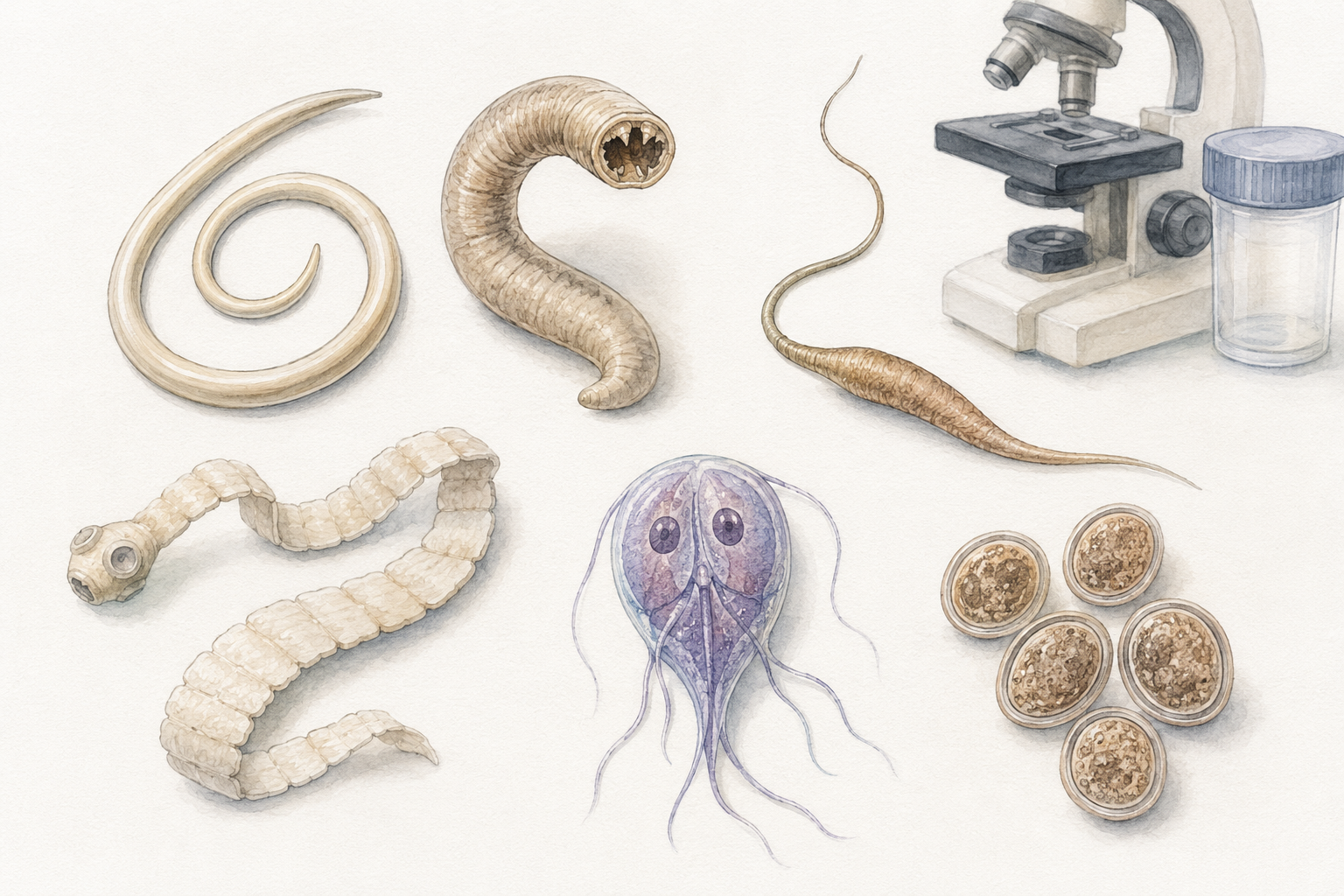
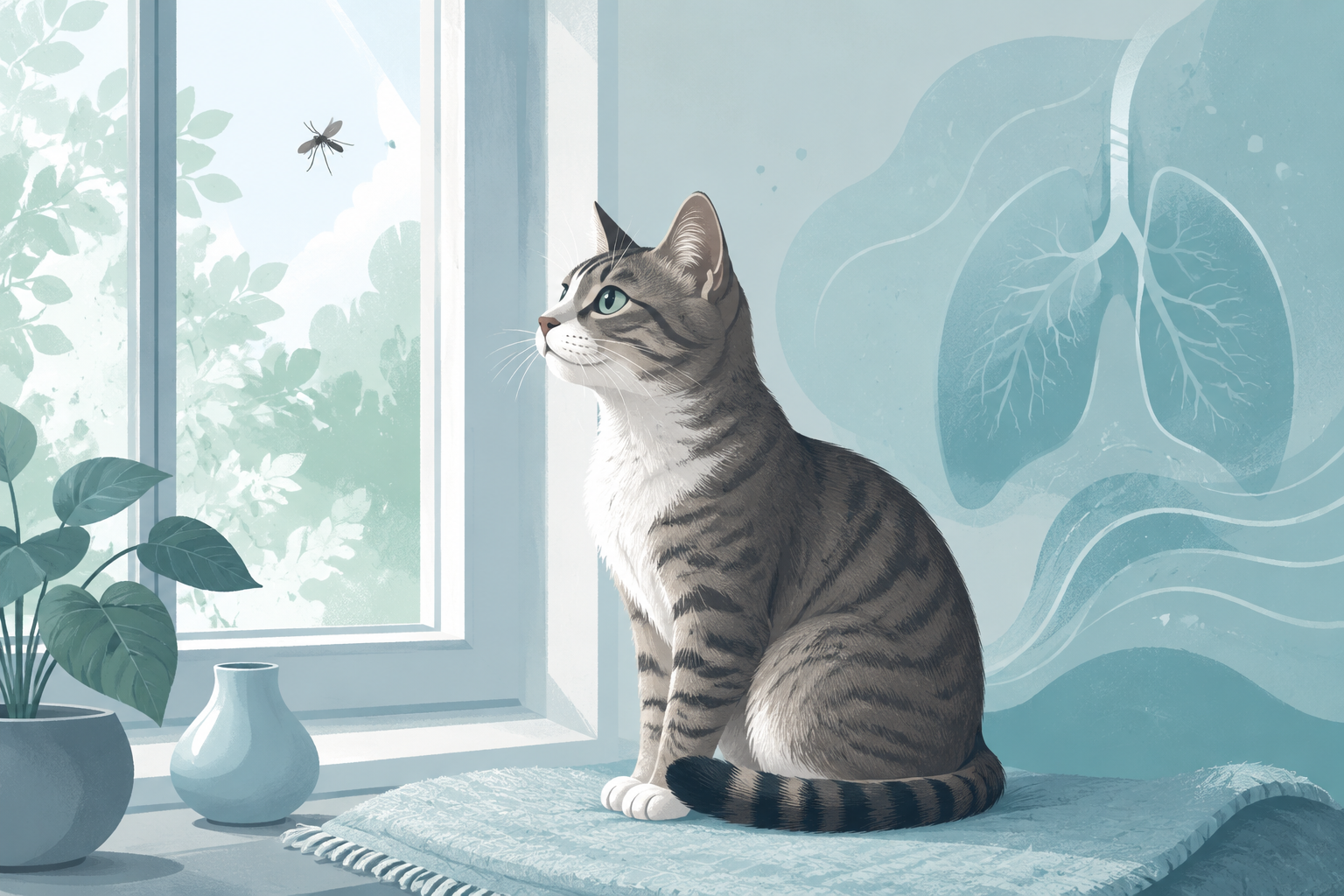
External Fleas Ctenocephalides felis and related species Fast-moving, biting insects whose eggs, larvae and pupae can persist throughout a household—not just on an animal. External Ticks Ixodes, Amblyomma, Dermacentor and other genera Blood-feeding arachnids that can transmit different infectious organisms depending on tick species, region and attachment history. External Lice Host-specific chewing and sucking lice Wingless parasites that generally remain on one host species and spread through close contact or shared grooming equipment. External Mites Sarcoptes, Demodex, Otodectes and related mites Usually microscopic arachnids that can affect skin, ears, feather follicles or other tissues, with very different behavior between mite species. External Flies and flystrike Blowflies, biting flies, botflies and related species Biting flies can cause irritation and transmit some organisms; fly larvae can invade soiled fur, wounds or vulnerable skin in a potentially life-threatening emergency. Internal Roundworms Toxocara canis, Toxocara cati and other ascarids Common intestinal worms, particularly in young animals, that can contaminate soil and create preventable human exposure. Internal Hookworms Ancylostoma and Uncinaria species Blood-feeding intestinal worms that can cause anemia and intestinal disease, particularly in young or heavily infected animals. Internal Whipworms Trichuris vulpis and related host-specific species Large-intestinal worms best known in dogs, with environmentally persistent eggs and sometimes intermittent detection. Internal Tapeworms Dipylidium, Taenia, Echinococcus and related species Segmented intestinal worms acquired through an intermediate host such as a flea or prey animal; public-health implications depend strongly on the species. Internal Heartworms Dirofilaria immitis Mosquito-transmitted worms that primarily affect the pulmonary arteries and can cause severe heart and lung disease in dogs, cats and ferrets. Internal Lungworms Aelurostrongylus, Angiostrongylus, Crenosoma and related species Respiratory parasites with species- and region-dependent life cycles, sometimes involving slugs, snails or prey animals. Protozoal Giardia Giardia duodenalis A microscopic intestinal protozoan spread through infectious cysts in feces, contaminated surfaces or water. Protozoal Coccidia Cystoisospora, Eimeria and related intestinal coccidia A broad group of microscopic intestinal protozoa; the relevant organism and health consequences differ considerably among dogs, cats, rabbits, poultry and livestock. Protozoal Toxoplasma Toxoplasma gondii A protozoan with important pregnancy and immunocompromise considerations; cats can shed oocysts, but contaminated food, soil and undercooked meat are also major exposure routes. Protozoal Cryptosporidium Cryptosporidium species Microscopic protozoa transmitted through infectious oocysts, with particular relevance to diarrhea, contaminated water, young livestock and immunocompromised people.
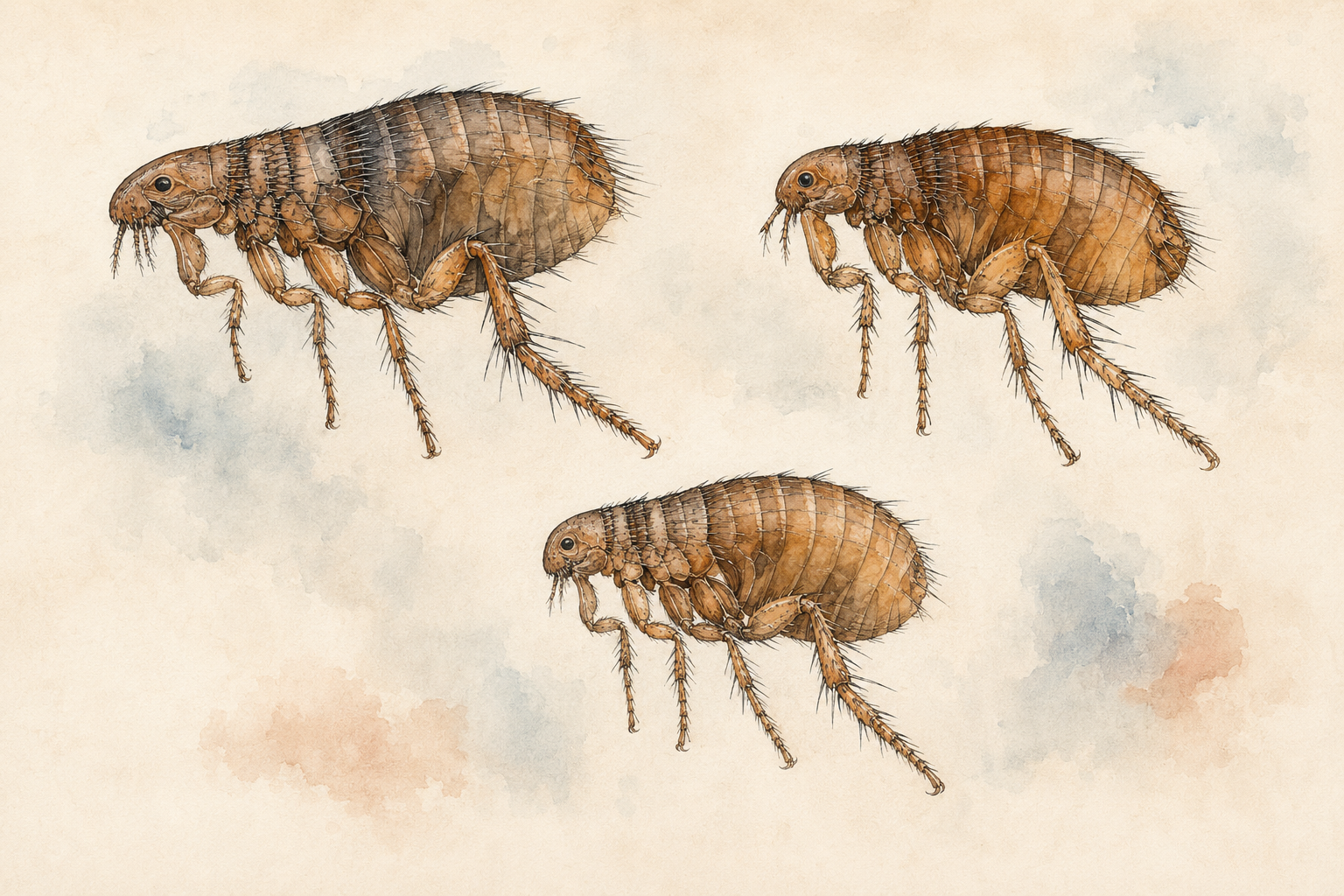
External parasite Fleas Ctenocephalides felis and related species
Fast-moving, biting insects whose eggs, larvae and pupae can persist throughout a household—not just on an animal.
What might it look like? Adults are tiny, dark reddish-brown, flattened insects that move quickly through fur. Flea dirt looks like black pepper and may turn rust-red on a damp white towel. Eggs and immature stages are usually in the environment and can be difficult to see.
Potential human-health concern Possible
Animals affected: Dogs, Cats, Small mammals, Domestic equines, Livestock.
Read the complete fleas guide →