DOG HEALTH · VACCINE GUIDE · REVIEWED AUGUST 16, 2026

Vaccines for
dogs.

What the common vaccines protect against, which are broadly recommended, which depend on exposure, and how your veterinarian builds an individual plan.

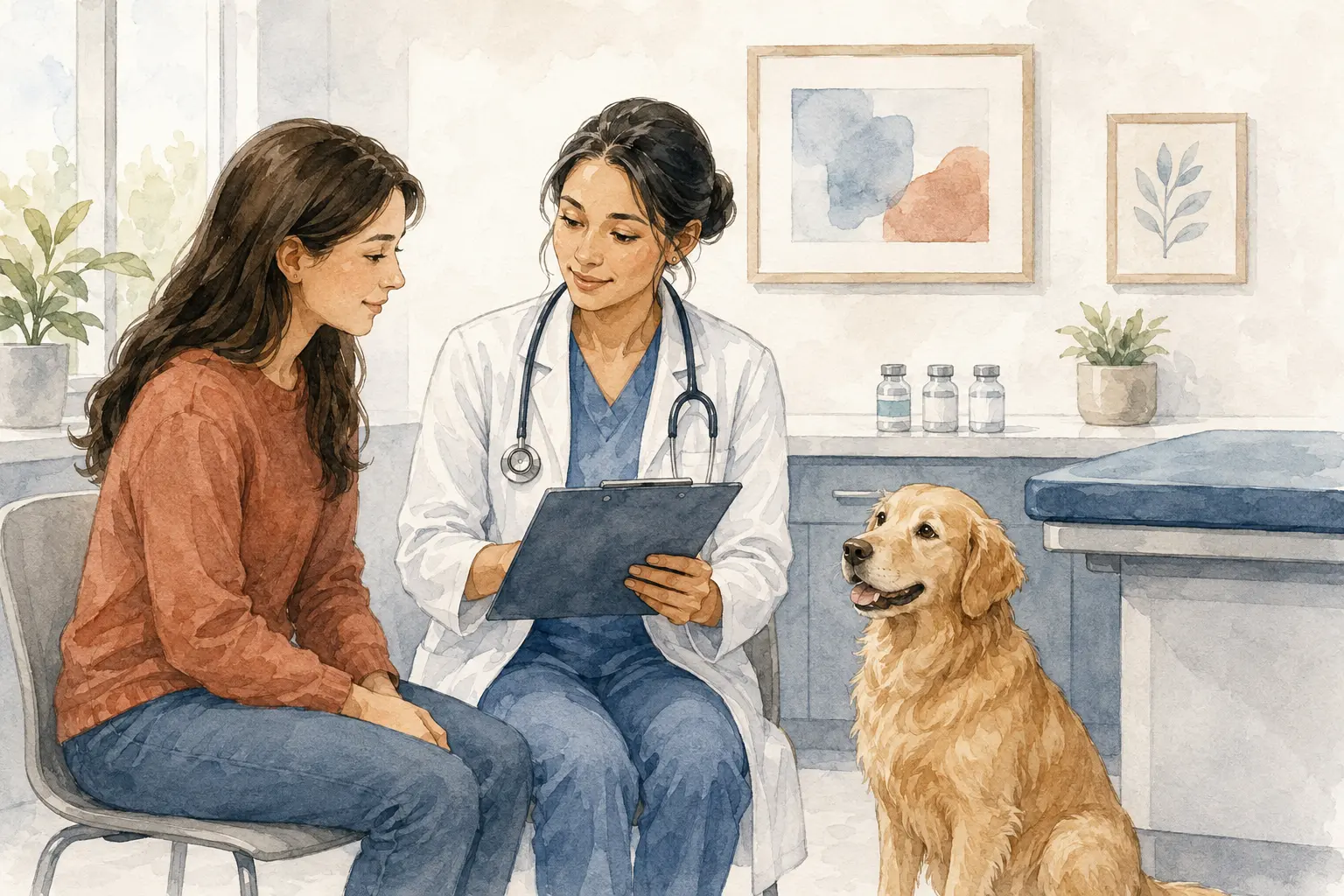
Veterinarian and caregiver calmly reviewing a vaccination plan beside a healthy dog
Original illustration created for Companion Health Library.

WHY VACCINATE?

Protection is planned before exposure.

Vaccines prepare the immune system to respond to serious infectious diseases. They do not all follow the same schedule, and no single protocol fits every dog. Your veterinarian weighs disease severity, likelihood of exposure, local law, product labeling, age, health, and prior reactions.

Corerecommended broadlyRiskguides added vaccinesVisitreview the plan annually

Vaccines recommended broadly for dogs

The American Animal Hospital Association (AAHA) identifies distemper, adenovirus, parvovirus, rabies, and—following its 2024 update—leptospirosis as core for most dogs. Combination labels vary, so ask what each abbreviation includes.

COMMON COMBINATION VACCINE

Distemper, adenovirus, parainfluenza & parvovirus

This combination may be labeled DAPP or DA2PP. The letters refer to canine distemper, canine adenovirus type 2, canine parainfluenza, and canine parvovirus. Product contents can vary, so confirm the label with your veterinarian. The puppy series matters because maternal antibodies can temporarily interfere with early doses.

REQUIRED BY LAW

Rabies

Rabies is fatal and can infect people. Timing and documentation must follow local law and the vaccine label; only a veterinarian can advise whether a medical exemption process exists locally.

CORE GUIDELINE UPDATE

Leptospirosis

The American Animal Hospital Association now classifies leptospirosis vaccination as core for most dogs. This bacterial disease spreads through urine-contaminated water or soil, can cause kidney or liver failure, and can infect people. Risk is not limited to rural or outdoor dogs; rodents and urban wildlife matter.

Vaccines that may become essential for an individual dog

Bordetella / respiratory disease

Often recommended for dogs that board, attend daycare, visit groomers, train in groups, go to shelters, or have close contact with unfamiliar dogs. Route and booster timing vary by product and facility rules.

Canine influenza

Considered for dogs with frequent dog-to-dog contact or travel to areas with outbreaks. The initial series generally requires two doses; protection is not immediate.

Lyme disease

Considered where infected ticks occur or for dogs traveling to tick-endemic areas. Vaccination complements—not replaces—effective tick prevention and daily tick checks.

Important: Facility requirements are not a substitute for a medical plan. Tell your veterinarian about boarding, grooming, daycare, shows, hiking, hunting, travel, wildlife, and standing water.

Why the schedule changes with age and history

  • Core puppy combination vaccines commonly begin around 6–8 weeks and repeat every 2–4 weeks until at least 16 weeks; higher-risk settings or current World Small Animal Veterinary Association (WSAVA) guidance may support a final selected core dose at or after 16 weeks and sometimes a later dose around 26 weeks.
  • Rabies timing follows local law and product labeling.
  • Leptospirosis and several lifestyle vaccines require a two-dose initial series, usually separated by a few weeks; one dose alone may not complete protection.
  • After the initial series and first adult booster, some core viral vaccines are generally boosted at longer intervals, while many bacterial or lifestyle vaccines are typically annual.
  • An overdue or unknown history does not always mean restarting every series. Bring records and let the veterinary team determine what is needed.

Bring the dog’s real life into the decision

  • Where does the dog walk, hike, swim, board, train, or travel?
  • Is there exposure to rodents, wildlife, ticks, standing water, or unfamiliar dogs?
  • Are there chronic illnesses, immune-suppressing medications, pregnancy, or a prior vaccine reaction?
  • What diseases does today’s combination vaccine contain, when does protection begin, and when is the next dose due?
Important: Vaccines reduce risk; they do not guarantee that infection is impossible. Preventive care, parasite control, sanitation, and avoiding known outbreaks still matter.

Sources behind this guide

American Animal Hospital Association (AAHA)2022 canine vaccination guidelines and subsequent updatesFeline Veterinary Medical Association (FelineVMA; formerly the American Association of Feline Practitioners)2020 feline vaccination guidelines developed with the American Animal Hospital AssociationWorld Small Animal Veterinary Association (WSAVA)2024 global vaccination guidelinesAmerican Veterinary Medical Association (AVMA)Pet-owner vaccination and reaction guidance

Source links are provided so readers can review the underlying guidance. Publication dates and recommendations can change; confirm individual plans with the treating veterinary team.

CONTINUE EXPLORING

Use these connected guides to prepare informed questions for your veterinary team.

Vaccines for CatsUnderstand feline protection and individualized risk.Read resource →Vaccine ReactionsKnow expected effects and when to contact a veterinarian.Read resource →Preventative ComparisonCompare parasite-prevention options separately from vaccination.Read resource →Printable Owner ToolkitBring observations, medication details and questions to your appointment.Read resource →