CAT HEALTH · VACCINE GUIDE · REVIEWED AUGUST 16, 2026

Vaccines for
cats.

Core protection, feline leukemia virus risk, indoor-cat considerations, injection-site monitoring, and the questions that shape an individual plan.

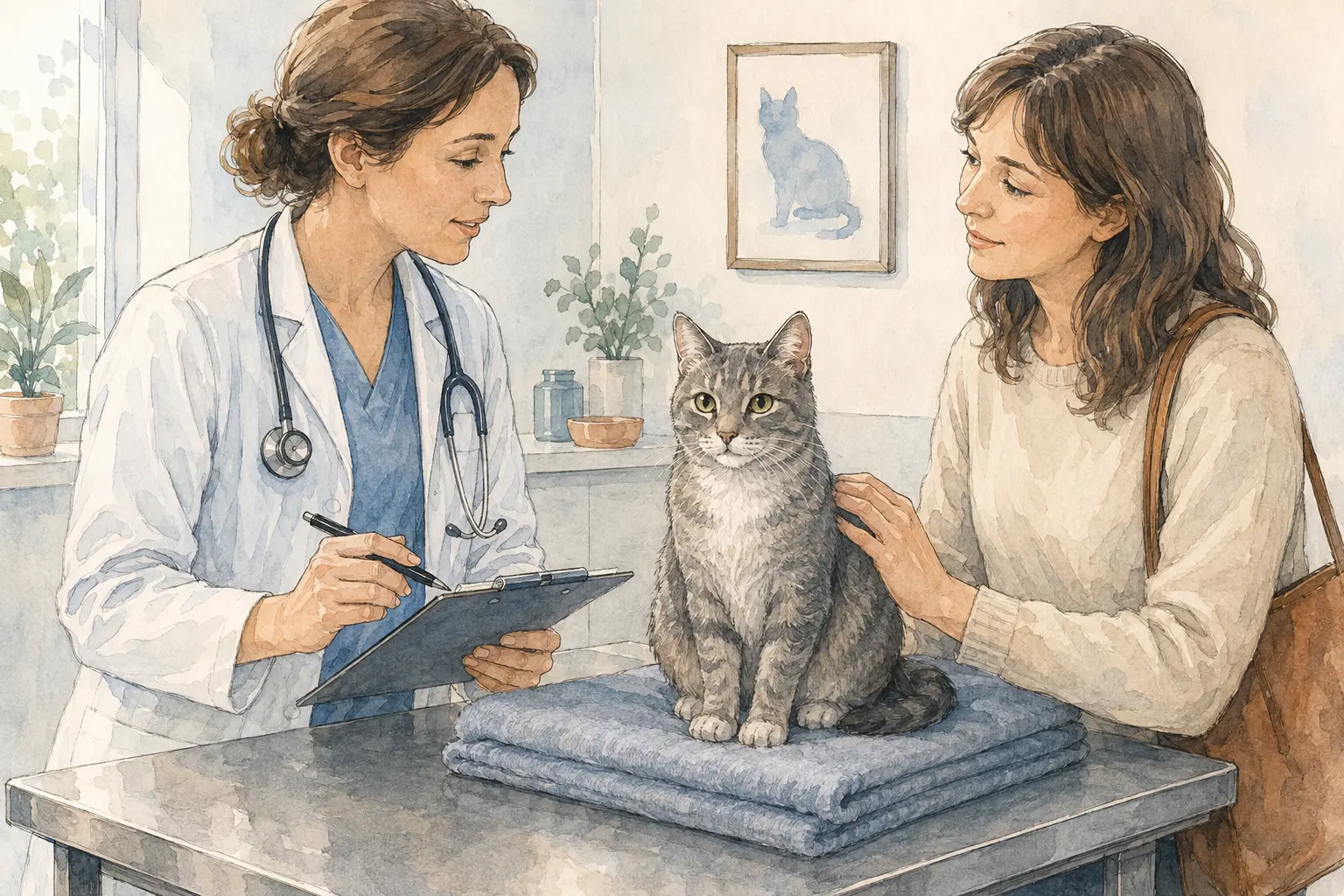
Calm cat with veterinarian and caregiver reviewing a vaccination plan
Original illustration created for Companion Health Library.

FELINE VACCINATION

The plan follows life stage and exposure.

Feline vaccination balances the seriousness of disease with each cat’s age, health, household, escape potential, contact with other cats, travel, and local law. The goal is appropriate protection—not simply the greatest possible number of injections.

Corefeline combination seriesRabiespublic-health protectionFeLVfeline leukemia virus (FeLV)

The common core vaccines

FELINE CORE COMBINATION

Panleukopenia, herpesvirus & calicivirus

This combination is commonly abbreviated FVRCP: feline viral rhinotracheitis (caused by feline herpesvirus), calicivirus, and panleukopenia. Panleukopenia can be rapidly fatal, while herpesvirus and calicivirus are major causes of contagious respiratory and oral disease. The vaccine does not prevent every cause of sneezing.

PUBLIC HEALTH

Rabies

Rabies is fatal and zoonotic. Indoor status does not eliminate the possibility of an escaped cat or a bat entering a home. Timing must follow local law and product labeling.

RETROVIRUS

Feline leukemia virus (FeLV)

FeLV spreads mainly through close cat contact. Guidelines treat FeLV vaccination as core for kittens and young cats because lifestyles can change; ongoing adult vaccination depends on exposure risk.

Questions that change the plan

  • Does the cat go outdoors, escape, live with a feline leukemia virus (FeLV)-positive cat, or encounter cats of unknown status?
  • Will the cat board, travel, enter a shelter, foster kittens, or move to a multi-cat home?
  • Have feline leukemia virus (FeLV) and feline immunodeficiency virus (FIV) tests been performed when appropriate before FeLV vaccination or after a possible exposure?
  • Is the cat ill, pregnant, taking immune-suppressing medication, or known to have reacted previously?
Important: Vaccinating for feline leukemia virus (FeLV) does not replace testing or preventing high-risk contact. No FeLV vaccine is 100% protective.

Monitor the site without fearing routine care

Most post-vaccine soreness or a small lump is temporary. Cats also have a rare risk of injection-site sarcoma, which is why veterinary teams document sites and choose products thoughtfully.

THE 3-2-1 RULE

Have a lump checked

Contact your veterinarian if a lump remains for 3 months, is larger than 2 centimeters, or is still increasing in size 1 month after the injection. Do not wait for all three criteria.

Keep accurate records

Save the vaccine name, date, location, and next-due date. Tell the clinic about any prior reaction or persistent injection-site lump before future vaccination.

Kittens need a series—not a single early dose

  • The feline viral rhinotracheitis, calicivirus, and panleukopenia combination vaccine (FVRCP) generally begins around 6–8 weeks and repeats every 3–4 weeks until at least 16–20 weeks, depending on risk and the veterinary protocol.
  • Feline leukemia virus (FeLV) vaccination generally uses a two-dose initial series beginning at 8 weeks or older, with ongoing boosters based on risk and product labeling.
  • Rabies is given according to law and product labeling.
  • Adult booster intervals differ by vaccine, product, risk, and prior history. An annual wellness visit does not mean every vaccine is automatically given every year.
Important: A cat with an unknown history can still be protected. Your veterinarian will select an age-appropriate catch-up plan rather than guessing from appearance.

Sources behind this guide

American Animal Hospital Association (AAHA)2022 canine vaccination guidelines and subsequent updatesFeline Veterinary Medical Association (FelineVMA; formerly the American Association of Feline Practitioners)2020 feline vaccination guidelines developed with the American Animal Hospital AssociationWorld Small Animal Veterinary Association (WSAVA)2024 global vaccination guidelinesAmerican Veterinary Medical Association (AVMA)Pet-owner vaccination and reaction guidanceAmerican Veterinary Medical AssociationFeline injection-site sarcoma information

Source links are provided so readers can review the underlying guidance. Publication dates and recommendations can change; confirm individual plans with the treating veterinary team.

CONTINUE EXPLORING

Use these connected guides to prepare informed questions for your veterinary team.

Vaccines for DogsDiscuss core and lifestyle-based canine protection.Read resource →Vaccine ReactionsKnow expected effects and when to contact a veterinarian.Read resource →Preventative ComparisonCompare parasite-prevention options separately from vaccination.Read resource →Printable Owner ToolkitBring observations, medication details and questions to your appointment.Read resource →