DOG & CAT HEALTH · HEALTHY AGING

Senior pet health
is proactive care.

How examinations, diagnostic trends, mobility, muscle, cognition, comfort and home changes can protect quality of life as dogs and cats age.
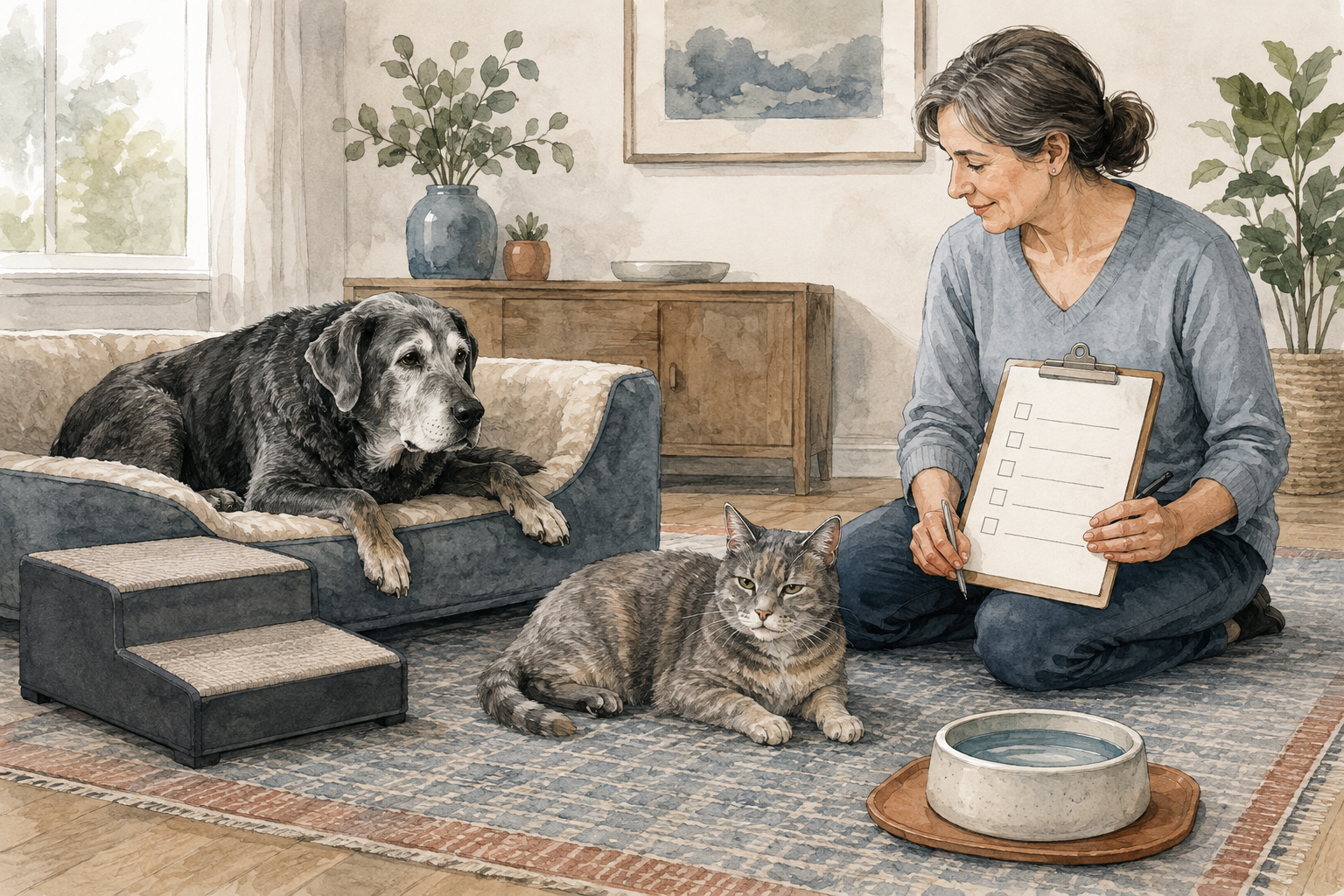
Older dog and cat resting comfortably while a caregiver reviews a wellness plan
Original illustration created for Companion Health Library.

AGE IS INDIVIDUAL

Senior status depends on species, size, breed and health—not one birthday.

The American Animal Hospital Association recommends proactive senior care focused on early detection, function and the relationship between the pet and caregiver. Larger dogs often reach senior life stages earlier than smaller dogs, while cats may hide disease until it is advanced.

Twice yearlyoften appropriate for seniorsTrendweight, muscle and test resultsFunctionmobility, senses and cognition

Small changes can be medically meaningful

  • Unplanned weight loss or gain, reduced muscle over the spine or hips
  • Difficulty rising, slipping, hesitating on stairs or jumping less
  • Increased thirst or urination, appetite change, vomiting or altered stool
  • New nighttime waking, staring, pacing, vocalizing or house-soiling
  • Coughing, exercise intolerance, fainting or faster breathing at rest
  • Bad breath, dropping food, chewing on one side or avoiding hard food
  • New irritability, hiding, reduced grooming or less interest in family

What a proactive review may include

Whole-pet examination

Weight, body and muscle condition, mouth, eyes, heart, lungs, abdomen, skin, neurologic function, joints and mobility.

Laboratory trends

Complete blood count, chemistry and urinalysis are commonly considered every six to twelve months, with thyroid, blood pressure and other tests selected by species and risk.

Function and comfort

Pain, mobility, cognition, vision, hearing, sleep and the ability to eat, drink, eliminate and interact should be reviewed explicitly.

Make the environment easier before a crisis

  • Add nonslip runners and stable ramps or steps.
  • Provide supportive bedding and warm, draft-free resting areas.
  • Use low-entry litter boxes and place resources on the level the pet uses most.
  • Keep nails and paw hair managed to improve traction.
  • Record resting respiratory rate when your veterinarian recommends it.
  • Use videos to document gait, coughing, episodes or behavior that may not appear in the clinic.

Some changes need prompt or emergency care

  • Labored breathing, blue or pale gums, collapse or repeated fainting
  • Sudden inability to stand, severe weakness or uncontrolled pain
  • Repeated vomiting, a swollen abdomen or inability to urinate
  • Seizures, sudden blindness or marked disorientation
  • Refusal of food with illness, especially in cats
Important: A senior pet can still benefit from treatment. Age alone should not determine whether diagnostics, anesthesia, pain relief or surgery are appropriate.

Sources behind this guide

American Animal Hospital Association2023 Senior Care Guidelines for Dogs and CatsOhio State University Veterinary Medical CenterQuality-of-life and caregiver resources

Source links are provided so readers can review the underlying guidance. Publication dates and recommendations can change; confirm individual plans with the treating veterinary team.

CONTINUE EXPLORING

Use these connected guides to prepare informed questions for your veterinary team.

Chronic Kidney DiseaseRecognize common monitoring needs as animals age.Read resource →OsteoarthritisUnderstand subtle pain and mobility changes.Read resource →Chemistry PanelSee why organ-function testing may be recommended.Read resource →Dental DiseaseRecognize how oral discomfort can change eating and behavior.Read resource →Printable Owner ToolkitBring observations, medication details and questions to your appointment.Read resource →