DOG & CAT HEALTH · NUTRITION
Nutrition &
healthy weight.
A practical guide to food selection, portions, body and muscle condition, weight loss, treats, home-prepared diets and nutrition claims.
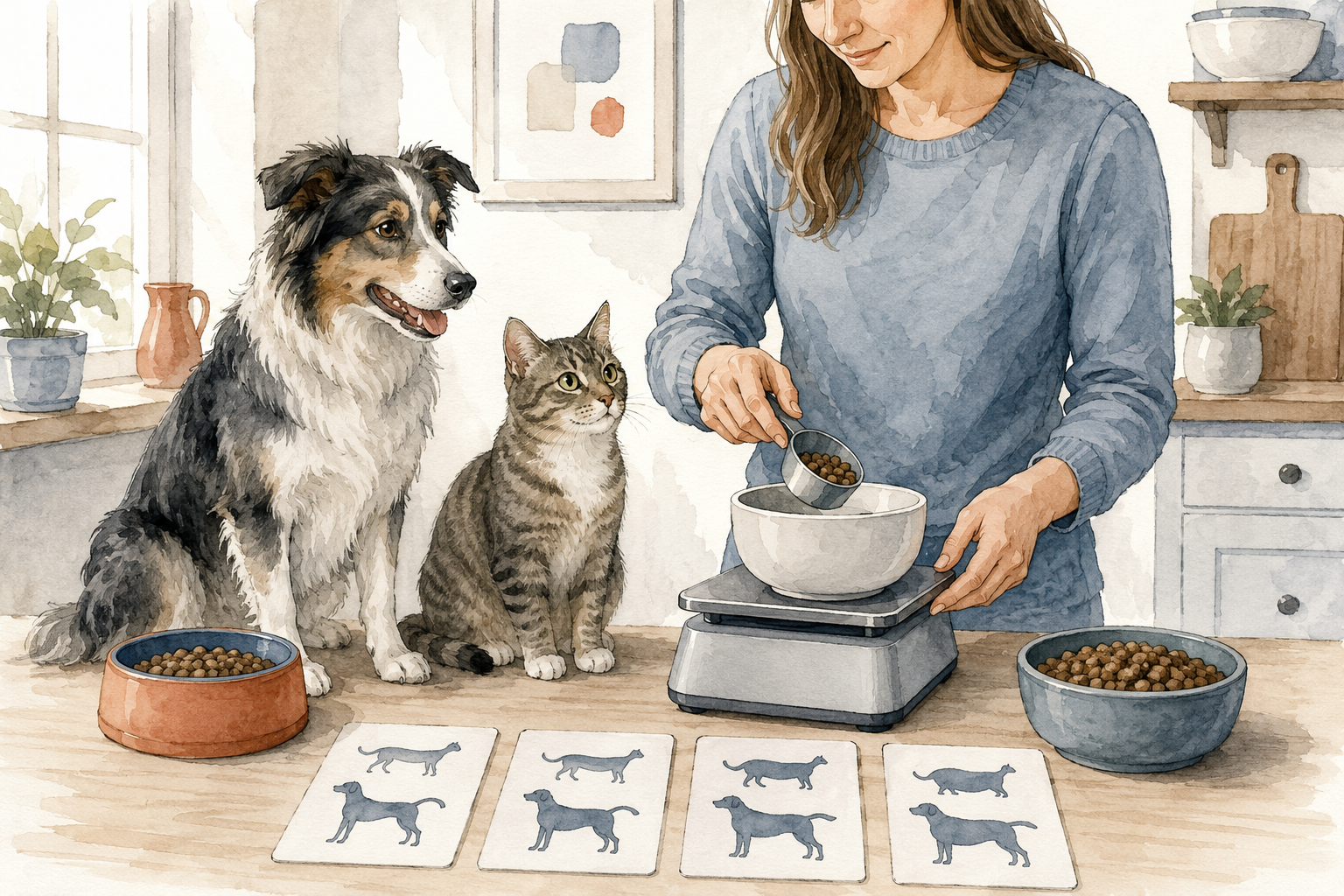
MEASURE MORE THAN POUNDS
Weight, body condition and muscle condition tell different stories.
A pet can be overweight and still lose important muscle. Nutritional assessment should include the complete diet, treats, supplements, medications, appetite, stool, activity, body condition and muscle condition.
Look beyond the front of the bag
- Confirm the food is complete and balanced for the intended species and life stage.
- Ask who formulates the diet and how quality control and nutrient analysis are performed.
- Ingredient lists do not reveal digestibility, nutrient balance or manufacturing quality by themselves.
- Terms such as natural, premium, holistic and human-grade do not automatically predict better health.
- Medical conditions may require a therapeutic diet selected with a veterinarian.
The package is a starting estimate—not a prescription
- Measure food accurately; a gram scale is more consistent than a scoop.
- Include treats, chews, table food and food used for medication.
- Use regular weigh-ins and body-condition scoring to adjust calories.
- Weight loss should be gradual and monitored to preserve muscle and meet nutrient needs.
- Cats should never be placed on a sudden crash diet because inadequate intake can contribute to hepatic lipidosis.
Good ingredients do not guarantee complete nutrition
Most recipes from books or the internet do not provide every essential nutrient in the correct amount. If home preparation is necessary or strongly preferred, use a recipe formulated for the individual pet by a board-certified veterinary nutritionist and follow it precisely.
Appetite and weight changes can be signs of disease
- Unplanned weight loss or muscle loss
- A cat eating little or nothing for a day, especially with illness
- Trouble chewing or swallowing
- Repeated vomiting, diarrhea or blood in stool
- Excessive thirst or urination
- A puppy, kitten, pregnant animal or sick pet failing to eat normally
TRUSTED SOURCES
Sources behind this guide
Source links are provided so readers can review the underlying guidance. Publication dates and recommendations can change; confirm individual plans with the treating veterinary team.