DOGS AND CATS · OWNER EDUCATION
Overweight and Obesity
Excess body fat can affect joint comfort, mobility, metabolic health and long-term wellness; the right plan depends on the individual animal.
THE SHORT VERSION
Understanding supports better veterinary conversations.
Obesity is a medical and nutritional concern, not a character judgment or simply a number on the scale. Veterinarians consider body condition, muscle condition, diet, medications and other disease.
What is this condition?
Obesity is a medical and nutritional concern, not a character judgment or simply a number on the scale. Veterinarians consider body condition, muscle condition, diet, medications and other disease.
Which animals can be affected?
Risk factors, examination findings and management can differ between species and individual patients.
Why can it happen?
- Calorie intake exceeding individual energy needs over time.
- Reduced activity, high-calorie treats, life stage or certain medical conditions.
- Household feeding patterns and loss of muscle can complicate assessment.
What might an owner notice?
- Difficulty feeling ribs, reduced waist definition or weight gain over time.
- Exercise intolerance, reduced jumping or difficulty grooming.
- Worsening joint discomfort or changes in metabolic health.
How is the problem investigated?
- Body-weight measurement, body-condition assessment and muscle-condition evaluation.
- Diet and treat history, activity review and medication discussion.
- Laboratory testing when an underlying condition is suspected.
What might treatment involve?
- Veterinarian-guided portion, diet and activity planning.
- Gradual monitoring using consistent weight checks.
- Management of contributing pain, endocrine problems or other illness.
This is an overview, not a prescription or a recommendation for a specific individual animal.
What can owners do at home?
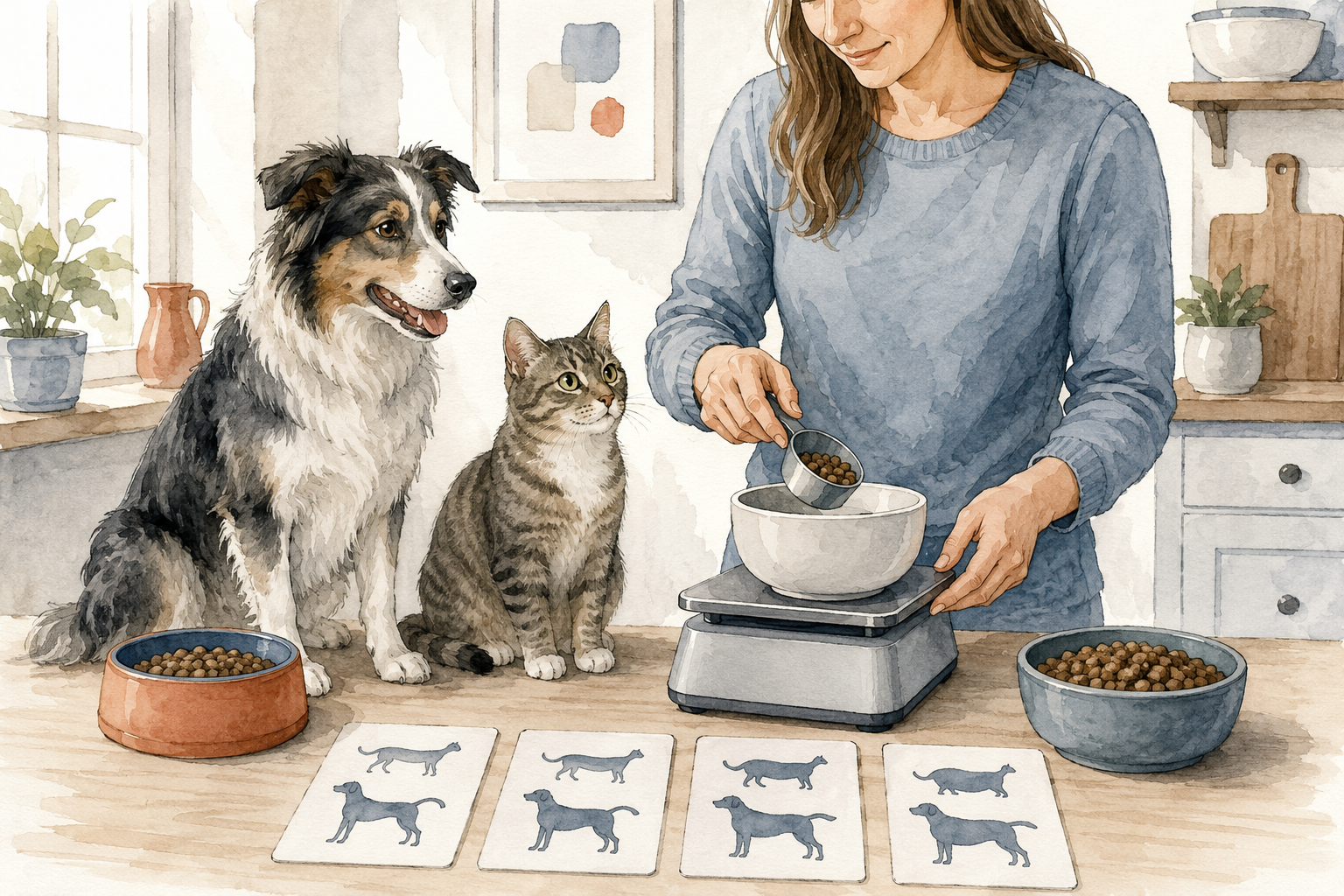
- Measure meals and account for every treat.
- Track weight and body condition with the printable worksheet.
- Use a species-appropriate activity plan that respects joint comfort.
Avoid actions that could make care less safe.
- Do not impose severe calorie restriction or fasting, especially in cats.
- Do not start an online calorie plan or human weight-loss product without veterinary guidance.
- Do not give human medications, leftover prescriptions or supplements without veterinary approval.
- Do not stop, increase, decrease or double prescribed medication without contacting your veterinary team.
- Do not delay assessment if symptoms are worsening, the animal stops eating or an emergency sign appears.
What can the longer-term outlook involve?
Many animals improve mobility and long-term health with gradual, supported weight management; the appropriate pace and target depend on species and medical history.
Can risk be reduced?
- Discuss body and muscle condition during routine veterinary visits.
- Adjust food and activity as age, health and lifestyle change.
When should you arrange care?
- Call for rapid weight change, reduced appetite or inability to exercise comfortably.
Seek emergency veterinary care if you notice:
SEEK EMERGENCY VETERINARY CARE- Collapse, heat-related distress, difficult breathing or sudden inability to move.
Sources behind this guide
American Animal Hospital Association veterinary guidelinesPrimary veterinary or veterinary-university guidance ↗Cornell University College of Veterinary Medicine: feline health topicsPrimary veterinary or veterinary-university guidance ↗Content last reviewed: August 23, 2026. Review status: veterinary-informed; independent veterinarian review not yet completed.