Trouble breathing
Open-mouth breathing in a cat, gasping, choking, noisy or labored breathing, blue or gray gums, or obvious distress while breathing.
DOG + CAT HEALTH · URGENT CARE GUIDE · REVIEWED AUGUST 16, 2026
How to recognize danger, act without making things worse, and decide when your pet needs immediate or same-day veterinary care.
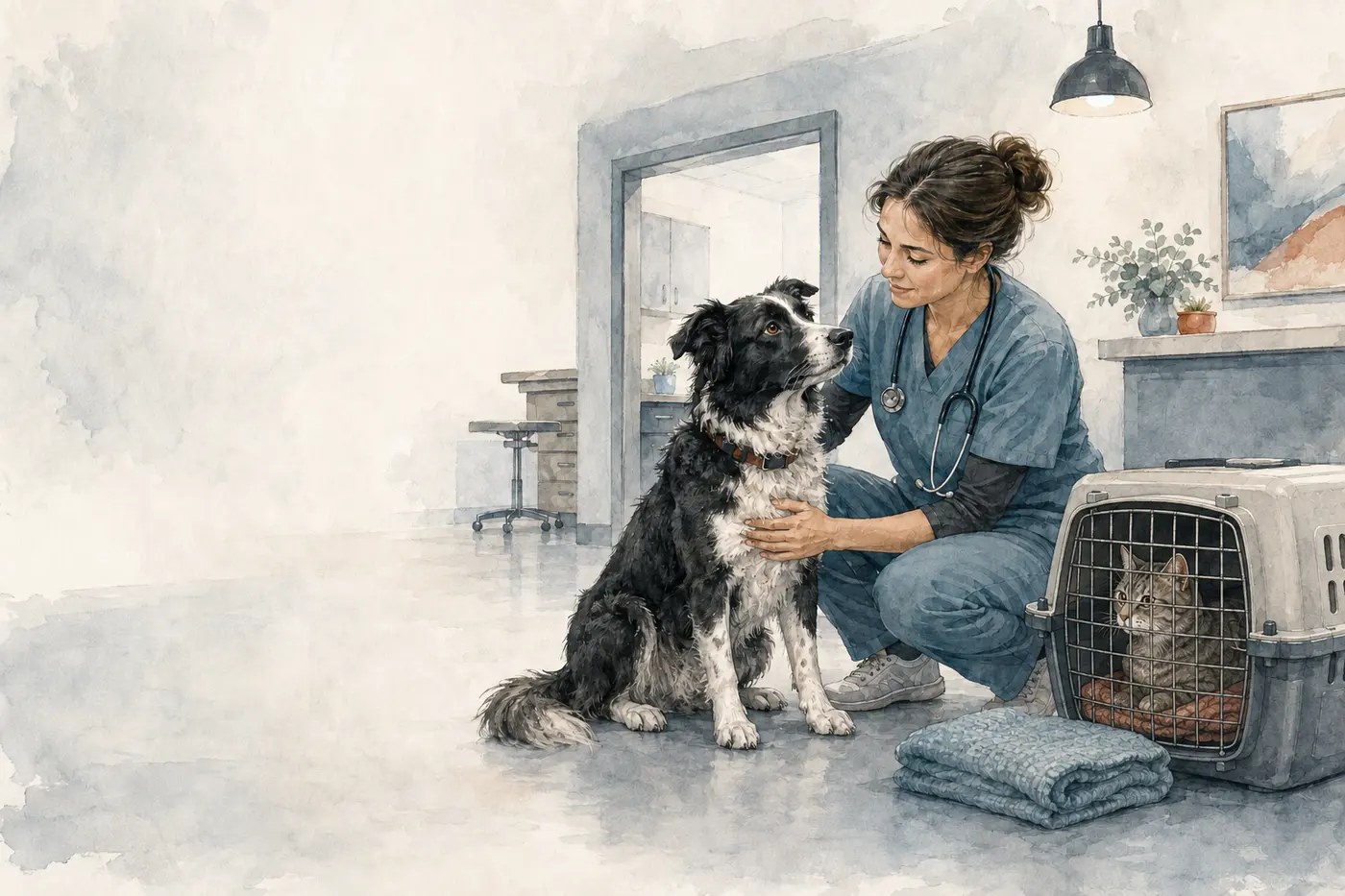
Call the nearest veterinary emergency hospital. Tell them what happened, your pet’s species and size, current signs, and your estimated arrival time.
Leave promptly. Calling ahead helps the team prepare, but do not allow a long phone conversation to delay transport of an unstable pet.
Transport safely. Keep movement minimal, protect yourself from pain-related bites, and use a carrier, box, towel, blanket, or rigid surface when appropriate.
A SIMPLE RULE
No webpage can assess gum color, breathing effort, circulation, pain, neurologic function, hydration, or internal injury as accurately as a veterinary professional. Signs may also look mild before an animal deteriorates.
When something feels dramatically different from your pet’s normal behavior—or the change is sudden, severe, worsening, or follows trauma or toxin exposure—contact a veterinarian or emergency hospital.
This list is not exhaustive. If your pet appears unstable or you cannot safely evaluate them, err on the side of urgent veterinary assessment.
Open-mouth breathing in a cat, gasping, choking, noisy or labored breathing, blue or gray gums, or obvious distress while breathing.
Fainting, inability to stand, extreme weakness, sudden paralysis, loss of consciousness, or gums that are very pale, white, blue, or gray.
A seizure lasting more than five minutes, repeated seizures without normal recovery, multiple seizures in 24 hours, or a seizure with possible toxin exposure.
Being hit by a vehicle, a serious fall, bite wounds, penetrating injury, uncontrolled bleeding, suspected internal bleeding, or any trauma followed by weakness or breathing changes.
A suddenly enlarged or painful abdomen, repeated attempts to vomit with little or nothing produced, drooling, pacing, or collapse—especially in a large or deep-chested dog.
Repeated straining with no urine or only drops, crying in the litter box, genital licking, vomiting, or lethargy. This is especially urgent in male cats.
Medication mistakes, toxic foods or plants, rodenticide, antifreeze, chemicals, cannabis, xylitol, lilies in cats, or any unknown substance—call immediately even if your pet looks normal.
Heavy panting with weakness, confusion, vomiting, collapse, seizures, very red or pale gums, or a body that feels dangerously hot after heat exposure.
Your veterinarian may direct you to an appointment, urgent-care clinic, emergency hospital, or careful home monitoring based on the details.
Especially with blood, pain, weakness, dehydration, a very young or elderly pet, a chronic medical condition, or inability to keep water down.
Squinting, holding an eye closed, cloudiness, sudden swelling, trauma, chemical exposure, or sudden vision change can worsen quickly.
Crying, trembling, hiding, guarding the abdomen, a tense posture, inability to settle, or refusing to use a limb deserves prompt assessment.
Disorientation, circling, head tilt, stumbling, marked restlessness, pressing the head against objects, or a major unexplained personality change.
Abrupt appetite loss—particularly in cats—or reduced intake with lethargy, vomiting, pain, weight loss, or another health condition warrants a call.
A new cough, faster breathing at rest, reduced stamina, or breathing that looks different should be discussed promptly; visible effort is an emergency.
Risk depends on the exact substance, concentration, amount, time, species, weight, and health history. Some toxins cause delayed injury after a pet initially appears normal.

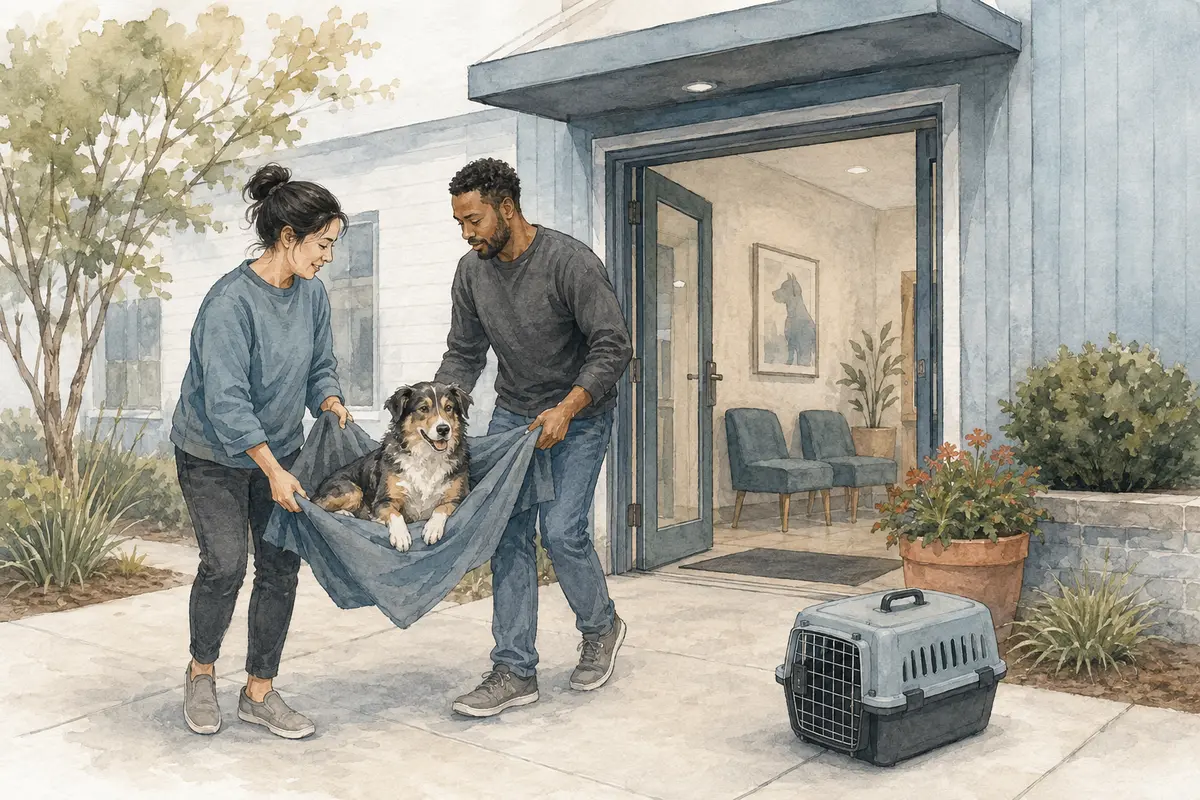
Apply firm, direct pressure with clean cloth or gauze. If blood soaks through, add material on top rather than repeatedly lifting the first layer.
Move nearby objects, dim the room, keep hands away from the mouth, and time the episode. Do not restrain your pet. Record video only if it is safe.
Keep your pet calm and cool, minimize handling, avoid pressure on the neck or chest, and go directly to emergency care. Do not place anything in the mouth unless an object is clearly visible and safely removable.
Move the pet as little as possible. Support the body on a blanket, board, or other firm surface when spinal injury is possible. Even pets that stand after an impact may have internal injuries.
Move to a cooler area and begin cooling with cool—not ice-cold—water and airflow while arranging immediate transport. Stop active cooling if directed by the veterinary team.
A frightened or painful pet may bite. Use a towel or carrier when possible. Never muzzle an animal that is vomiting, having difficulty breathing, has facial trauma, or is unconscious.
BE READY BEFORE YOU NEED TO LEAVE
TRUSTED SOURCES