Human medications
Pain relievers, antidepressants, stimulants, heart and blood-pressure drugs, cold medicines, sleep aids, vitamins, supplements, topical fluorouracil, and other prescriptions can cause serious poisoning.
DOG + CAT HEALTH · POISON PREVENTION · REVIEWED AUGUST 16, 2026
What to keep out of reach, why species and dose matter, and how to respond quickly when a pet may have been exposed.
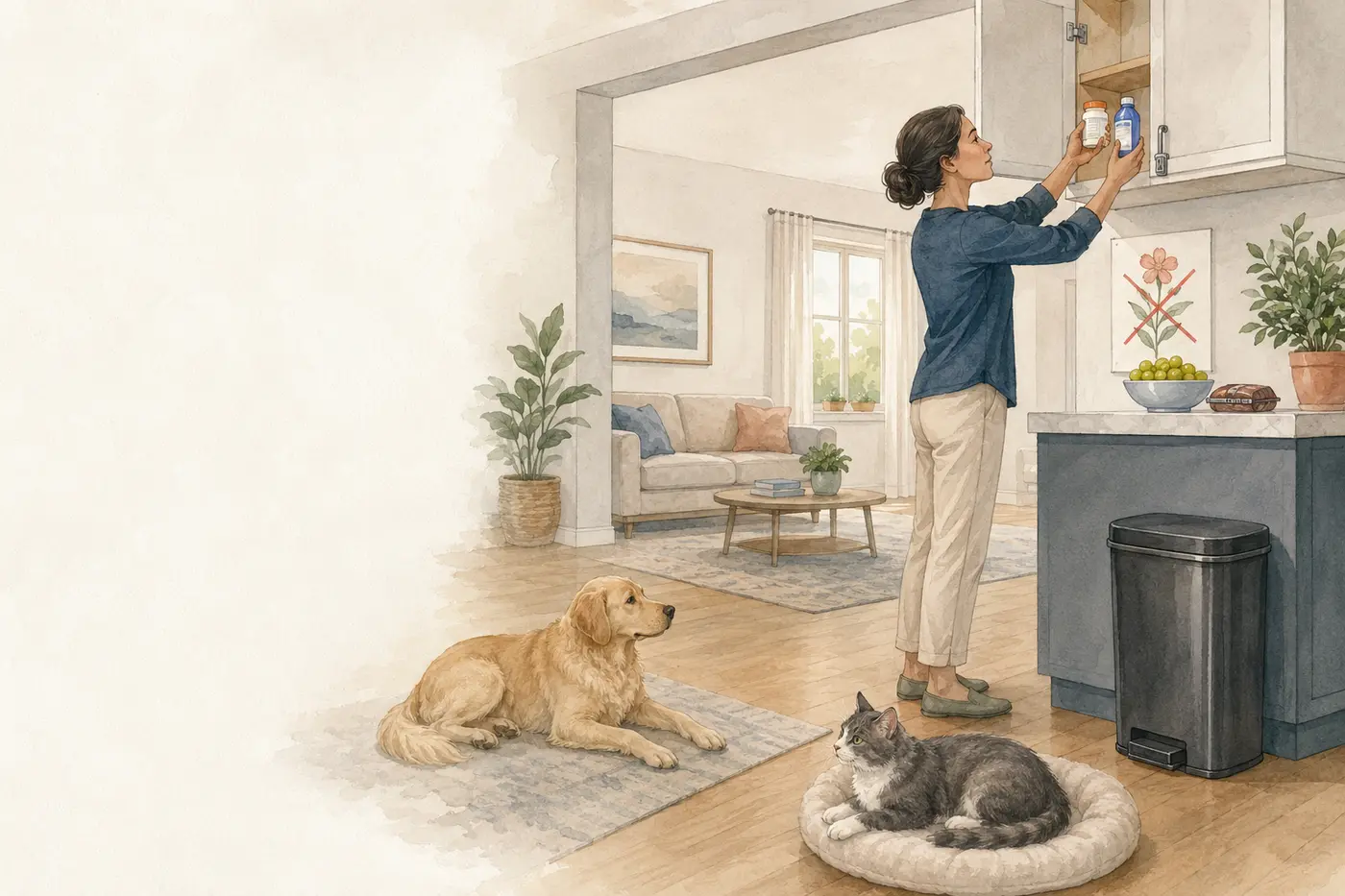
Separate and secure. Move your pet away from the substance without exposing yourself. Prevent other animals from entering the area.
Call immediately. Contact your veterinarian, an emergency hospital, or an animal poison-control service. Do not wait for signs.
Bring the evidence. Keep the package, label, plant sample, photo, or vomited material safely contained. Estimate the amount and time.
THE MOST IMPORTANT RULE
Toxicity depends on the exact substance, concentration, amount, route of exposure, time since exposure, species, body weight, age, and medical history. Advice that was safe for another animal—or for a person—may be dangerous for your pet.
This page is a prevention guide, not a complete poison list or a tool for deciding whether an exposure is safe. If you are unsure, call and let a veterinary professional calculate the risk.
The examples below are not exhaustive. “Natural,” “organic,” “pet-friendly,” and child-resistant packaging do not guarantee safety for every animal.
Pain relievers, antidepressants, stimulants, heart and blood-pressure drugs, cold medicines, sleep aids, vitamins, supplements, topical fluorouracil, and other prescriptions can cause serious poisoning.
Chocolate, xylitol, grapes and raisins, onions and garlic, alcohol, caffeine, macadamia nuts, raw yeast dough, high-fat scraps, and moldy food are common concerns. Product ingredients matter.
True lilies and daylilies are an emergency for cats. Sago palms, oleander, azaleas, autumn crocus, cyclamen, tulip or daffodil bulbs, and many other plants can also be dangerous.
Concentrated cleaners, detergents, essential oils, batteries, nicotine products, cannabis products, mothballs, paints, solvents, adhesives, and some cosmetics deserve secure storage.
Antifreeze, de-icers, fuels, fertilizers, pesticides, herbicides, rodenticides, slug bait, compost, mushrooms, and blue-green algae can create urgent or delayed illness.
A pet medicine can become toxic when the wrong species receives it, too much is given, products are combined, or a dog consumes an entire package of flavored chews. Never apply a dog-only flea product to a cat.
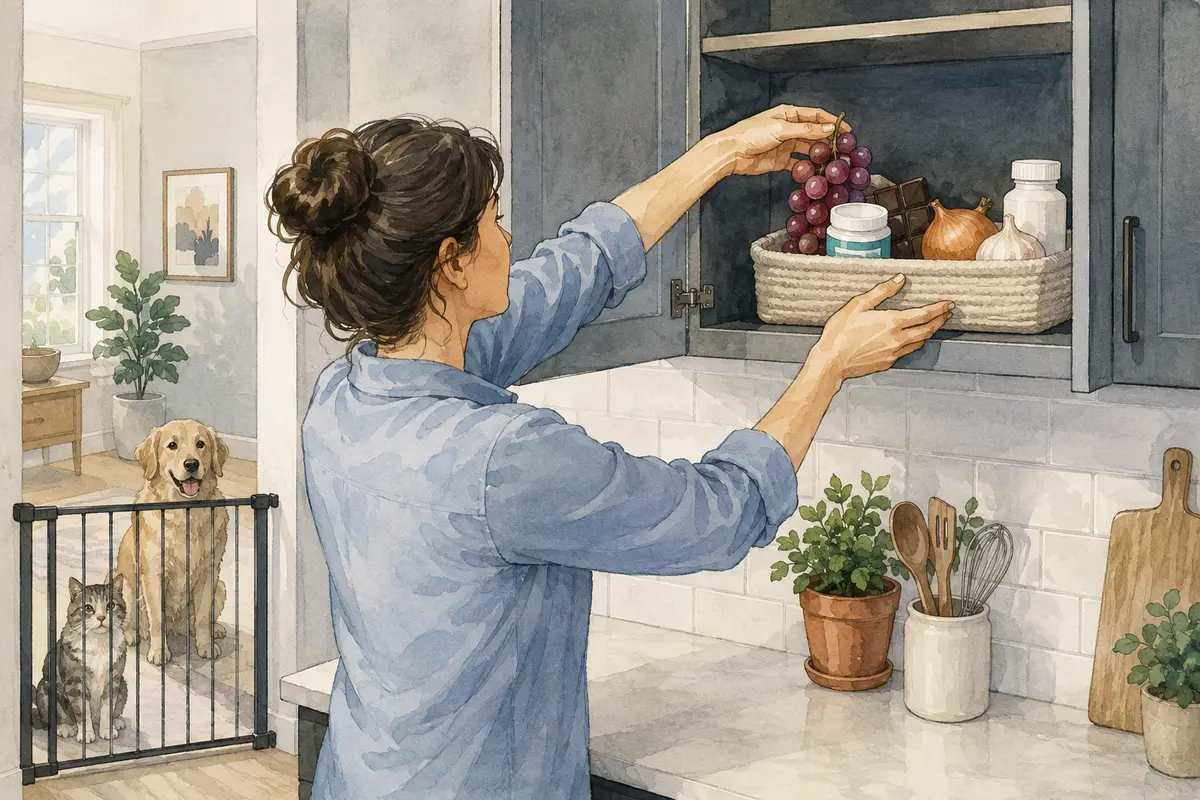
Darker chocolate and concentrated cocoa generally contain more methylxanthines, but any exposure should be assessed using the product, amount, and pet’s weight.
This sweetener may appear in sugar-free gum, candy, baked goods, toothpaste, supplements, and some medications. It can cause dangerous low blood sugar and liver injury in dogs.
They can cause acute kidney injury in dogs, and a reliably safe amount has not been established. Call after any suspected exposure.
Fresh, cooked, dried, powdered, or concentrated forms can damage red blood cells. Repeated smaller exposures may also matter.
Alcohol-containing drinks or products can poison pets. Rising yeast dough can expand and produce alcohol inside the stomach.
Moldy food, fatty scraps, bones, skewers, corn cobs, strings, wrappers, and snack bags can cause poisoning, obstruction, injury, or suffocation.
SPECIES-SPECIFIC EMERGENCY
True lilies in the Lilium group and daylilies in the Hemerocallis group can cause severe kidney injury in cats. Petals, leaves, stems, pollen, and vase water may all create risk. A cat that brushes against pollen and later grooms it can be exposed.
Do not wait for vomiting, lethargy, or appetite loss. Remove access, prevent grooming if you can do so safely, and call a veterinarian or animal poison-control service immediately. Bring the plant or a clear photo for identification.
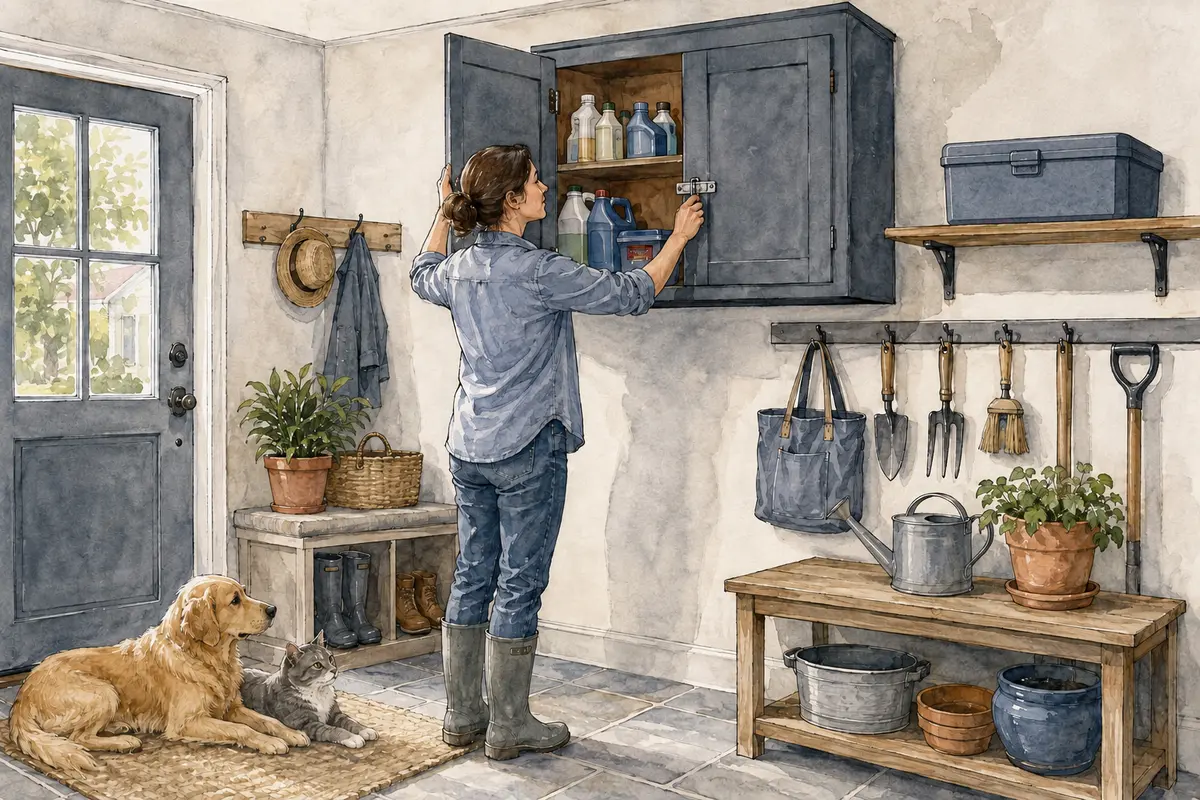
Lock medicines, vitamins, topical creams, nicotine, cannabis, cosmetics, essential oils, and personal-care products. Purses and overnight bags are common access points.
Store detergent pods, concentrates, bleach, disinfectants, dryer products, and drain or oven cleaners behind closed, latched doors. Keep pets away until surfaces are dry and ventilated as directed.
Antifreeze and fuels can be dangerous in small amounts. Repair leaks, absorb spills immediately, restrict access, and store containers upright in secure cabinets.
Keep pets away during application of lawn or pest products and follow the label’s re-entry time. Prevent access to rodent bait, mushrooms, compost, cocoa mulch, fertilizers, bulbs, and treated standing water.
GO TO AN EMERGENCY HOSPITAL NOW
Other possible signs include vomiting, diarrhea, drooling, tremors, agitation, unusual sleepiness, stumbling, abnormal heart rate, pale/blue/brown/yellow gums, facial swelling, sudden thirst or urination changes, and loss of appetite.
Signs vary by toxin and may be delayed. If your pet is unstable, leave for emergency care while another person calls ahead when possible.
Review the emergency guide →Plant and product formulations change. Use these resources and the package label, then call a professional for a pet-specific assessment.