Right pet
Confirm the patient name—especially when more than one pet takes medication.
DOG + CAT HEALTH · HOME SAFETY · REVIEWED AUGUST 16, 2026
Simple systems for giving the right medicine, recognizing controlled prescriptions, preventing accidental exposure, and knowing what to do when something goes wrong.
Stop and verify. Do not give another dose or try a home remedy until a professional advises you.
Call promptly. Contact your veterinarian, an emergency hospital, or animal poison control—even if your pet looks normal.
Bring the evidence. Keep the bottle or package and note the drug, strength, possible amount, time, and your pet’s weight.
THE SAFEST HABIT
Medication errors often happen during ordinary routines: two people both give a dose, a liquid concentration changes, similar bottles are confused, or a tablet falls unnoticed. A ten-second check is safer than relying on memory.
Never give a human prescription, pain reliever, cold medicine, supplement, or topical product to a pet unless a veterinarian specifically directs it. Products that are familiar to people can be dangerous to dogs or cats.
Confirm the patient name—especially when more than one pet takes medication.
Match the bottle to the written plan. Never substitute a similar-looking tablet.
The same drug may come in several concentrations or tablet sizes.
Measure exactly. For liquids, use the supplied oral syringe—not a kitchen spoon.
Give by mouth, in the eye, in the ear, on the skin, or another route only as directed.
Use a shared log so two caregivers do not give the same dose.
Do not stop early, extend treatment, or use leftovers without veterinary guidance.
Color and shape cannot reliably identify a medication or tell you whether it is controlled. Manufacturers change, generic products differ, and many pills look alike. Keep medicine in its original labeled container and ask the dispensing veterinarian or pharmacist to verify anything uncertain.
In the United States, the Controlled Substances Act places regulated drugs into five schedules based on medical use, potential for misuse, and safety or dependence liability. Veterinary patients may appropriately receive controlled medicine; the designation adds legal handling and diversion safeguards.
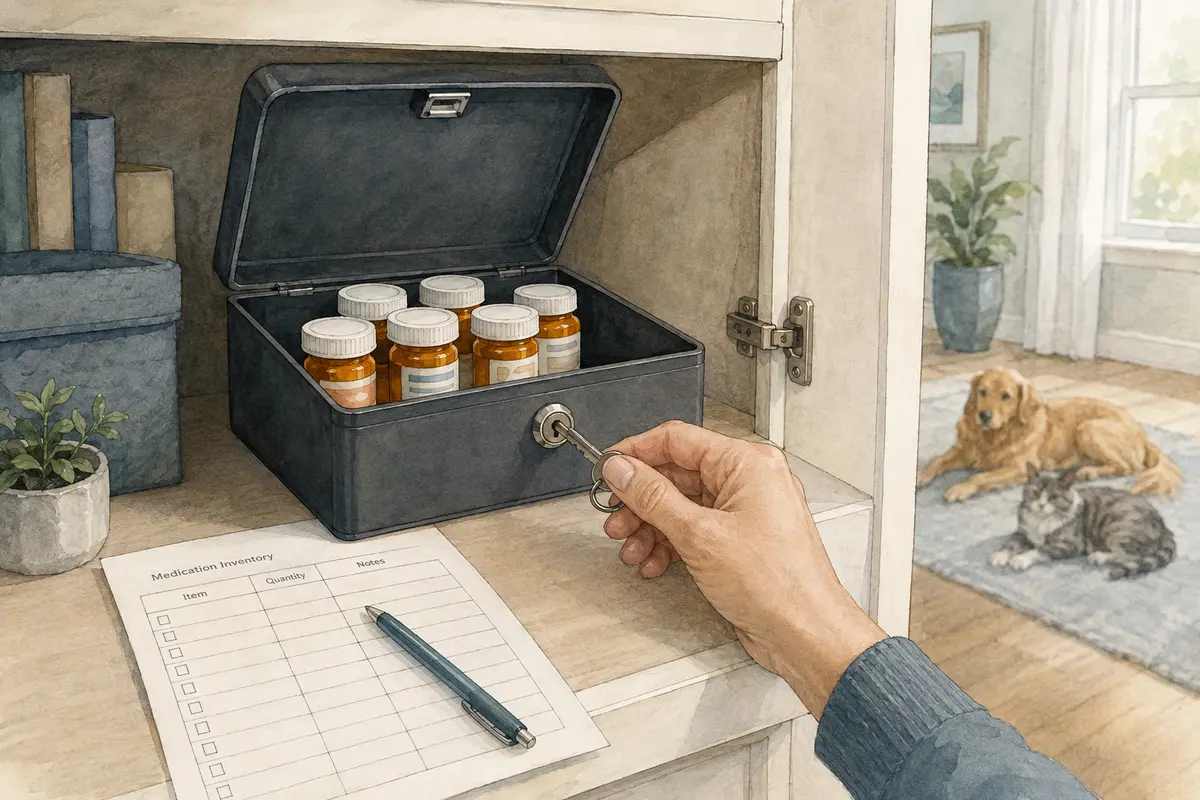
Look for the full drug name and strength on the dispensing label. A federal schedule may be shown as C-II, C-III, C-IV, or C-V. Label formats vary, and state controls can differ, so confirm with the dispensing veterinarian or pharmacist.
Examples can include certain opioids such as buprenorphine or hydrocodone, benzodiazepines such as alprazolam or diazepam, phenobarbital, and tramadol. This list is not exhaustive, and scheduling can change.
A schedule mark does not tell you the correct dose, whether a pill belongs to your pet, or whether it is safe now. Some non-controlled medicines are also highly dangerous when misused.
Some medicines may be monitored or controlled by a state even when they are not federally scheduled. Do not rely on an internet list for legal status; ask the dispenser where the prescription was filled.
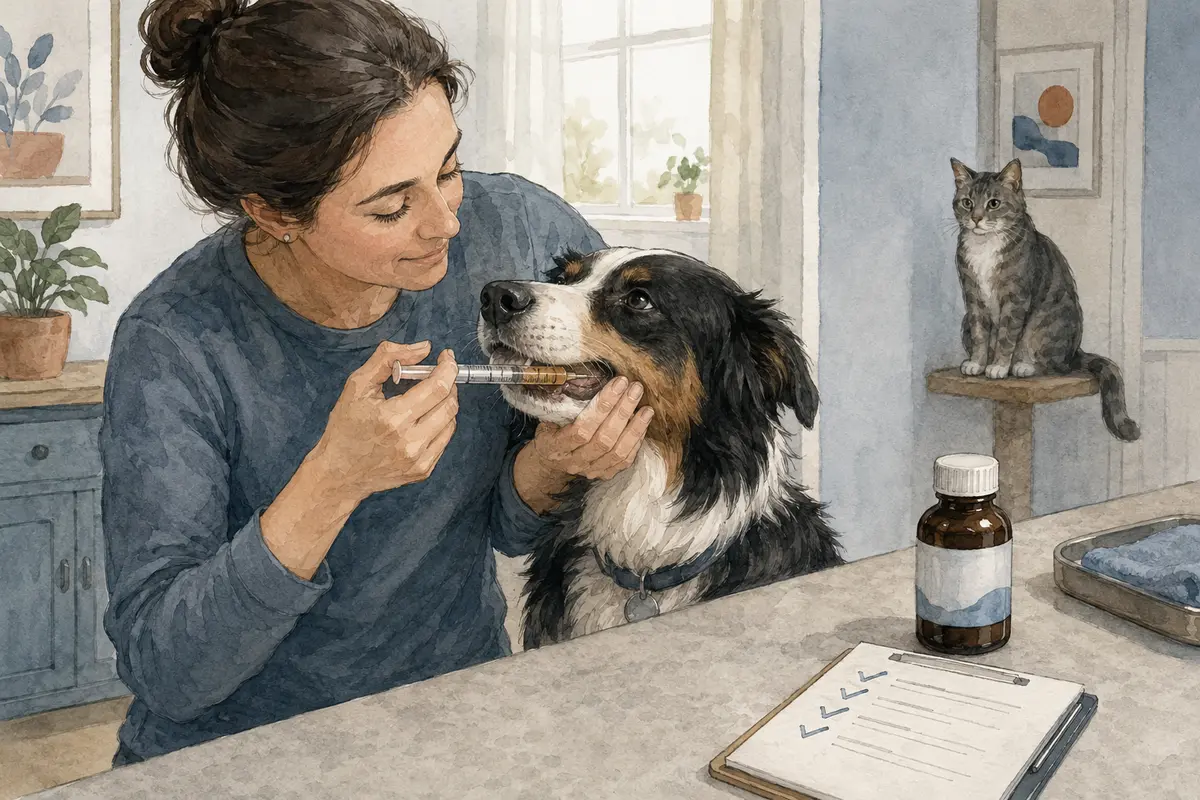
Shake only when instructed. Read the syringe at eye level and use the units written on the label. Milligrams (mg) and milliliters (mL) are not interchangeable.
Do not split, crush, open, or dissolve them unless the veterinarian or pharmacist confirms it is appropriate for that product.
Confirm the body site. Prevent licking or contact between animals until the product is dry or your veterinary team says it is safe.
Record the dose immediately—not later. Include date, time, amount, and initials so another caregiver knows it was given.
Human pain relievers such as ibuprofen, naproxen, and acetaminophen; cold and decongestant products; antidepressants and stimulants; prescription topical fluorouracil; and xylitol-containing medicines or supplements can cause serious poisoning. Cats are especially vulnerable to acetaminophen. Risk depends on the exact product, dose, species, and patient—do not wait for symptoms.
Hydrogen peroxide, salt, oils, and other home methods can create additional injury or be unsafe for the individual pet or substance.
Call for drug-specific advice. Whether to give it late, skip it, or adjust the next dose depends on the medication and timing.
Do not wait for symptoms. Call with the exact medication, strength, amount, time, pet’s weight, and relevant health conditions.
Treat this as a potential exposure. Keep the packaging and contact your veterinarian, emergency hospital, or poison control promptly.
Do not repeat the dose unless instructed; you may not know how much was absorbed. Photograph what you see and call.
(888) 426-4435 · A consultation fee may apply.
SAFE DISPOSAL
Use a drug take-back location or prepaid mail-back envelope when available. This is particularly important for controlled medications.
If take-back is unavailable, follow the product instructions and current U.S. Food and Drug Administration guidance. Do not flush a medicine unless it appears on the U.S. Food and Drug Administration (FDA) Flush List. Remove or obscure personal information on empty packaging.
Read U.S. Food and Drug Administration disposal guidance ↗This resource is educational and cannot identify an unknown pill, diagnose poisoning, or replace instructions from the dispensing veterinarian or pharmacist.