AMPHIBIANS · ENVIRONMENTAL HEALTH
Amphibian wellness
depends on water and habitat.
A client guide to water quality, temperature, humidity, nutrition, biosecurity, safe handling and urgent warning signs in frogs, toads, salamanders and newts.
IN THIS GUIDELife history determines the habitatMeasure what the animal actually experiencesTest first, then change water safelyFeed variety, quality and appropriate prey sizeHandle only when necessaryA separate room is better than a nearby tankSubtle changes deserve attentionAmphibians can deteriorate quicklyTrusted sources
SPECIES FIRST
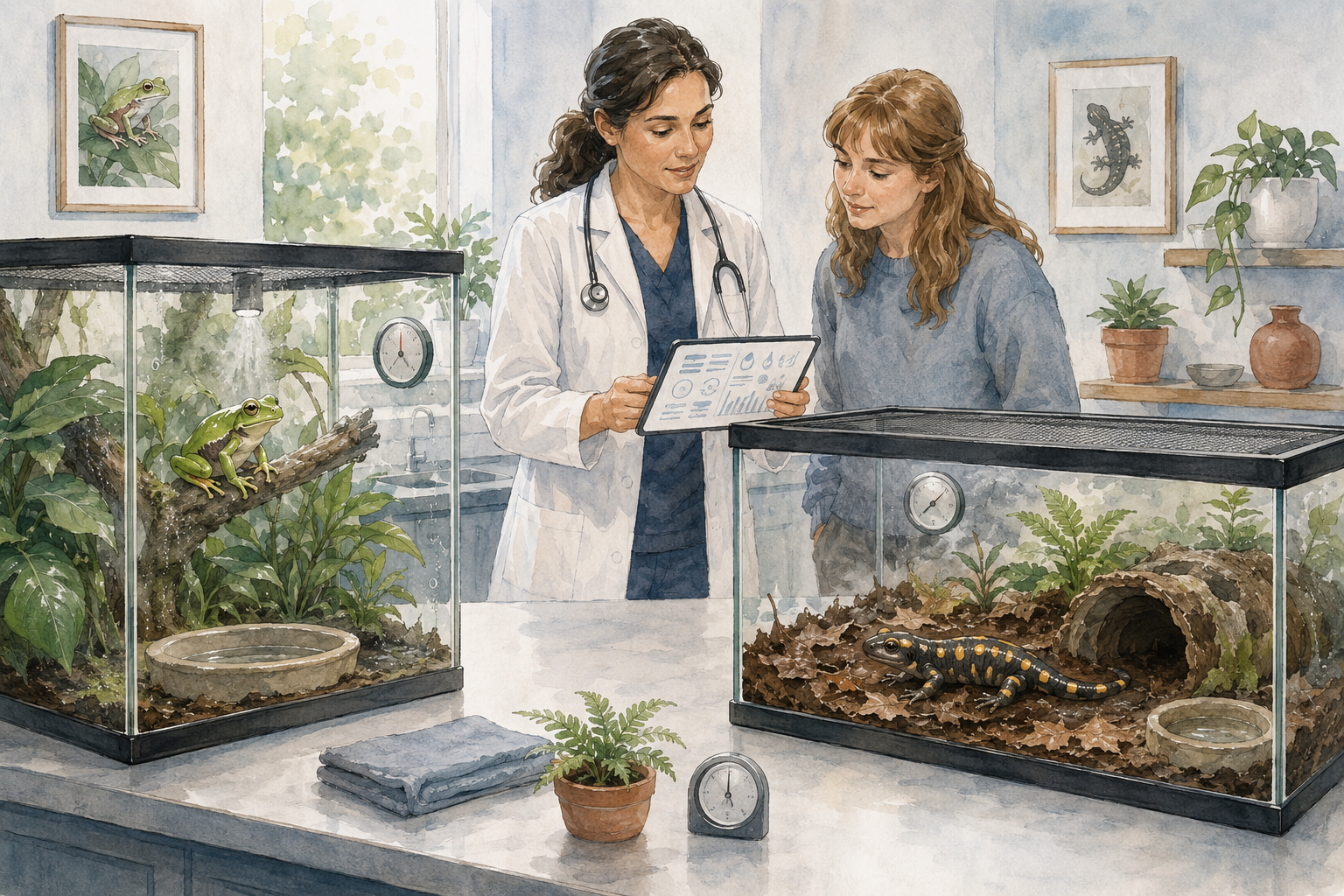
Aquatic, terrestrial and arboreal amphibians need very different environments.
Use care information for the exact species and life stage. Larvae and adults may require different water, temperature, food and enclosure design.
Watertest and condition appropriatelyMinimalhandling reduces stressBiosecurityprotects individuals and collections
SPECIES DIRECTORY
Life history determines the habitat
| Group | Common companion examples | Key distinction |
|---|---|---|
| Tree frogs | White's tree frog, red-eyed tree frog and Amazon milk frog | Arboreal space, ventilation, foliage, humidity and climbing surfaces. |
| Terrestrial frogs and toads | Pacman frog, tomato frog, fire-bellied toad and American toad where legal | Ground-level space, substrate, burrowing and species-specific water access. |
| Dart frogs | Dendrobates, Ranitomeya and related captive-bred frogs | Small live food, stable tropical microclimate, group compatibility and strict biosecurity. |
| Aquatic frogs | African dwarf frog and African clawed frog where legal | Fully aquatic filtration, water depth, feeding access and escape prevention. |
| Salamanders and newts | Axolotl, tiger salamander, fire-bellied newt and crested newts where legal | Cool-water or terrestrial needs, low heat tolerance and species-specific land-water balance. |
| Native or protected species | Varies by state and country | Collection, possession, transport and release may be restricted even when an animal appears common. |
Important: Use captive-bred animals from a documented source. Never release a captive amphibian or its water because disease and invasive-species risks can affect wild populations.
01 · ENVIRONMENT
Measure what the animal actually experiences
- Match water depth, land access, temperature, humidity, ventilation and photoperiod to the species.
- Use appropriately treated water and monitor relevant parameters such as temperature, pH, ammonia, nitrite and nitrate for aquatic systems.
- Prevent contact with soaps, lotions, aerosols, cleaners, metals and untreated tap water unless verified safe.
- Provide hides and visual cover and avoid chronic crowding or vibration.
02 · WATER QUALITY
Test first, then change water safely
| Parameter | Owner question | Common concern |
|---|---|---|
| Source | Is chlorine or chloramine present? | Treatment methods differ; aging water may not remove chloramine. |
| Ammonia and nitrite | Are biological filtration and stocking appropriate? | Both should remain controlled; a spike can injure skin and gills. |
| Nitrate | Are water changes frequent enough? | Accumulation may signal inadequate maintenance. |
| pH and hardness | Are they stable and species-appropriate? | A rapid correction can be more dangerous than a mild stable difference. |
| Temperature | Is it measured continuously or only during cleaning? | Warm water holds less oxygen and may accelerate pathogen growth. |
Important: Do not chase a generic number. Ask an amphibian-experienced veterinarian or knowledgeable aquatic specialist for targets appropriate to the exact species and life stage.
03 · NUTRITION
Feed variety, quality and appropriate prey size
- Identify the species' natural feeding strategy and whether needs change after metamorphosis.
- Use healthy, appropriately sized feeder animals from a reliable source rather than wild-caught insects exposed to pesticides or parasites.
- Gut-load feeders and use supplements only according to a species-specific plan.
- Remove uneaten prey before it injures or chronically stresses the amphibian.
- Track appetite and body weight; repeated refusal is a health sign, not merely pickiness.
04 · HANDLING & HYGIENE
Handle only when necessary
- Prepare the enclosure or transport container before moving the animal.
- Use clean, wet, powder-free gloves when handling is necessary and change gloves between enclosures.
- Support the whole animal without restraining the chest or damaging the tail and limbs.
- Never release a captive amphibian, feeder animal, water, plants or substrate into the wild.
- Wash hands after habitat care and keep equipment away from food-preparation areas.
05 · QUARANTINE & COLLECTION HEALTH
A separate room is better than a nearby tank
- Quarantine new animals with separate tools, water containers and waste handling.
- Care for established healthy animals before quarantined or sick animals.
- Record source, arrival date, feeding, weight, feces and any skin changes.
- Ask about testing when animals are wild-caught, newly imported, exposed at shows or joining a breeding collection.
- Unexplained illness in more than one animal may require diagnostic sampling and strict movement restrictions.
06 · MONITORING
Subtle changes deserve attention
- Record appetite, body weight, posture, activity, skin appearance and shedding.
- Watch for redness, ulcers, cloudy skin, swelling, bloating, abnormal buoyancy or retained shed.
- Note changes in breathing, coordination, righting response or time spent in unusual areas.
- Photograph lesions beside a size reference and note water-test results at the same time.
- Transport with stable moisture and temperature appropriate to the species; avoid deep water in a moving container unless specifically advised.
07 · URGENT SIGNS
Amphibians can deteriorate quickly
- Marked lethargy, loss of righting ability or inability to move normally
- Open wounds, burns, severe redness or rapidly changing skin
- Sudden swelling, bloating, abnormal buoyancy or prolapse
- Persistent refusal of food with weight loss
- Multiple animals becoming ill or dying
Important: Do not add salt, antibiotics, antifungals or other treatments to the water without species-specific veterinary direction; a wrong concentration can be toxic.
TRUSTED SOURCES
Sources behind this guide
Association of Reptile and Amphibian VeterinariansFind a veterinarian with reptile and amphibian experience ↗Merck Veterinary ManualAmphibian infectious disease overview ↗Centers for Disease Control and PreventionSafe handling around reptiles and amphibians ↗
Source links are provided so readers can review the underlying guidance. Publication dates and recommendations can change; confirm individual plans with the treating veterinary team.