COMPANION BIRDS · AVIAN MEDICINE
Companion bird wellness
starts with the species.
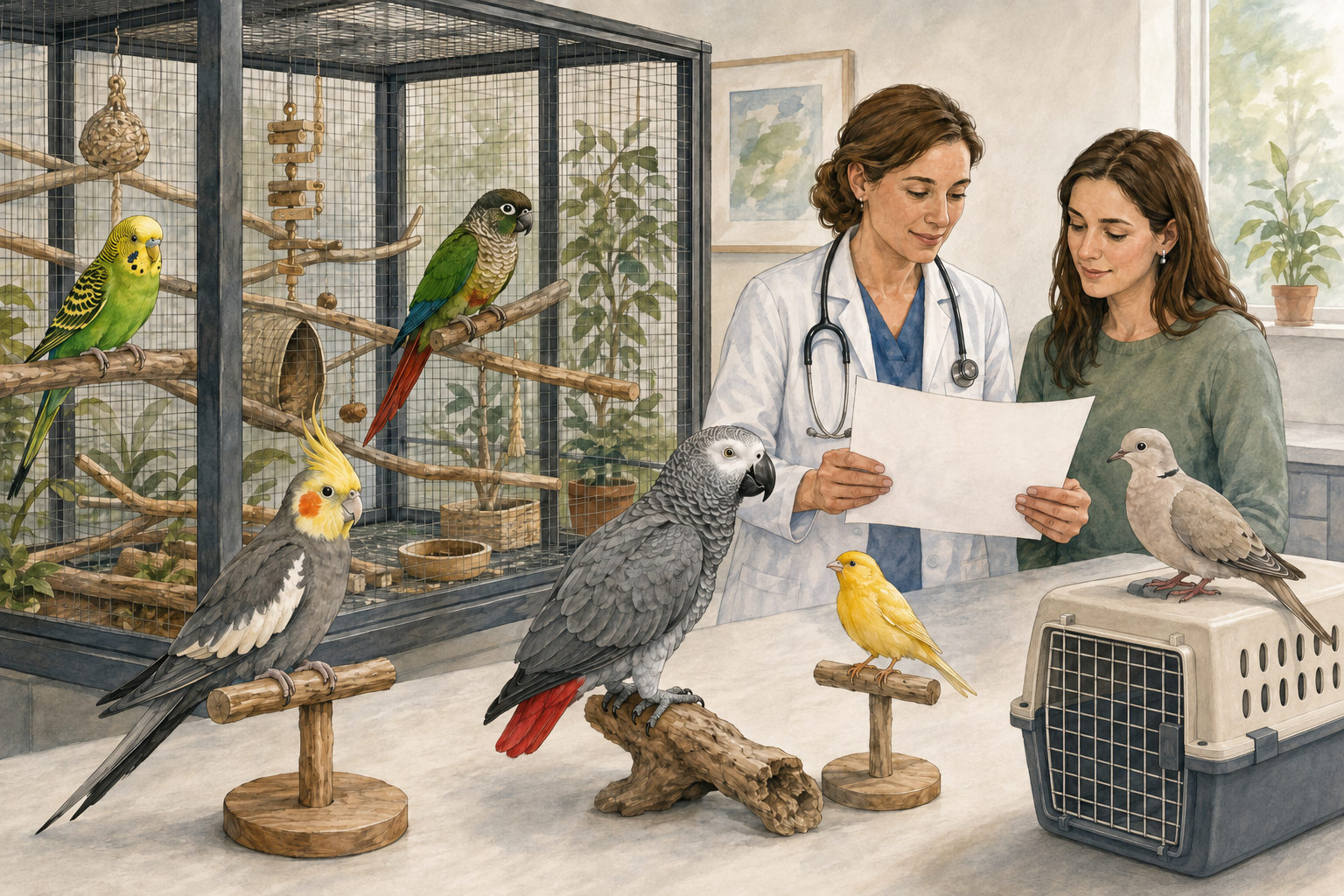
Owner guidance for parrots, parakeets, cockatiels, cockatoos, macaws, conures, finches, canaries, doves and other companion birds.
IN THIS GUIDEUse groups to begin—not to erase species differencesDesign for movement, safety and healthy lungsSeed-only feeding is not complete nutritionForaging and choice protect behavioral healthA wellness visit looks beyond feathersBirds often hide illness until reserves are lowA female can lay eggs without a maleA bird's respiratory system and curiosity increase riskSupport quietly and seek help nowTrusted sources
KNOW THE BIRD IN FRONT OF YOU
Body size alone does not predict behavior, lifespan or care difficulty.
A budgerigar, African grey, lory and canary differ in diet, social behavior, beak strength, noise, enrichment and disease risk. Scientific name, origin, age, sex and reproductive history help make care safer.
Dailyweight, appetite and droppings awarenessYearlyminimum wellness examinationSpeciesdrives diet and environment
01 · WHICH BIRD?
Use groups to begin—not to erase species differences
| Bird group | Common companions | Care distinction |
|---|---|---|
| Small parrots and parakeets | Budgerigar, parrotlet, Bourke's parrot, lineolated and ring-necked parakeets | Active intelligent birds needing flight space, foraging and careful social management despite small size. |
| Cockatiels and cockatoos | Cockatiel; Goffin's, umbrella, Moluccan and other cockatoos | Produce powder down; cockatoos have exceptionally intense social, noise, dust and enrichment needs. |
| Conures and caiques | Green-cheeked, sun, Jenday and blue-crowned conures; caiques | Highly active parrots; noise, beak strength and arousal differ greatly among species. |
| African greys, Amazons, Pionus and Poicephalus | Congo or Timneh African grey; Amazon; Pionus; Senegal or Meyer's parrot | Long-lived cognitive and social needs; species tendencies affect nutrition, behavior and household fit. |
| Macaws | Mini macaws through blue-and-gold, green-winged, scarlet and hyacinth macaws | Large space, powerful beak, advanced handling, long lifespan and major financial and estate commitments. |
| Lories and lorikeets | Rainbow and red lories or lorikeets | Specialized nectar- and fruit-adapted feeding; liquid-rich diet changes sanitation and droppings management. |
| Finches and canaries | Zebra, society and Gouldian finches; song and color canaries | Small flock or territorial songbirds usually observed more than handled; some have air-sac mite or thread-entanglement risks. |
| Doves and pigeons | Ring-necked and diamond doves; domestic pigeons | Different diet, beak, perching and social behavior from parrots; need level platforms and species-specific guidance. |
| Other specialists | Eclectus, Vasa parrots, rosellas, toucans and softbills | May have specialized gastrointestinal, iron, diet, space or behavior needs requiring experienced guidance. |
Important: This orientation list is informed by Lafeber's companion-bird index. It is not a care sheet; verify the exact species and obtain guidance tailored to that bird.
02 · HOME & AIR QUALITY
Design for movement, safety and healthy lungs
- Use the largest practical enclosure with bar spacing and strength appropriate to the bird; wings, head and feet must not become trapped.
- Provide varied natural-diameter perches and platform options; do not rely on one uniform dowel or abrasive perch.
- Locate the enclosure near family activity but away from kitchen fumes, smoke, aerosols, candles, fragrance products and heating or cooling vents.
- Overheated nonstick cookware and some coated appliances can release fumes that are rapidly fatal to birds; keep birds out of the kitchen.
- Provide a predictable dark quiet sleep period appropriate to the species and manage reproductive light cycles with veterinary guidance.
- Allow safe flight or species-appropriate exercise in a bird-proofed room with windows, mirrors, doors, fans, water and other pets secured.
03 · NUTRITION
Seed-only feeding is not complete nutrition
- Build the staple diet for the exact species; many parrots benefit from a formulated diet plus measured vegetables and other approved foods.
- Convert diets gradually while tracking body weight and actual intake—a bird can starve beside an unfamiliar full bowl.
- Lories and nectar-adapted birds require specialized feeding and sanitation; finches, canaries, doves and softbills need their own plans.
- Avoid avocado, chocolate, caffeine, alcohol, high-salt foods and unsafe plants; ask before offering uncertain foods.
- Clean fresh-water and food dishes daily and position them to limit fecal contamination.
- Do not add vitamins, antibiotics or supplements to water unless prescribed; dosing is unreliable and taste changes may reduce intake.
04 · BEHAVIOR & ENRICHMENT
Foraging and choice protect behavioral health
- Teach step-up, stationing, carrier entry and scale use with positive reinforcement rather than punishment.
- Rotate shredding, chewing, manipulation and food-search activities suited to beak size and species.
- Offer social contact without forcing handling; some finches and canaries prefer interaction at a distance.
- Touch parrots mainly on the head and neck unless care requires otherwise; stroking the back or under wings may encourage reproductive behavior.
- Watch for fear, guarding, overstimulation and escape routes before a bite; yelling, hitting or beak grabbing damages trust.
- Feather damage requires medical and environmental evaluation. A collar or behavior label alone does not diagnose the cause.
05 · AVIAN VETERINARY CARE
A wellness visit looks beyond feathers
- Arrange an examination with an avian-experienced veterinarian after acquisition and at least annually; some birds need more frequent care.
- Bring diet, supplements, source history, sleep schedule, enclosure photographs and recent weight trend.
- The veterinarian may recommend sex testing, fecal evaluation, bloodwork, infectious-disease testing or imaging based on risk.
- Ask about microchip or leg-band identification, travel rules and an escape-recovery plan.
- Quarantine new birds in a separate airspace when possible and use separate equipment until cleared for introduction.
- Do not bring a new bird to shows, boarding or the resident flock before health and biosecurity planning.
06 · DAILY MONITORING
Birds often hide illness until reserves are low
- Know the normal morning weight on a gram scale and ask what change is concerning for that individual.
- Observe appetite, food handling, voice, activity, balance, perching, breathing and interaction before cleaning.
- Learn the normal fecal, urate and urine portions of droppings; food color and watery urine can change appearance without true diarrhea.
- Check feet, beak, nails, eyes, nostrils, feathers and vent without forceful restraint.
- Record video of altered breathing, movement, vocalization or episodes from a safe distance.
- Do not wait several days on a fluffed quiet bird that is eating less or sitting lower than usual.
07 · REPRODUCTIVE HEALTH
A female can lay eggs without a male
- Know or test sex when it affects planning, but appearance and behavior do not reliably sex every species.
- Avoid dark nest-like spaces, huts and prolonged petting that may encourage reproductive behavior in some parrots.
- Do not remove eggs or change light cycles reflexively; ask for a species-specific plan because actions can stimulate replacement laying.
- Review calcium, complete nutrition, body condition and chronic egg laying with an avian veterinarian.
- Straining, wide stance, tail pumping, weakness, abdominal swelling, cage-floor sitting or reduced droppings may indicate emergency.
08 · HOUSEHOLD HAZARDS
A bird's respiratory system and curiosity increase risk
- Cooking fumes, smoke, carbon monoxide, aerosols, essential-oil diffusers and overheated coated appliances
- Lead or zinc in hardware, jewelry, bells, stained glass, curtain weights, paint or imported toys
- Open windows and doors, ceiling fans, mirrors, toilets, hot pans and uncovered water
- Cats, dogs and ferrets—even a small bite or scratch can be life-threatening
- Frayed rope, fine nesting thread, unsafe clips, gaps and toys that trap toes, tongue or head
- Human medications, cannabis products, toxic plants and unattended electrical cords
Important: After possible fume exposure, metal ingestion, bite injury or toxin contact, move the bird to clean air only if safe and contact emergency care immediately.
09 · EMERGENCY SIGNS
Support quietly and seek help now
- Open-mouth breathing, pronounced tail bobbing, wheezing or blue-gray color
- Sitting on the cage floor, inability to perch, collapse or seizure
- Uncontrolled bleeding, animal bite, major fall, burn or suspected fracture
- Repeated vomiting, severe crop swelling or inability to swallow
- Straining, suspected egg binding, prolapse or marked abdominal swelling
- Sudden neurologic change, toxin exposure or a rapid illness cluster in multiple birds
Important: Minimize handling, keep the bird warm and quiet unless overheating is possible, and call ahead. Do not force food or water into a weak or breathing-compromised bird.
TRUSTED SOURCES
Sources behind this guide
Association of Avian VeterinariansBird-owner care and health resources ↗Association of Avian VeterinariansFind an avian veterinarian ↗Merck Veterinary ManualRoutine care and safety of companion birds ↗Lafeber CompanyCompanion-bird species and group index ↗
Source links are provided so readers can review the underlying guidance. Publication dates and recommendations can change; confirm individual plans with the treating veterinary team.