AVIAN NUTRITION · OWNER GUIDE
Feeding companion birds
by exact species.
Formulated diets, produce, seed, nectar, iron, conversion safety and weight monitoring across companion birds.
IN THIS GUIDEBuild the diet around species biologyMake intake visible and repeatableUse the correct branch of the feeding planRecalculate when the animal changesAsk questions marketing cannot answerAvoid well-intended imbalancesWeight is only one outcomeAppetite changes can be medical emergenciesTrusted sources
NUTRITION IS MEDICINE
A feeding plan should be complete, measurable and adjustable.
Write down every food, treat, supplement, forage, prey item and flavored medication. Review the full list with a veterinarian familiar with the species before making major changes.
Measurethe amount actually offeredTrackweight and body conditionChange slowlyunless urgent care directs otherwise
01 · DAILY FOUNDATION
Build the diet around species biology
- Confirm exact species before choosing a diet.
- For many parrots, use an appropriate formulated staple with measured plant foods rather than seed alone.
- Finches, canaries, pigeons, lories and softbills require group-specific plans.
- Prepare wet nectar or fruit-based foods hygienically and replace them before spoilage.
- Provide clean water and wash dishes every day.
02 · PORTIONS & ROUTINE
Make intake visible and repeatable
- Use a gram scale and record weight at a consistent time.
- Measure food offered and inspect what is actually swallowed rather than only husks.
- Convert diets gradually while monitoring weight and droppings.
- Provide multiple feeding stations in groups.
- Use foraging to increase behavior without making calories unknowable.
03 · SPECIES-SPECIFIC STARTING POINTS
Use the correct branch of the feeding plan
| Bird group | Usual foundation | Special caution |
|---|---|---|
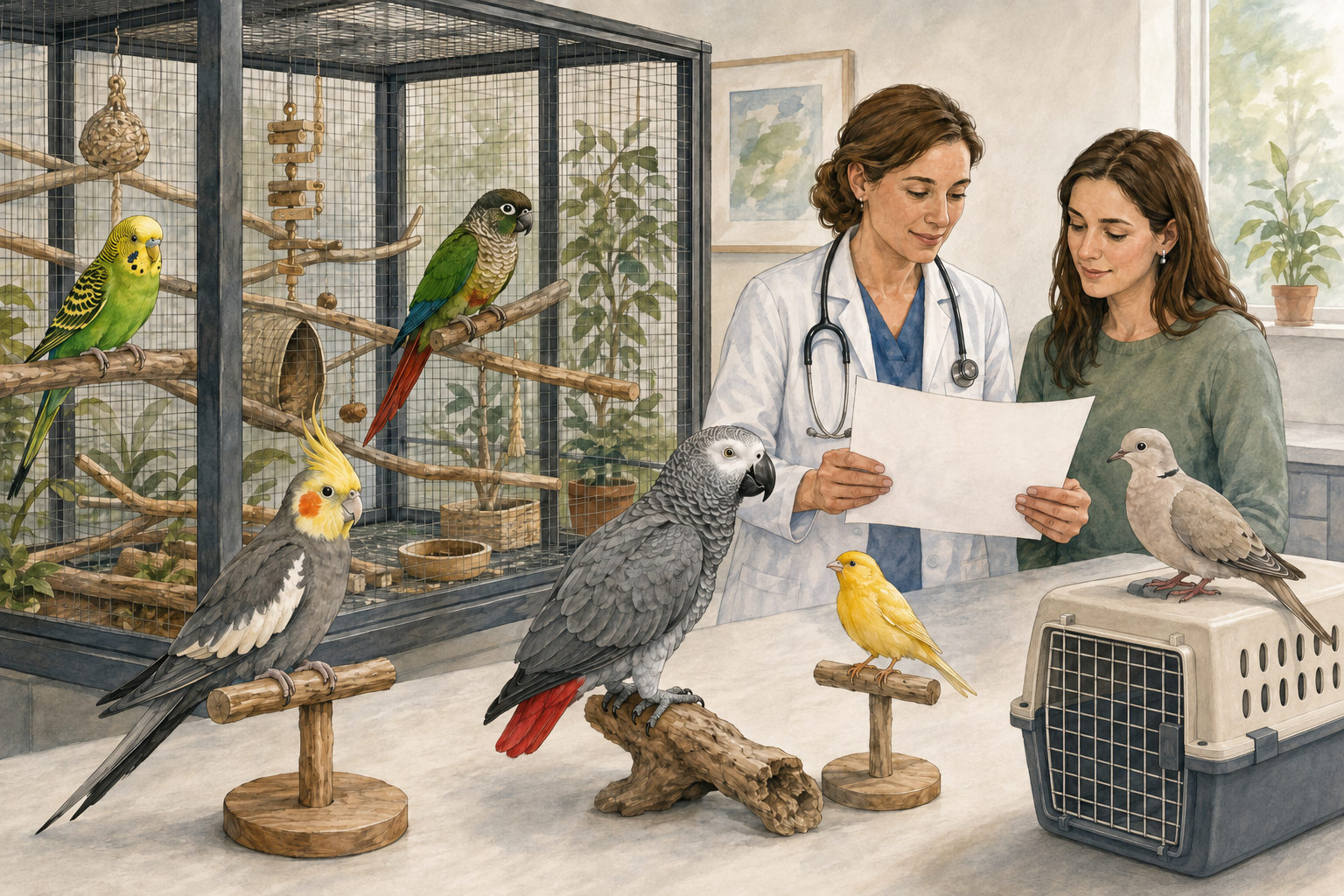
| Budgerigars, cockatiels and many parrots | Species-appropriate formulated food plus measured vegetables and other veterinarian-approved foods | Never starve a bird into accepting a new diet |
| Finches and canaries | Species-specific balanced plan with appropriate seed/formulated components and greens | Monitor flock competition and body weight |
| Pigeons and doves | Balanced pigeon/dove ration selected for life stage | Grit and supplements are not interchangeable |
| Lories and lorikeets | Commercial lory nectar plus species-appropriate produce | Wet food spoils quickly; hygiene is essential |
| Toucans, mynahs and other softbills | Specialist diet chosen for species, often with iron management | Do not assume a parrot pellet is suitable |
04 · LIFE STAGE & HEALTH
Recalculate when the animal changes
- Growth, pregnancy, lactation and heavy work can change energy and nutrient needs substantially.
- Senior status does not automatically mean one particular food; appetite, teeth, muscle, organs and activity guide the plan.
- Weight loss should preserve muscle and should not be rushed.
- Dental, gastrointestinal, urinary, endocrine, kidney, liver and mobility disorders may require a veterinary therapeutic plan.
- Recheck the diet after a diagnosis, medication change, surgery, major weight change or prolonged appetite change.
05 · LABELS & CLAIMS
Ask questions marketing cannot answer
- Confirm the food is intended for the exact species and appropriate life stage.
- Look for a nutritional-adequacy statement when packaged complete diets are used.
- Ask who formulates the diet, what quality controls are used and whether nutrient analysis is available.
- An ingredient list alone cannot show digestibility, balance, safety or manufacturing consistency.
- Natural, premium, holistic and human-grade are not substitutes for nutritional adequacy or veterinary assessment.
06 · RISKS & COMMON MISTAKES
Avoid well-intended imbalances
- Abruptly removing familiar food during conversion
- Seed-only diets for species that require broader nutrition
- Sugar water or fruit alone for nectar-adapted birds
- Unsupervised calcium, vitamin or iron supplementation
- Avocado, alcohol, caffeine, chocolate and unsafe household foods
Important: Never copy a therapeutic, homemade, raw, supplement or weight-loss plan from another animal without veterinary guidance.
07 · MONITORING
Weight is only one outcome
- Gram weight and keel muscle
- Droppings, urine and urates
- Beak, feathers, feet and molt
- Appetite, food manipulation and regurgitation
- Activity, voice and breathing
08 · WHEN TO CALL
Appetite changes can be medical emergencies
- Not eating, rapid weight loss or sitting on the enclosure floor
- Repeated vomiting or crop swelling
- Open-mouth breathing or pronounced tail bobbing
- Weak grip, collapse or seizure
- Possible toxin, metal or fume exposure
Important: Do not force-feed, syringe water, change insulin, give human remedies or delay emergency care unless a veterinary professional gives case-specific instructions.
TRUSTED SOURCES
Sources behind this guide
Association of Avian VeterinariansBird-owner health and nutrition resources ↗Lafeber CompanyVeterinary-reviewed companion-bird education ↗
Source links are provided so readers can review the underlying guidance. Publication dates and recommendations can change; confirm individual plans with the treating veterinary team.