DOGS AND CATS · OWNER EDUCATION
Diabetes Mellitus
A disorder of blood-sugar regulation that can increase thirst and urination, affect appetite and weight, and require careful veterinary-directed monitoring.
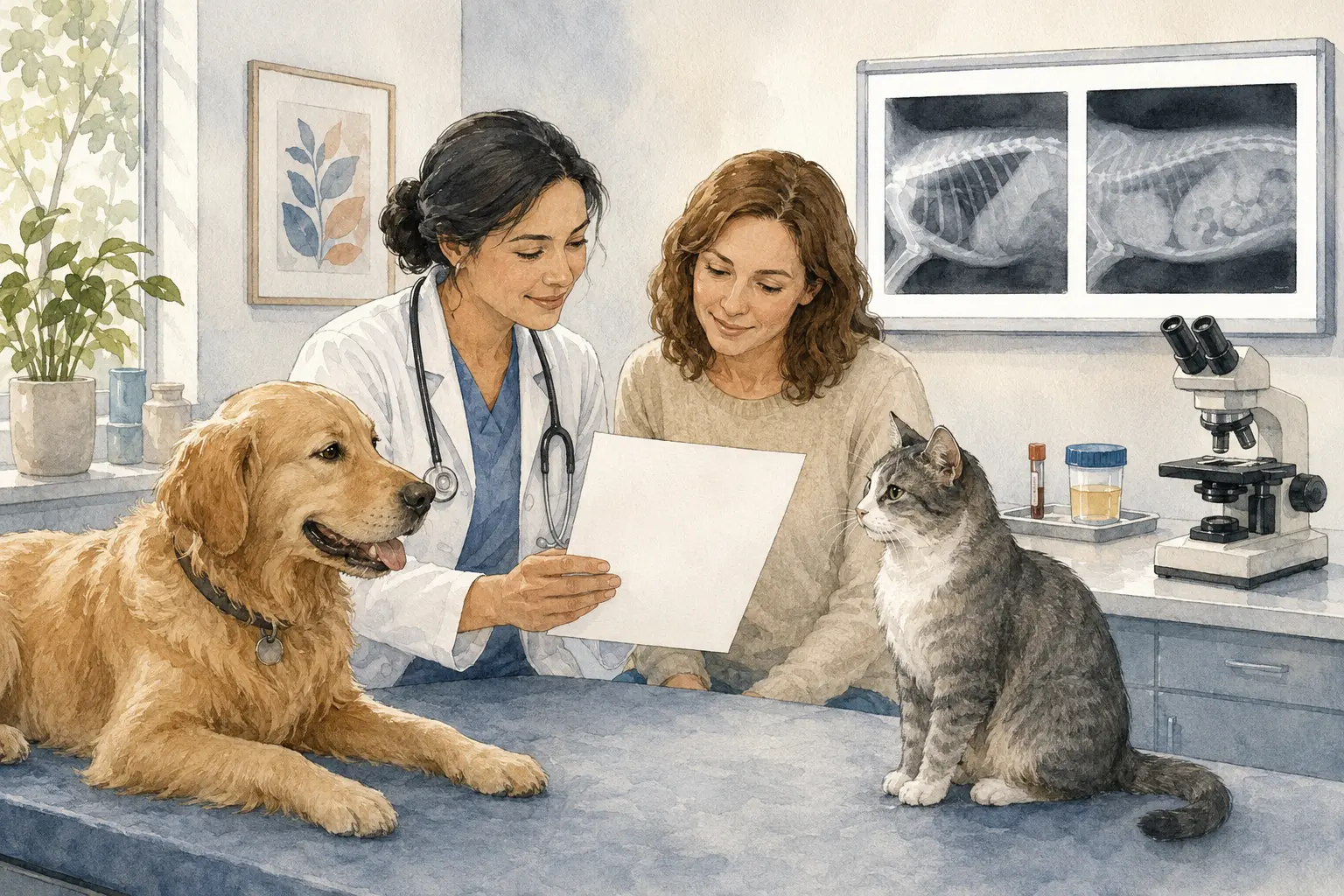
THE SHORT VERSION
Understanding supports better veterinary conversations.
Diabetes mellitus involves an inability to regulate blood sugar normally. Dogs and cats can differ in the underlying process, treatment choices and potential for remission, so management must be individualized.
What is this condition?
Diabetes mellitus involves an inability to regulate blood sugar normally. Dogs and cats can differ in the underlying process, treatment choices and potential for remission, so management must be individualized.
Which animals can be affected?
Risk factors, examination findings and management can differ between species and individual patients.
Why can it happen?
- Insufficient insulin production, impaired insulin response or contributing medical conditions.
- Body weight, age, inflammation, medications and other disease can influence risk.
- Species differences matter; a canine plan should not automatically be applied to a cat.
What might an owner notice?
- Increased drinking, increased urination and unexplained weight loss.
- Changes in appetite, reduced energy or recurrent urinary concerns.
- Vomiting, dehydration, weakness or collapse when complications develop.
How is the problem investigated?
- Blood glucose, chemistry testing and urinalysis.
- Additional tests to distinguish stress-related changes, assess concurrent illness or monitor control.
- A veterinarian-guided glucose monitoring plan when needed.
What might treatment involve?
- Species-appropriate veterinary management that may include insulin or other carefully selected therapy.
- Diet planning, monitoring and evaluation for concurrent disease.
- Education about recognizing low blood sugar and when to seek emergency care.
This is an overview, not a prescription or a recommendation for a specific individual animal.
What can owners do at home?
- Keep consistent feeding and medication records using the printable medication and appetite trackers.
- Follow the precise veterinary plan for missed meals, missed doses and monitoring.
- Bring changes in thirst, weight, urination or behavior to the veterinary team promptly.
Avoid actions that could make care less safe.
- Never adjust insulin or another diabetes medication independently.
- Do not give medication when the prescribed sick-day instructions are unclear—call the veterinarian.
- Do not give human medications, leftover prescriptions or supplements without veterinary approval.
- Do not stop, increase, decrease or double prescribed medication without contacting your veterinary team.
- Do not delay assessment if symptoms are worsening, the animal stops eating or an emergency sign appears.
What can the longer-term outlook involve?
With careful veterinary-directed treatment, many animals maintain good quality of life. Risk and prognosis depend on species, concurrent disease, complications and the individual response to therapy.
Can risk be reduced?
- Maintain a healthy body condition and discuss risk factors during wellness visits.
- Monitor high-risk animals according to veterinary advice.
When should you arrange care?
- Call promptly for increased thirst or urination, unexpected weight changes or changes in food intake.
Seek emergency veterinary care if you notice:
SEEK EMERGENCY VETERINARY CARE- Collapse, marked weakness, tremors, seizures, repeated vomiting, severe dehydration or altered responsiveness.
Sources behind this guide
American Animal Hospital Association: 2026 feline diabetes management guidelinesPrimary veterinary or veterinary-university guidance ↗American Animal Hospital Association veterinary guidelinesPrimary veterinary or veterinary-university guidance ↗Cornell University College of Veterinary Medicine: feline health topicsPrimary veterinary or veterinary-university guidance ↗Content last reviewed: August 23, 2026. Review status: veterinary-informed; independent veterinarian review not yet completed.