COMPANION BIRDS · SPECIES GUIDE
Conures, caiques & small parrots
combine energy with a powerful beak.
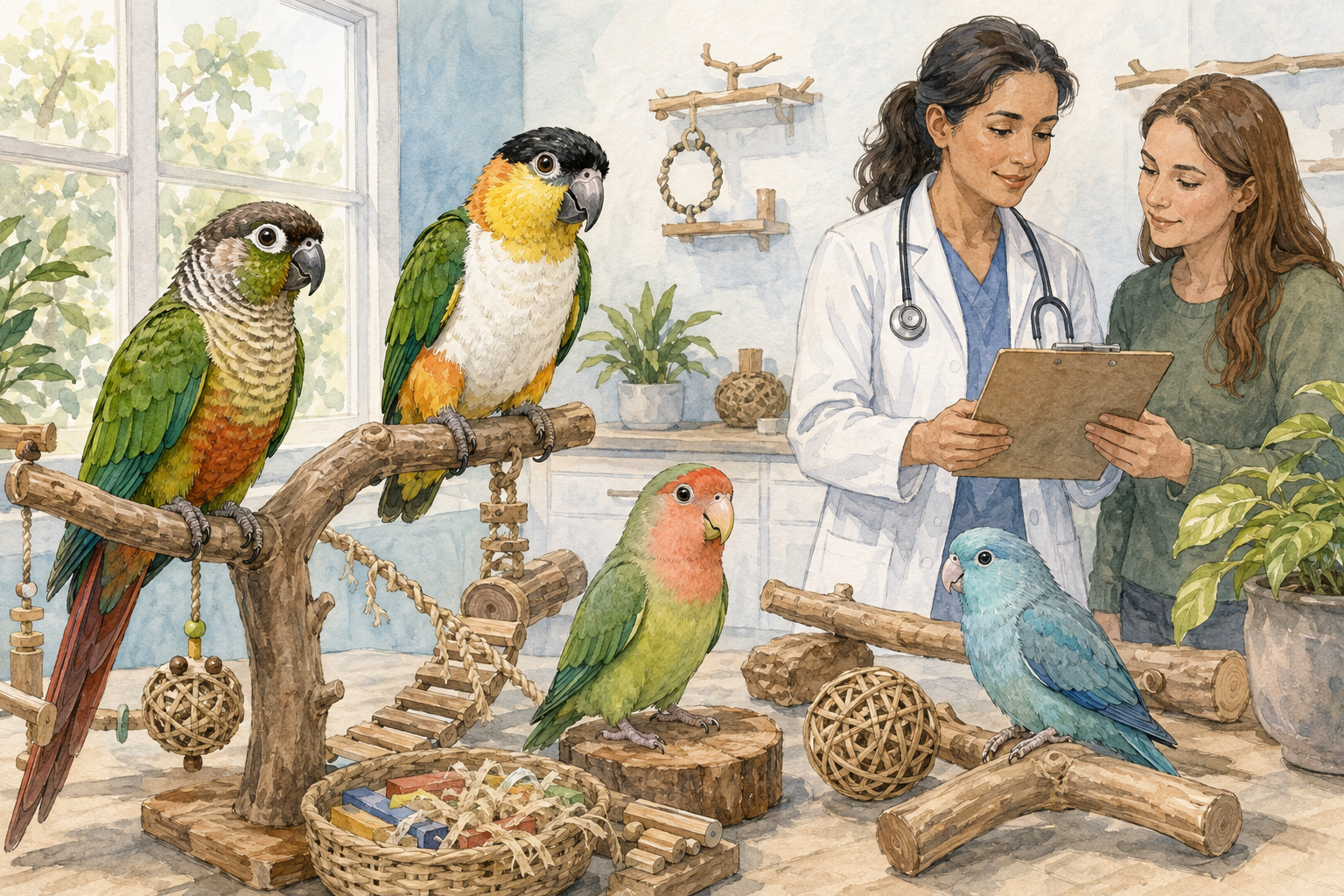
Care for conures, caiques, parrotlets, lovebirds and related small parrots, including behavior, housing, nutrition and health risks.
IN THIS GUIDERecognize the group without treating every member alikeDesign for the way these birds move and thinkMatch food form and nutrient balance to the speciesKnow the patterns worth discussing earlyEstablish normal before the bird looks sickBirds can decline before illness looks dramaticTrusted sources
IDENTIFY FIRST
Use common names to begin—and scientific identity to confirm.
Size and appearance do not reveal every nutritional, behavioral or medical need. Record species, age, sex, source, reproductive history, diet and household bird exposure for the veterinary team.
Dailyweight, appetite and droppings awarenessAnnualavian wellness examinationForaginga daily behavioral need
01 · WHO IS INCLUDED
Recognize the group without treating every member alike
- Conures include green-cheeked Pyrrhura species and louder Aratinga relatives such as sun and Jenday conures.
- Caiques are stocky Pionites parrots known for intense active play.
- Lovebirds (Agapornis) and parrotlets (Forpus) are small but may be highly territorial.
- Lineolated, Bourke's and other parakeets differ in activity, vocalization and social style.
Important: Hybrids, color mutations and misleading common names occur. Ask an avian veterinarian or experienced taxonomic resource to confirm identity.
02 · HOME, FLIGHT & BEHAVIOR
Design for the way these birds move and think
- Provide flight space, climbing routes, destructible materials and supervised out-of-enclosure movement.
- Choose hardware for beak strength and inspect clips, doors and toys frequently.
- Use foraging and short training sessions to channel energy and improve cooperative care.
- Watch arousal signals and give retreat options; rough play can escalate into biting.
- Supervise around other birds because small parrots can seriously injure cage mates.
03 · NUTRITION
Match food form and nutrient balance to the species
- Base feeding on a species-appropriate formulated diet and measured produce.
- Use seeds and nuts strategically for training rather than unlimited free choice.
- Track body and muscle condition; feather coverage can hide obesity or weight loss.
- Avoid sharing salty, fatty or sugary human snack foods.
- Make diet changes gradually with gram-weight monitoring.
Important: Never convert a diet by removing familiar food abruptly. Track gram weight and observed intake so a bird does not starve beside unfamiliar food.
04 · GROUP-SPECIFIC CONCERNS
Know the patterns worth discussing early
- Behavioral overarousal, territorial biting and reproductive behavior often reflect environment and learning—not dominance.
- Feather damaging behavior requires medical, nutritional and environmental evaluation.
- Conures and related parrots may develop gastrointestinal, liver, respiratory or reproductive disease.
- Lovebirds and small parrots can experience egg binding and chronic egg production.
- Foreign-body ingestion and heavy-metal exposure can cause vomiting, neurologic signs or abnormal droppings.
05 · PREVENTIVE AVIAN MEDICINE
Establish normal before the bird looks sick
- Arrange a post-acquisition and at least annual examination with an avian-experienced veterinarian.
- Bring diet labels, enclosure photographs, sleep schedule, source history and a recent weight trend.
- Discuss sex testing, fecal evaluation, bloodwork, infectious-disease testing and imaging based on species and exposure.
- Quarantine new birds in separate airspace when possible, with dedicated equipment, until medically cleared.
- Train scale use, carrier entry and stationing with positive reinforcement.
- Protect from smoke, aerosols, essential-oil diffusers, heavy metals, ceiling fans, open water and fumes from overheated coated cookware.
06 · EMERGENCY SIGNS
Birds can decline before illness looks dramatic
- Open-mouth breathing, pronounced tail bobbing, blue-gray color or inability to vocalize normally
- Sitting on the enclosure floor, inability to perch, collapse or seizure
- Not eating, repeated vomiting, crop swelling or rapid weight loss
- Animal bite, uncontrolled bleeding, burn, major fall or suspected fracture
- Straining, suspected egg binding, prolapse or marked abdominal swelling
- Possible fume, medication, metal, plant or other toxin exposure
Important: Minimize handling, keep the bird quiet and call ahead. Do not force food or water into a weak, vomiting or breathing-compromised bird.
TRUSTED SOURCES
Sources behind this guide
Association of Avian VeterinariansBird-owner care and health resources ↗Association of Avian VeterinariansFind an avian veterinarian ↗Lafeber CompanyCompanion-bird species orientation ↗
Source links are provided so readers can review the underlying guidance. Publication dates and recommendations can change; confirm individual plans with the treating veterinary team.