CELLS, TISSUE AND INFECTION
Histopathology and Biopsy
Microscopic examination of tissue architecture by a pathologist, often providing more information than a sample of isolated cells.
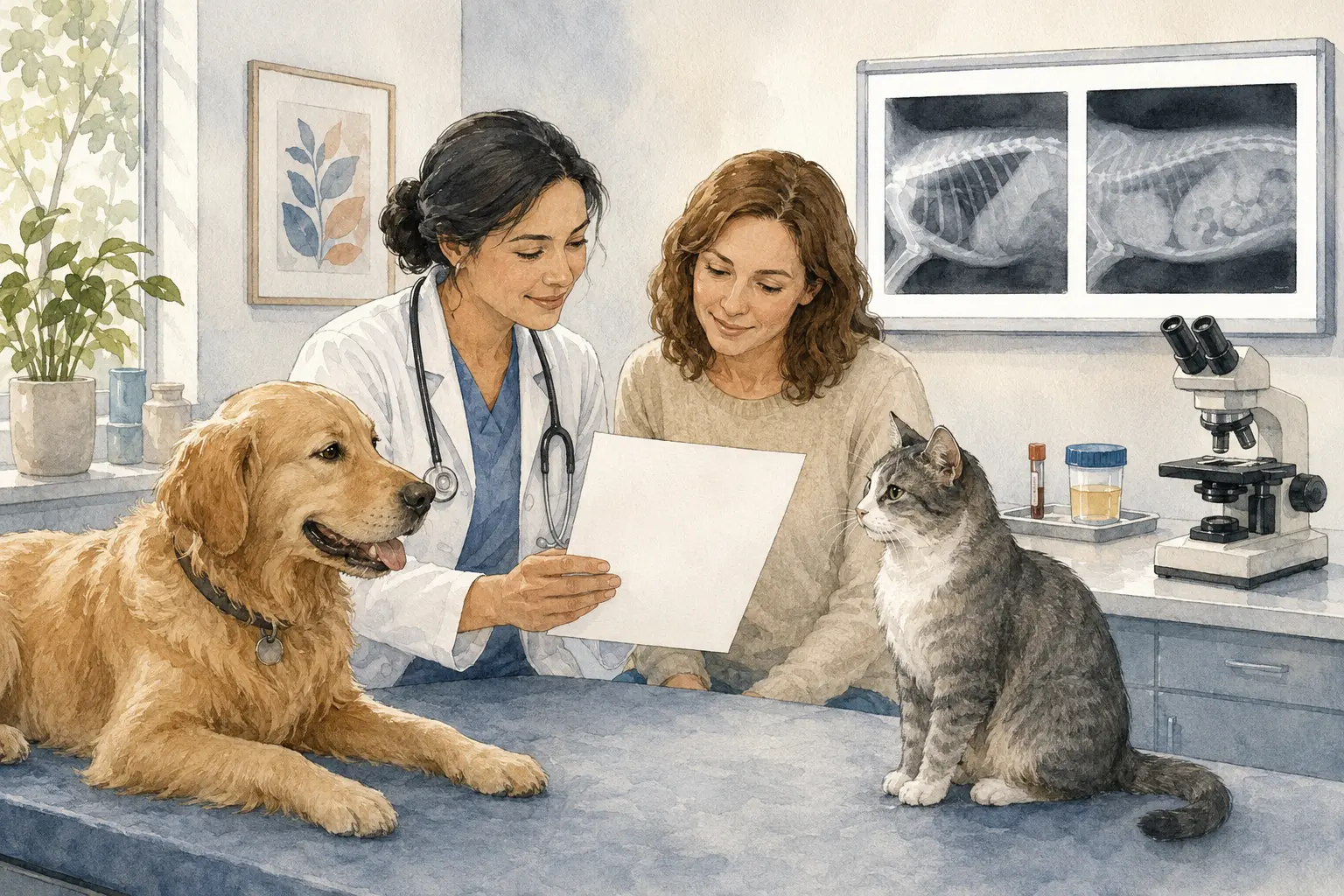
THE SHORT VERSION
Testing helps answer a clinical question.
A biopsy collects a piece of tissue so a pathologist can evaluate how the cells are organized within the larger structure. Histopathology can help classify inflammation, tumors and other disease processes.
What is this test?
A biopsy collects a piece of tissue so a pathologist can evaluate how the cells are organized within the larger structure. Histopathology can help classify inflammation, tumors and other disease processes.
What information can it provide?
- The sample may be collected surgically, endoscopically or by another veterinary-selected technique.
- Tissue is processed, placed on slides and examined by a pathologist.
- The report can address tissue type, margins, inflammation and other relevant features depending on the sample.
- Additional special testing is sometimes recommended when routine staining does not answer the clinical question.
When might your veterinarian recommend it?
- Investigate a lump, skin disorder, intestinal concern or tissue change.
- Clarify inconclusive cytology.
- Help guide treatment, prognosis, surgical planning or specialist referral.
What can owners do before the visit?
- Ask about anesthesia, fasting, medication instructions and wound care.
- Share prior cytology, imaging and medical history.
- Discuss typical reporting time and how the team will communicate the result.
What can this test not tell you by itself?
- A small sample may not represent every part of a lesion.
- Processing and pathologist interpretation take time, which varies by laboratory and case complexity.
- Results must be interpreted alongside the examination, imaging and overall patient goals.
Do not change medication, interpret an abnormal number as a diagnosis or delay urgent treatment without direction from your veterinary team.
Useful questions for your appointment
- Why is biopsy expected to add more information than cytology?
- What are the sampling, anesthesia and recovery considerations?
- How will the result influence treatment or prognosis?