DONKEYS · COMPLETE OWNER GUIDE
Donkey care
requires donkey-specific expectations.
Nutrition, weight, feet, teeth, behavior, preventive medicine and emergencies in domestic donkeys and miniature donkeys.
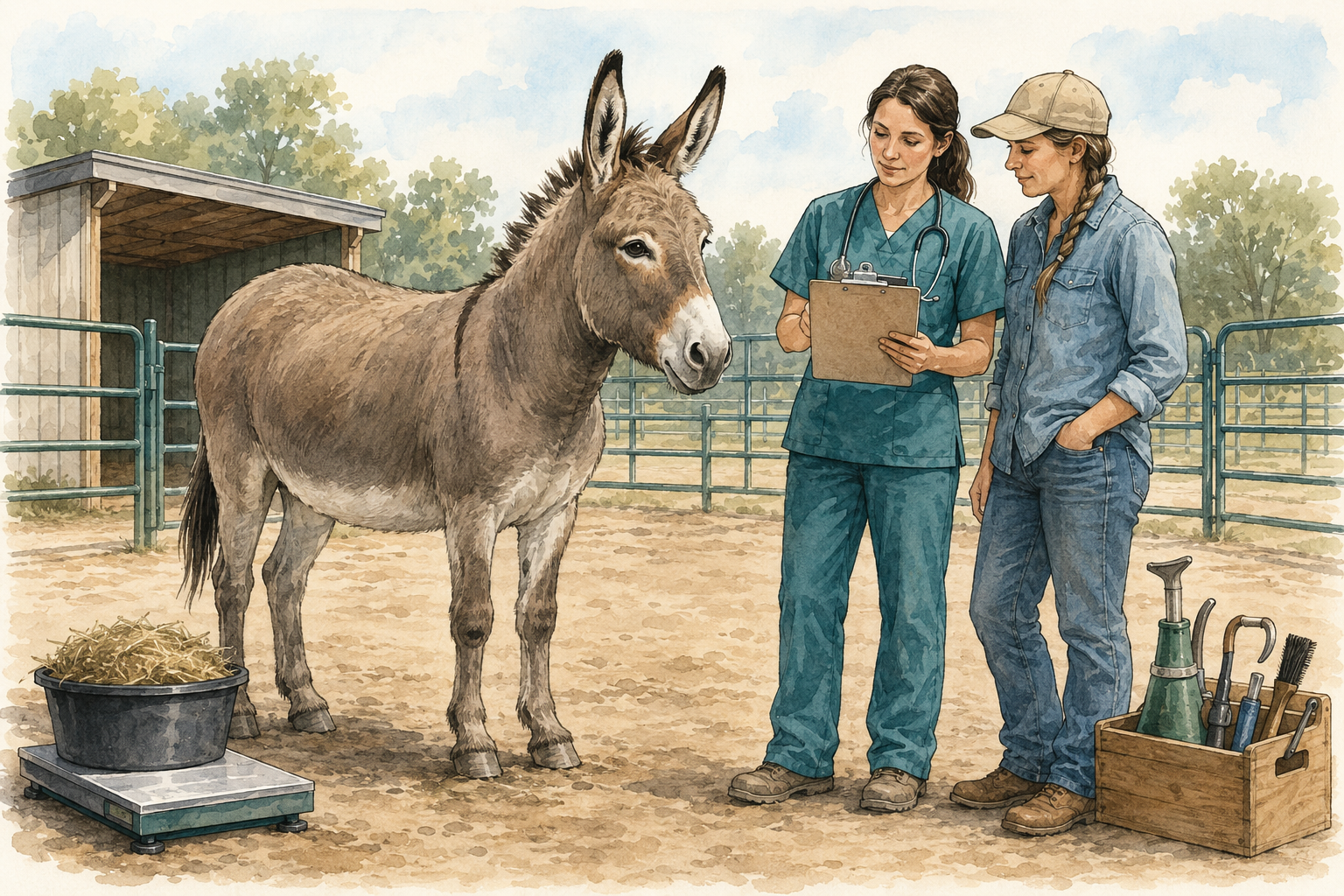
IN THIS GUIDEMiniature, standard and mammoth donkeys need individualized carePrevent obesity without creating hunger or ulcersRoutine care must fit donkey anatomyUse equine guidance through a donkey lensSubtle dullness can be seriousDo not wait for dramatic distressTrusted sources
SPECIES PROFILE
Long ears are the obvious difference; metabolism and behavior matter more.
Donkeys may appear stoic, form intense pair bonds and show illness through quiet withdrawal rather than dramatic signs. Breed, size, age and prior management still matter.
Sparseenergy needs are often lowerQuietpain may be understatedPair bondsocial planning matters
01 · KNOW THE DONKEY
Miniature, standard and mammoth donkeys need individualized care
- Confirm mature size, body condition, dental age and reproductive status.
- Learn normal behavior, appetite, manure and social relationships.
- Do not use horse weight tapes or medication estimates blindly.
- Assess fat deposits at neck, back and rump; obesity can be missed.
- Plan companions and separations carefully because bonded donkeys may become distressed.
02 · NUTRITION
Prevent obesity without creating hunger or ulcers
- Use mature lower-energy forage appropriate to dental health and testing.
- Restrict rich pasture with a safe veterinarian-guided plan when needed.
- Avoid routine grain and calorie-dense horse feed unless specifically indicated.
- Provide clean water, salt and balanced minerals without excess calories.
- Never crash diet an obese donkey; rapid negative energy balance can cause hyperlipemia.
03 · FEET, TEETH & SKIN
Routine care must fit donkey anatomy
- Use a farrier familiar with donkey hoof shape and stance.
- Check for thrush, white-line disease, abscesses and subtle laminitis.
- Schedule dental assessment; sharp points, missing teeth and periodontal disease affect intake.
- Provide dry standing areas and shelter from prolonged cold rain.
- Inspect thick coats for skin disease, wounds and body-condition change.
04 · PREVENTIVE MEDICINE
Use equine guidance through a donkey lens
- Review vaccination based on region and exposure.
- Use fecal egg counts and evidence-based parasite control.
- Discuss bloodwork and testing for metabolic disease, liver disease or hyperlipemia risk.
- Maintain identification, travel documentation and quarantine.
- Ask how drug dosing and toxicity differ in donkeys before treatment.
05 · PAIN & ILLNESS
Subtle dullness can be serious
- Reduced interest in companions, lowered head or unusual stillness
- Eating slowly, selective feeding or leaving forage
- Fewer droppings, altered lying time or reluctance to walk
- Warm feet, stronger digital pulses or shortened stride
- Weight loss, swelling, discharge, cough or changed breathing
Important: A donkey that stops eating is an urgent patient because hyperlipemia can develop, especially with obesity, pregnancy, stress or other illness.
06 · EMERGENCIES
Do not wait for dramatic distress
- Refusal of food, markedly reduced manure or colic behavior
- Recumbency, collapse, severe weakness or neurologic signs
- Choke, breathing difficulty or uncontrolled bleeding
- Severe lameness, suspected laminitis, fracture or deep hoof wound
- Eye pain or injury
- Prolonged labor, retained placenta or sick foal
Important: If a bonded companion must accompany the patient, coordinate safe transport and hospital arrangements before loading.
TRUSTED SOURCES
Sources behind this guide
American Association of Equine PractitionersEquine owner health resources ↗Merck Veterinary ManualHorse-owner health information ↗The Donkey SanctuaryDonkey-specific owner resources ↗
Source links are provided so readers can review the underlying guidance. Publication dates and recommendations can change; confirm individual plans with the treating veterinary team.