DOMESTIC EQUINE · ORAL HEALTH
Dental health
in domestic equines.
Routine oral examinations, signs of dental pain, dental radiographs and equine odontoclastic tooth resorption and hypercementosis in horses, donkeys and mules.
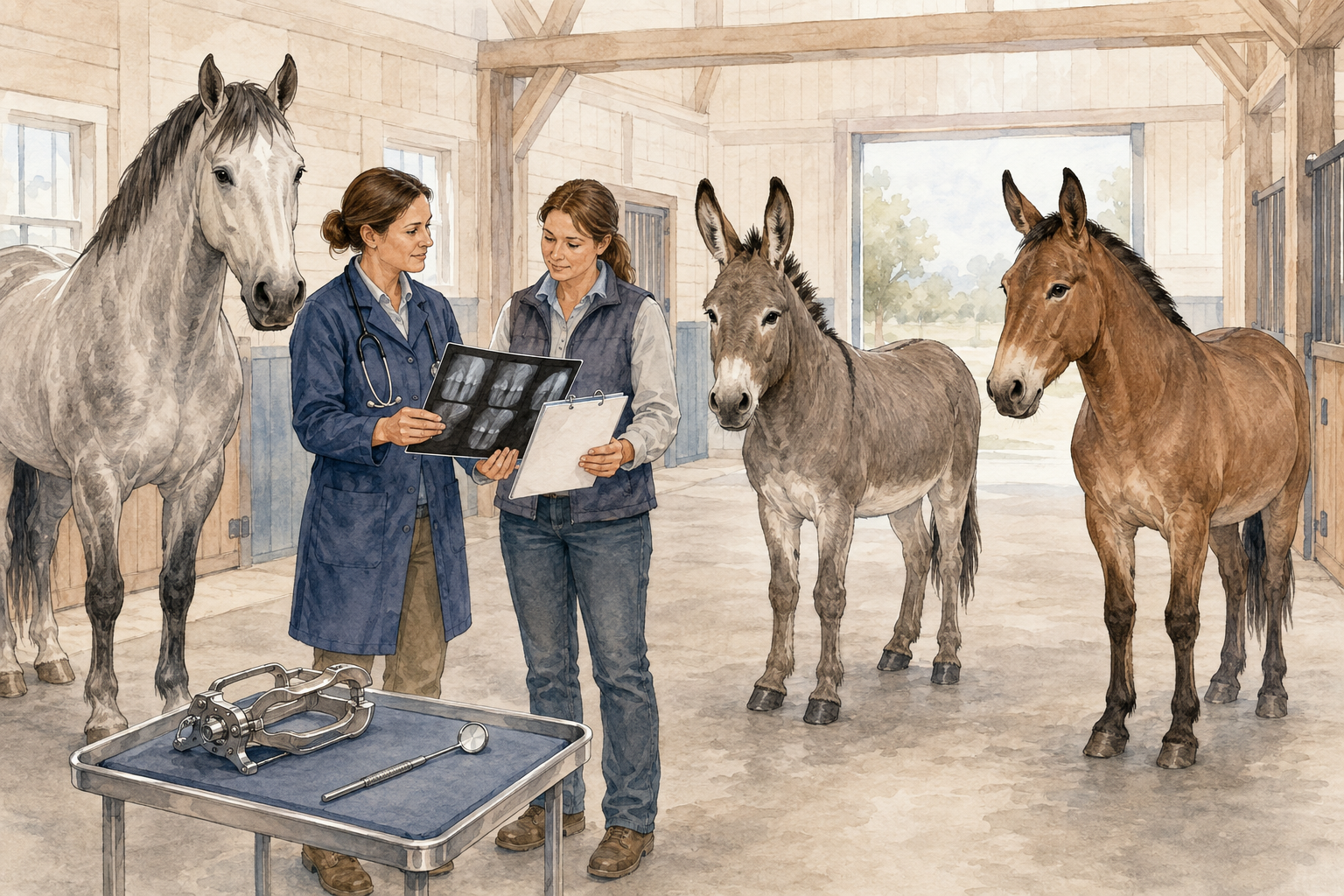
MORE THAN SHARP POINTS
Equine dental disease includes periodontal, fractured, infected and resorptive teeth.
Dental care should be based on age, species, anatomy, prior findings and clinical signs. Floating corrects selected overgrowths; it does not treat every painful dental condition.
Changes that deserve evaluation
- Dropping partially chewed feed or forming quids
- Long fibers or poorly digested feed in manure
- Weight loss, slow eating or altered chewing
- Facial swelling, nasal discharge or foul odor
- Resistance to the bit, head tossing or behavior change
- Incisor changes, receding gums, draining tracts or difficulty grazing
What proper assessment may require
- Safe restraint and appropriately selected sedation
- Bright light, mirror or oral endoscope and a full-mouth speculum
- Systematic examination and dental charting
- Dental radiographs when roots, bone, infection, fracture or resorption are concerns
- A treatment plan that avoids unnecessary removal of normal tooth material
Equine odontoclastic tooth resorption and hypercementosis (EOTRH)
This painful progressive condition most often affects older equids and commonly involves incisors and canine teeth, although other teeth may be affected. Early disease may not be obvious without radiographs. Bulbous tooth roots, gum recession, draining tracts, incisor sensitivity or reluctance to bite firm treats may raise concern.
Follow the diagnosis—not a calendar alone
- Keep dental charts and radiographs for comparison.
- Follow feeding instructions after extraction or treatment.
- Monitor body weight, chewing, manure and willingness to graze.
- Call for swelling, fever, persistent bleeding, worsening discharge or refusal to eat.
TRUSTED SOURCES
Sources behind this guide
Source links are provided so readers can review the underlying guidance. Publication dates and recommendations can change; confirm individual plans with the treating veterinary team.