DOMESTIC EQUINE · ENDOCRINE HEALTH
Metabolic disease &
laminitis risk.
Understanding insulin dysregulation, equine metabolic syndrome, pituitary pars intermedia dysfunction and practical prevention in horses, donkeys and mules.
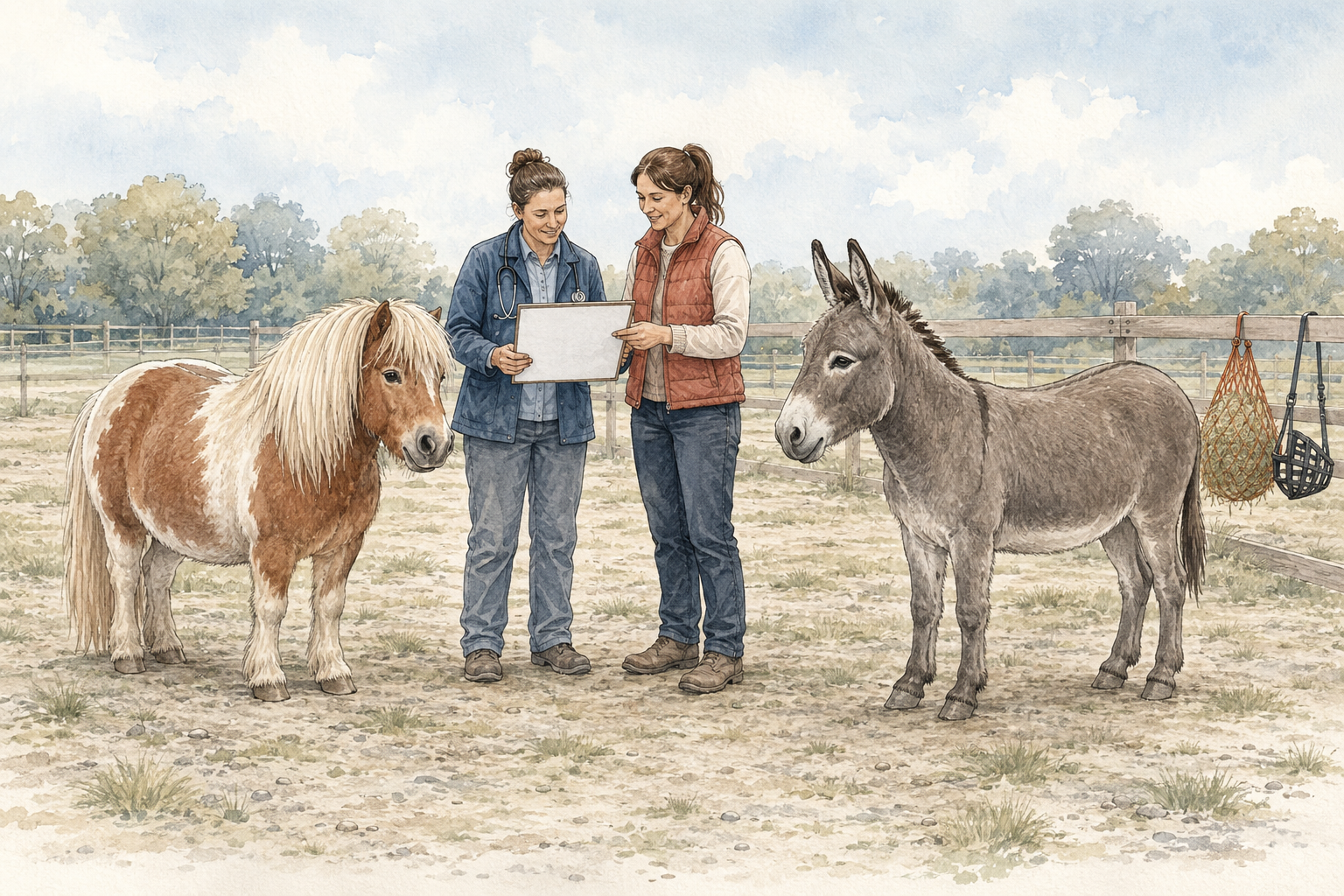
RELATED—NOT IDENTICAL
Equine metabolic syndrome and pituitary disease require different testing and management.
Equine metabolic syndrome centers on insulin dysregulation and laminitis risk. Pituitary pars intermedia dysfunction is an age-associated endocrine disorder that may also affect insulin regulation. Some equids have both.
Who should be assessed
- Easy keepers, regional fat deposits or obesity
- Prior laminitis or unexplained hoof rings
- Cresty neck, abnormal fat pads or difficulty losing weight
- Older equids with delayed shedding, muscle loss, increased drinking or recurrent infection
- Donkeys and ponies living on rich pasture or calorie-dense diets
One normal value may not answer the question
The veterinarian may use resting or dynamic insulin testing, glucose measurements and tests for pituitary pars intermedia dysfunction. Recent feed, stress, pain, season, medications and laboratory method can affect interpretation.
Reduce risk without causing nutrient deficiency
- Base the diet on tested forage when possible.
- Control pasture access using a veterinary nutrition plan.
- Avoid sudden starvation or severe restriction—especially in donkeys.
- Provide appropriate protein, vitamins and minerals while controlling calories and nonstructural carbohydrate.
- Use species-appropriate body and neck scoring, weight estimates and photographs.
- Coordinate veterinary care with an experienced farrier.
Call immediately
- Sudden lameness or reluctance to move
- Shifting weight or standing with the forefeet stretched forward
- Heat in the feet or stronger-than-usual digital pulses
- Turning painfully or walking as if on eggshells
TRUSTED SOURCES
Sources behind this guide
Source links are provided so readers can review the underlying guidance. Publication dates and recommendations can change; confirm individual plans with the treating veterinary team.