DOMESTIC EQUINE NUTRITION · OWNER GUIDE
Feeding horses, donkeys and mules
through forage and measurement.
Forage, body condition, minerals, metabolic risk, dental function and feeding emergencies across domestic equines.
IN THIS GUIDEBuild the diet around species biologyMake intake visible and repeatableUse the correct branch of the feeding planRecalculate when the animal changesAsk questions marketing cannot answerAvoid well-intended imbalancesWeight is only one outcomeAppetite changes can be medical emergenciesTrusted sources
NUTRITION IS MEDICINE
A feeding plan should be complete, measurable and adjustable.
Write down every food, treat, supplement, forage, prey item and flavored medication. Review the full list with a veterinarian familiar with the species before making major changes.
Measurethe amount actually offeredTrackweight and body conditionChange slowlyunless urgent care directs otherwise
01 · DAILY FOUNDATION
Build the diet around species biology
- Base the plan on suitable forage and analyze hay when precision matters.
- Provide abundant clean water and appropriate salt access.
- Balance minerals for the forage and region without stacking fortified products.
- Use concentrates only as needed for life stage, work, body condition or disease.
- Donkeys and many mules may require lower-energy forage and tighter weight management than horses.
02 · PORTIONS & ROUTINE
Make intake visible and repeatable
- Estimate or weigh forage and concentrates rather than feeding by scoop size.
- Track body condition, muscle and regional fat such as neck crest.
- Make feed changes gradually.
- Divide concentrate meals and avoid large starch loads.
- Reassess after dental change, pasture transition, work change or illness.
03 · SPECIES-SPECIFIC STARTING POINTS
Use the correct branch of the feeding plan
| Equine | Planning emphasis | Watch closely |
|---|---|---|
| Horse | Forage quality, work level, life stage and body condition | Starch load, ulcers, dental function and metabolic risk |
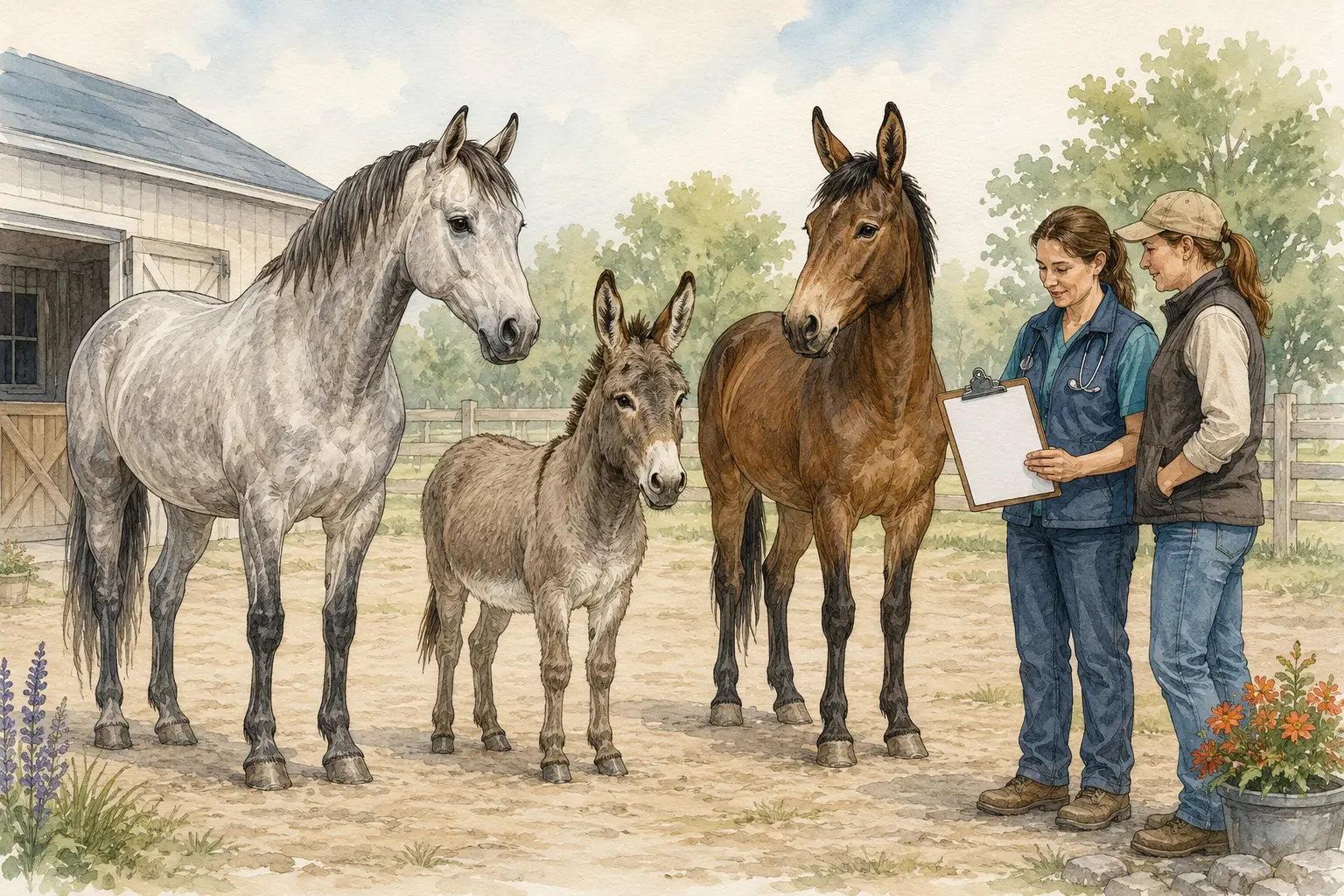
| Donkey | Lower-energy forage, weight control and uninterrupted safe intake | Obesity, hyperlipemia, subtle pain and dental disease |
| Mule | Individualized between donkey and horse tendencies; assess workload | Never assume horse portions or behavior apply |
04 · LIFE STAGE & HEALTH
Recalculate when the animal changes
- Growth, pregnancy, lactation and heavy work can change energy and nutrient needs substantially.
- Senior status does not automatically mean one particular food; appetite, teeth, muscle, organs and activity guide the plan.
- Weight loss should preserve muscle and should not be rushed.
- Dental, gastrointestinal, urinary, endocrine, kidney, liver and mobility disorders may require a veterinary therapeutic plan.
- Recheck the diet after a diagnosis, medication change, surgery, major weight change or prolonged appetite change.
05 · LABELS & CLAIMS
Ask questions marketing cannot answer
- Confirm the food is intended for the exact species and appropriate life stage.
- Look for a nutritional-adequacy statement when packaged complete diets are used.
- Ask who formulates the diet, what quality controls are used and whether nutrient analysis is available.
- An ingredient list alone cannot show digestibility, balance, safety or manufacturing consistency.
- Natural, premium, holistic and human-grade are not substitutes for nutritional adequacy or veterinary assessment.
06 · RISKS & COMMON MISTAKES
Avoid well-intended imbalances
- Abrupt pasture or concentrate changes
- Moldy, dusty or contaminated feed
- Unrestricted rich pasture in animals at metabolic or laminitis risk
- Horse-sized grain portions for donkeys by assumption
- Feeding immediately before or after intense work without a plan
Important: Never copy a therapeutic, homemade, raw, supplement or weight-loss plan from another animal without veterinary guidance.
07 · MONITORING
Weight is only one outcome
- Appetite, chewing, quidding and choke risk
- Manure, water intake and colic behavior
- Weight, topline and neck crest
- Hoof heat, digital pulses and movement
- Senior dental function and ability to use forage
08 · WHEN TO CALL
Appetite changes can be medical emergencies
- Choke, feed or saliva from nostrils
- Repeated rolling, flank watching or reduced manure
- Refusal of food—especially in donkeys at hyperlipemia risk
- Laminitis signs or severe lameness
- Weakness, tremors or suspected feed toxin
Important: Do not force-feed, syringe water, change insulin, give human remedies or delay emergency care unless a veterinary professional gives case-specific instructions.
TRUSTED SOURCES
Sources behind this guide
American Association of Equine PractitionersVeterinarian-reviewed horse-owner resources ↗Merck Veterinary ManualVeterinary species care and nutrition reference ↗
Source links are provided so readers can review the underlying guidance. Publication dates and recommendations can change; confirm individual plans with the treating veterinary team.