DOMESTIC EQUINE · COMFORT
Recognizing pain
in domestic equines.
How horses, donkeys and mules may show acute or chronic pain through expression, posture, movement, appetite and social behavior.
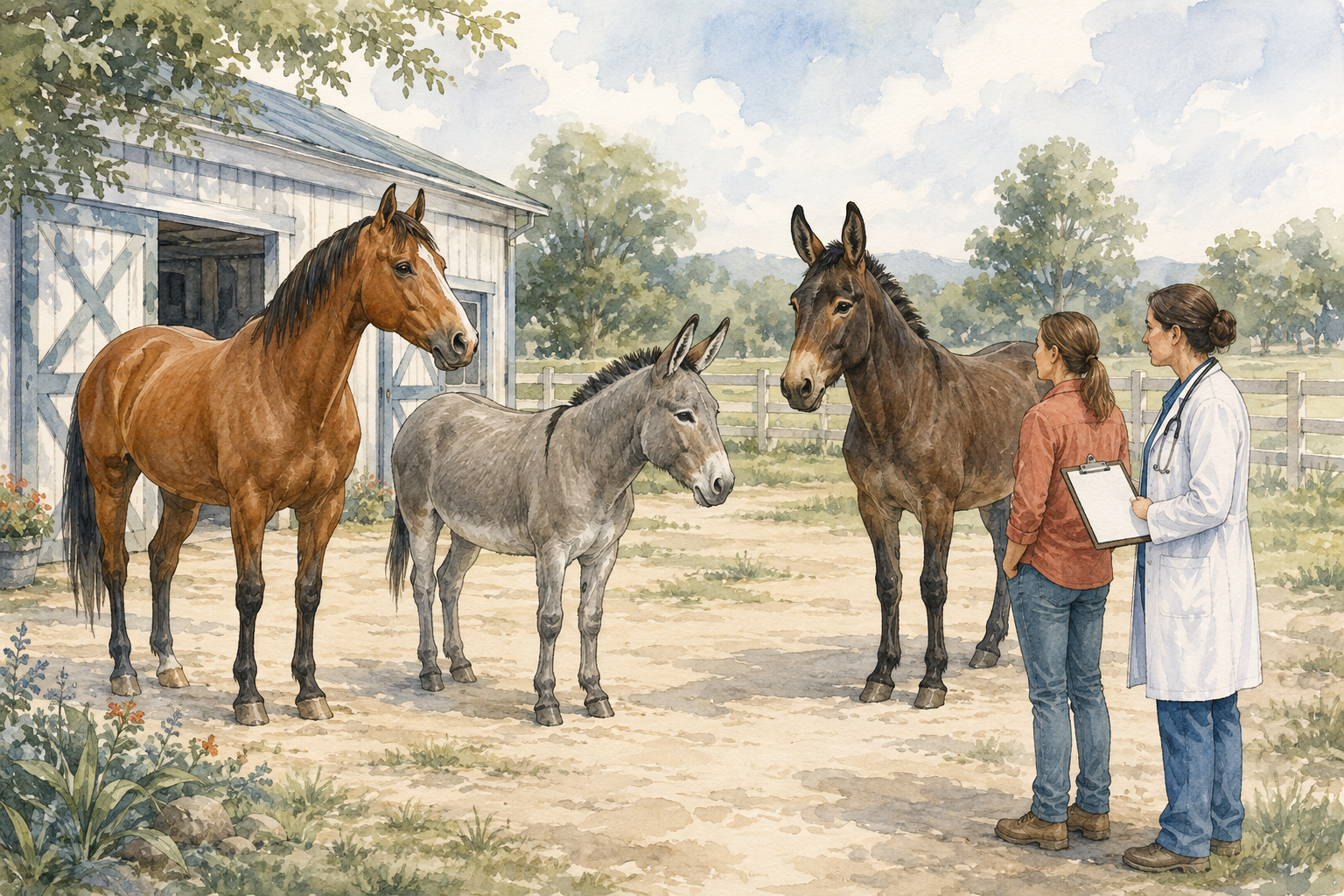
KNOW THE INDIVIDUAL
Pain is best recognized by change from normal.
Validated equine pain tools combine facial expression, behavior and movement. No single scale fits every condition, and an owner should use a tool with veterinary guidance rather than treating a score as a diagnosis.
Observe the whole animal
- Fixed or backward ears, orbital tightening or a tense muzzle
- Reduced appetite, slower chewing or altered drinking
- Isolation, lowered head, unusual stillness or reduced response
- Repeated weight shifting, guarding a limb or reluctance to turn
- Shortened stride, stiffness, reduced performance or difficulty rising
- Pawing, flank-watching, rolling, sweating or repeated lying down
Create information the veterinarian can use
- Record short videos at rest, walking straight and turning when safe.
- Note appetite, manure, sleep, herd interaction and willingness to move.
- Compare the same activities at similar times each day.
- Use a veterinarian-selected pain scale consistently.
- Do not mask worsening signs by changing medication without instructions.
Do not wait for dramatic behavior
- Colic signs or inability to pass manure
- Sudden severe lameness or inability to bear weight
- Strong digital pulses, hoof heat or a laminitis stance
- Difficulty breathing, collapse or neurologic signs
- A donkey that stops eating or becomes markedly quiet
Treatment should address the cause
Pain plans may include veterinary medication, hoof or dental treatment, rehabilitation, body-condition management, environmental changes and treatment of underlying disease.
TRUSTED SOURCES
Sources behind this guide
Source links are provided so readers can review the underlying guidance. Publication dates and recommendations can change; confirm individual plans with the treating veterinary team.