FERRETS · COMPLETE OWNER GUIDE
Ferret care
combines prevention and play.
Carnivore nutrition, vaccination, parasite prevention, ferret-proofing, common disease, diagnostics and emergency signs.
IN THIS GUIDEFeed for a short carnivore digestive tractFerret-proof from floor to furnitureMake a ferret-specific preventive planAge-related disease can begin with subtle behavior changeSeek urgent care for rapid changesTrusted sources
SPECIES PROFILE
Domestic ferrets are curious obligate carnivores with specialized medical needs.
Ferrets often remain playful despite early disease. Routine examinations, vaccination planning, parasite prevention, weight trends and a safely enriched home help uncover problems before a crisis.
Carnivorespecies-appropriate complete dietVaccinesdistemper and rabies planningDailysupervised exploration
01 · NUTRITION
Feed for a short carnivore digestive tract
- Use a complete veterinarian-approved ferret diet rich in animal protein and fat.
- Avoid high-sugar treats, fruit, sweets and unbalanced raw or homemade diets.
- Maintain reliable access to food and water unless the veterinarian gives different instructions.
- Track weight and body condition through seasonal change; sudden loss is not normal.
- Do not use supplements to compensate for an inappropriate staple diet.
02 · HOME & ENRICHMENT
Ferret-proof from floor to furniture
- Block access to recliners, appliances, wall openings, foam, rubber, earbuds and objects that can be swallowed.
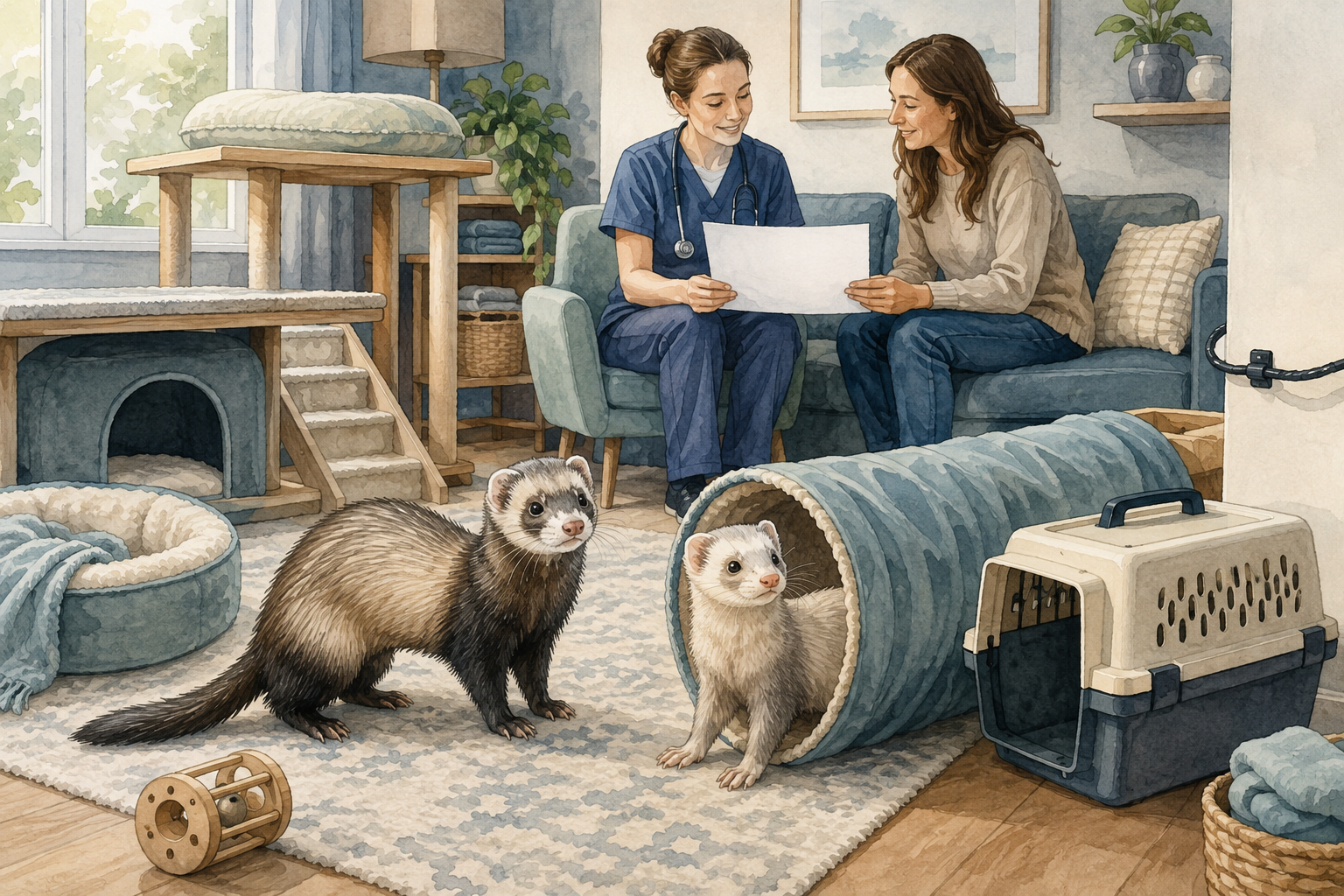
- Provide daily supervised exploration, tunnels, digging, problem-solving and social play.
- Use a large secure home base with solid levels, sleeping areas, litter stations and washable bedding.
- Protect from heat; ferrets tolerate high temperatures poorly.
- Train carrier entry and handling with rewards before an emergency.
03 · VACCINES & PARASITES
Make a ferret-specific preventive plan
- Discuss canine distemper vaccination because the disease is usually fatal in ferrets.
- Discuss rabies vaccination and local legal requirements.
- Remain for the veterinarian's recommended observation period after vaccination and know reaction signs.
- Use only veterinarian-approved heartworm, flea, tick and intestinal-parasite products and doses.
- Review exposure to dogs, wildlife, mosquitoes, boarding and outdoor activity at every visit.
04 · COMMON MEDICAL CONCERNS
Age-related disease can begin with subtle behavior change
- Insulinoma may cause staring, weakness, drooling, pawing at the mouth, collapse or seizures.
- Adrenal disease may cause progressive hair loss, itchiness, enlarged vulva or urinary difficulty in males.
- Foreign-body obstruction can cause reduced appetite, vomiting, tooth grinding, small stool and abdominal pain.
- Heart disease may cause reduced stamina, coughing, fast breathing, a swollen abdomen or hind-limb weakness.
- Dental disease, lymphoma, gastrointestinal inflammation and influenza-like respiratory illness also require assessment.
Important: Ferrets can catch human influenza viruses. Sick household members should reduce close face-to-face contact and practice careful hygiene.
05 · EMERGENCY SIGNS
Seek urgent care for rapid changes
- Collapse, seizure, severe weakness, drooling or abnormal staring
- Repeated vomiting, a painful abdomen, no stool or suspected swallowed object
- Labored breathing, blue or pale gums, inability to rise
- Straining to urinate or producing no urine
- Heat exposure, major trauma, uncontrolled bleeding or toxin exposure
Important: Do not give sugar routinely for suspected low blood glucose or delay transport. Call an emergency veterinarian for immediate instructions.
TRUSTED SOURCES
Sources behind this guide
Merck Veterinary ManualRoutine health care of ferrets ↗American Ferret AssociationFerret owner and welfare resources ↗
Source links are provided so readers can review the underlying guidance. Publication dates and recommendations can change; confirm individual plans with the treating veterinary team.