COMPANION BIRDS · SPECIES GUIDE
Finches, canaries, doves & pigeons
need species-appropriate flock care.
Flight housing, social groups, nutrition, breeding control, preventive medicine and emergencies in non-parrot companion birds.
IN THIS GUIDERecognize the group without treating every member alikeDesign for the way these birds move and thinkMatch food form and nutrient balance to the speciesKnow the patterns worth discussing earlyEstablish normal before the bird looks sickBirds can decline before illness looks dramaticTrusted sources
IDENTIFY FIRST
Use common names to begin—and scientific identity to confirm.
Size and appearance do not reveal every nutritional, behavioral or medical need. Record species, age, sex, source, reproductive history, diet and household bird exposure for the veterinary team.
Dailyweight, appetite and droppings awarenessAnnualavian wellness examinationForaginga daily behavioral need
01 · WHO IS INCLUDED
Recognize the group without treating every member alike
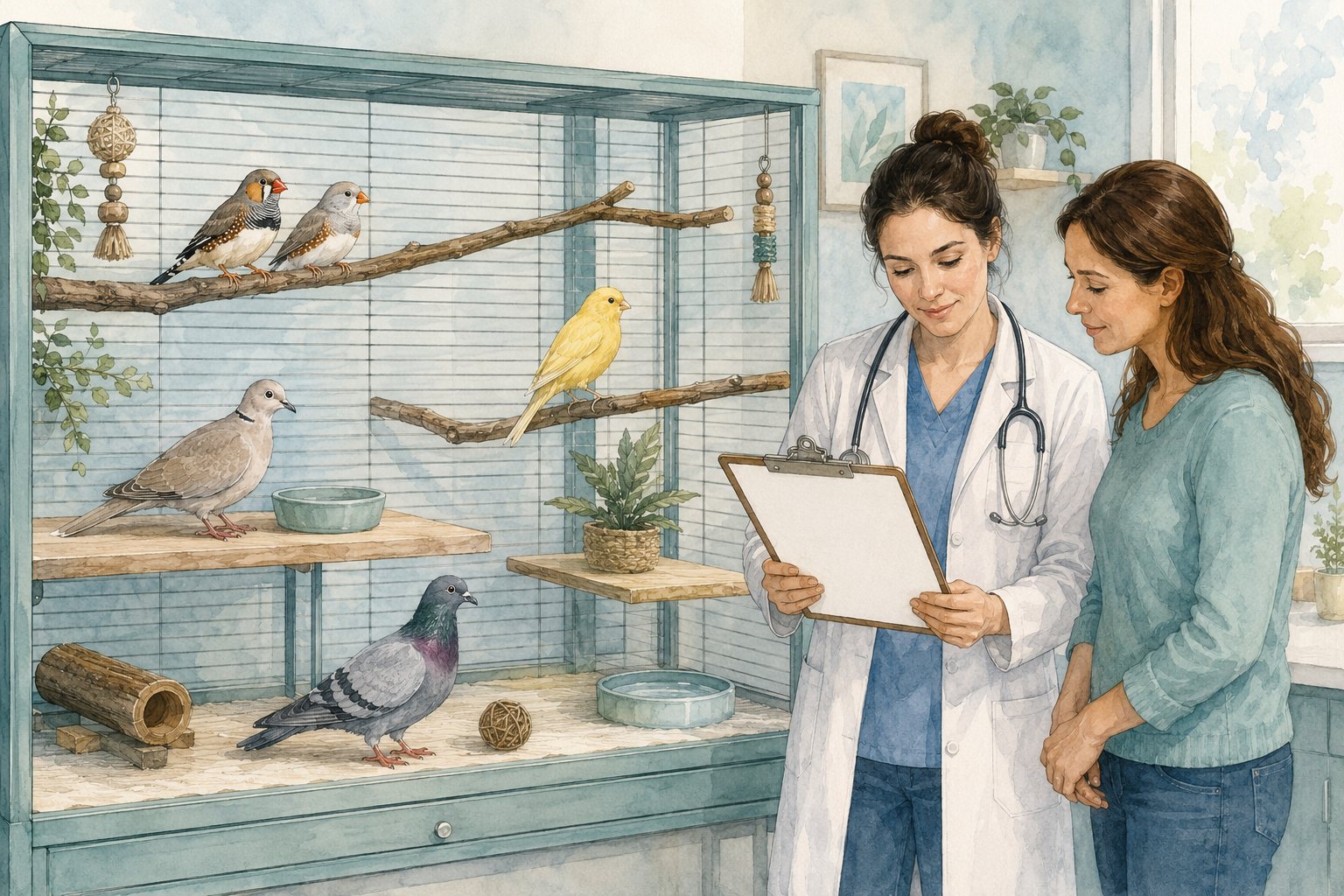
- Finches include zebra, society, Gouldian, owl and many other species with different social and breeding needs.
- Canaries include song, color and type varieties; males are often selected for song.
- Companion doves include ring-necked and diamond doves.
- Domestic pigeons include many breeds with varied size, feathering and flight ability.
Important: Hybrids, color mutations and misleading common names occur. Ask an avian veterinarian or experienced taxonomic resource to confirm identity.
02 · HOME, FLIGHT & BEHAVIOR
Design for the way these birds move and think
- Prioritize horizontal flight space, safe group size and multiple feeding and resting stations.
- Use fine safe bar spacing and prevent access to loose thread or nesting fibers that can strangulate toes.
- Provide species-appropriate perches; doves and pigeons also benefit from level shelves and platforms.
- Manage breeding intentionally; nests, light cycles and pair bonds can drive repeated reproduction.
- Quarantine newcomers and protect indoor birds from mosquitoes and wild-bird contact.
03 · NUTRITION
Match food form and nutrient balance to the species
- Use a complete plan for the exact species; a generic seed mix alone may be deficient.
- Finches and canaries may require species-specific formulated foods, greens and breeding adjustments.
- Doves and pigeons swallow food differently from parrots; grit recommendations depend on diet and should be individualized.
- Provide multiple feeding points so low-ranking birds can eat.
- Track group consumption and individual gram weights when practical.
Important: Never convert a diet by removing familiar food abruptly. Track gram weight and observed intake so a bird does not starve beside unfamiliar food.
04 · GROUP-SPECIFIC CONCERNS
Know the patterns worth discussing early
- Canaries and some finches may develop air-sac mites, respiratory disease, egg binding or foot problems.
- Fine nesting thread can wrap around toes and cause tissue death.
- Overcrowding can contribute to feather picking, injury and infectious spread.
- Pigeons and doves can develop crop, respiratory, intestinal or neurologic disease.
- A flock change—several quiet birds, reduced song, altered droppings or deaths—requires prompt biosecurity and veterinary guidance.
05 · PREVENTIVE AVIAN MEDICINE
Establish normal before the bird looks sick
- Arrange a post-acquisition and at least annual examination with an avian-experienced veterinarian.
- Bring diet labels, enclosure photographs, sleep schedule, source history and a recent weight trend.
- Discuss sex testing, fecal evaluation, bloodwork, infectious-disease testing and imaging based on species and exposure.
- Quarantine new birds in separate airspace when possible, with dedicated equipment, until medically cleared.
- Train scale use, carrier entry and stationing with positive reinforcement.
- Protect from smoke, aerosols, essential-oil diffusers, heavy metals, ceiling fans, open water and fumes from overheated coated cookware.
06 · EMERGENCY SIGNS
Birds can decline before illness looks dramatic
- Open-mouth breathing, pronounced tail bobbing, blue-gray color or inability to vocalize normally
- Sitting on the enclosure floor, inability to perch, collapse or seizure
- Not eating, repeated vomiting, crop swelling or rapid weight loss
- Animal bite, uncontrolled bleeding, burn, major fall or suspected fracture
- Straining, suspected egg binding, prolapse or marked abdominal swelling
- Possible fume, medication, metal, plant or other toxin exposure
Important: Minimize handling, keep the bird quiet and call ahead. Do not force food or water into a weak, vomiting or breathing-compromised bird.
TRUSTED SOURCES
Sources behind this guide
Association of Avian VeterinariansBird-owner care and health resources ↗Association of Avian VeterinariansFind an avian veterinarian ↗Lafeber CompanyCompanion-bird species orientation ↗
Source links are provided so readers can review the underlying guidance. Publication dates and recommendations can change; confirm individual plans with the treating veterinary team.