GERBILS · COMPLETE OWNER GUIDE
Gerbil care
is built around the social group.
Companionship, safe introductions, deep burrowing, nutrition, handling, common disease and emergencies in Mongolian gerbils.
IN THIS GUIDEProtect stable relationshipsBuild a dry landscape that holds tunnelsUse a complete staple and controlled enrichmentFace, teeth, scent gland and nervous system offer cluesSeek help for sudden declineTrusted sources
SPECIES PROFILE
Most pet gerbils are Mongolian gerbils, Meriones unguiculatus.
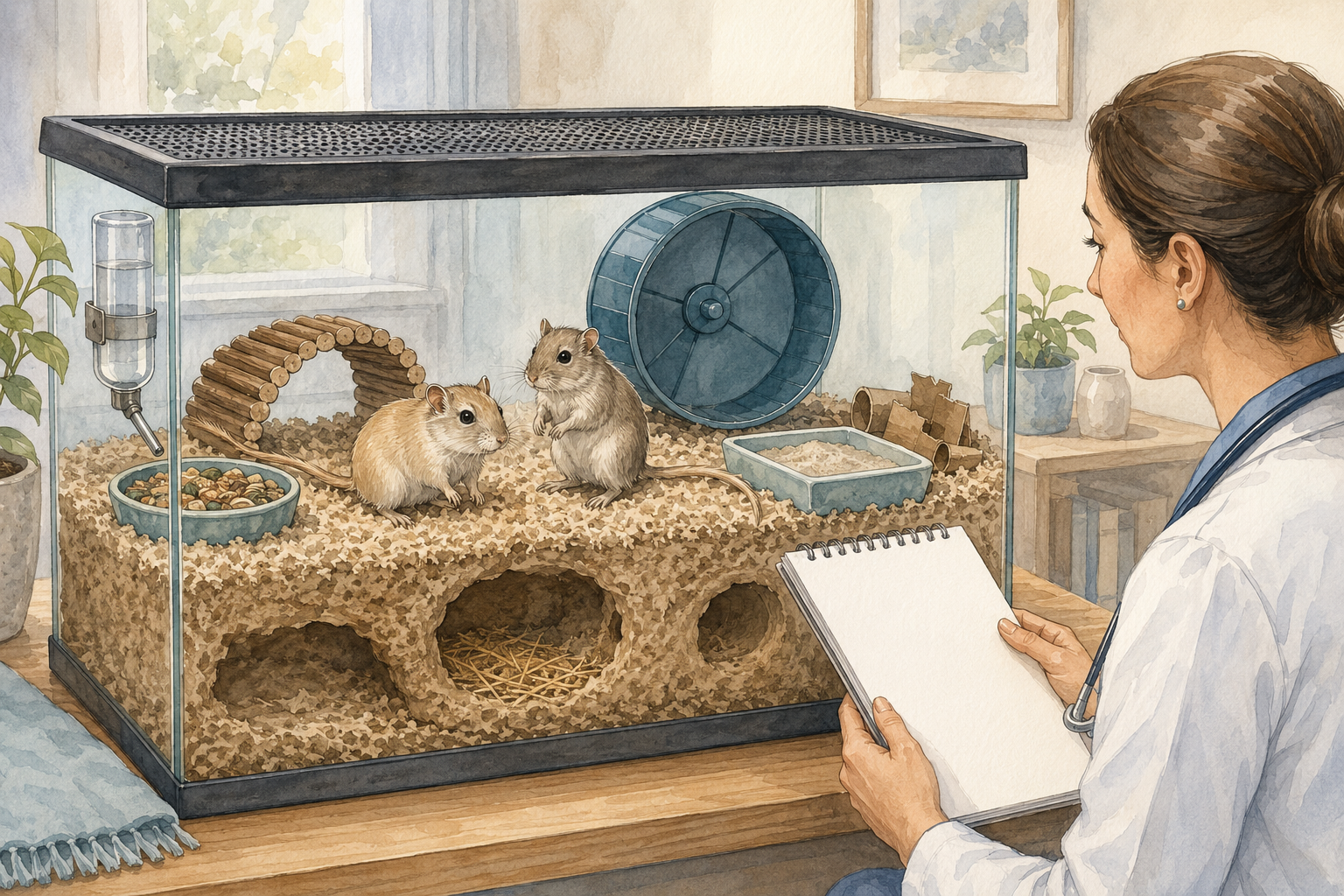
They are active desert-adapted rodents that dig complex tunnels, chew extensively and communicate through scent. Stable companions and a dry deep habitat are key welfare needs.
Paircompatible same-sex companionsDeeptunnel-holding substrateNeverlift by the tail
02 · HOUSING & HANDLING
Build a dry landscape that holds tunnels
- Provide deep mixed substrate, chew-safe paper, hides, tunnels and a secure lid.
- Use a solid correctly sized wheel and a safe sand bath.
- Maintain good ventilation and avoid damp, highly scented or dusty bedding.
- Lift with cupped hands or a container—never by the tail.
- Offer cardboard and safe wood for chewing while keeping plastic and electrical cords inaccessible.
03 · NUTRITION
Use a complete staple and controlled enrichment
- Feed a complete gerbil diet in measured amounts.
- Scatter feed to encourage foraging while monitoring intake.
- Offer only small amounts of appropriate fresh foods and remove leftovers.
- Verify water function daily even though gerbils may drink modest amounts.
- Track weight and check hidden food stores during routine cleaning.
04 · COMMON CONCERNS
Face, teeth, scent gland and nervous system offer clues
- Nasal or facial soreness may reflect irritation, infection or husbandry problems.
- Overgrown or damaged incisors cause drooling, weight loss or reduced gnawing.
- The abdominal scent gland can develop inflammation or masses, especially in males.
- Some gerbils experience seizures; video and environmental context help assessment.
- Fight wounds, tail injuries, diarrhea and respiratory changes require prompt attention.
05 · URGENT SIGNS
Seek help for sudden decline
- Labored breathing, collapse or repeated seizure
- Deep bite wounds, uncontrolled bleeding or tail degloving
- Not eating, rapid weight loss or profound inactivity
- Severe diarrhea, dehydration or abdominal swelling
- Prolapse, toxin exposure or inability to move normally
TRUSTED SOURCES
Sources behind this guide
Merck Veterinary ManualHamster biology, care and disorders ↗Merck Veterinary ManualGerbil biology, care and disorders ↗
Source links are provided so readers can review the underlying guidance. Publication dates and recommendations can change; confirm individual plans with the treating veterinary team.
Protect stable relationships