GUINEA PIGS · COMPLETE OWNER GUIDE
Guinea pig care
requires daily attention.
Nutrition, companionship, housing, dental and urinary health, routine veterinary care and emergency signs in domestic guinea pigs.
IN THIS GUIDEBuild every day around grass hayFloor space matters more than cage heightTeeth, lungs, feet and urinary tract deserve attentionCreate a baseline before diseaseDo not wait for complete appetite lossTrusted sources
SPECIES PROFILE
The domestic guinea pig is Cavia porcellus—not a hamster or small rabbit.
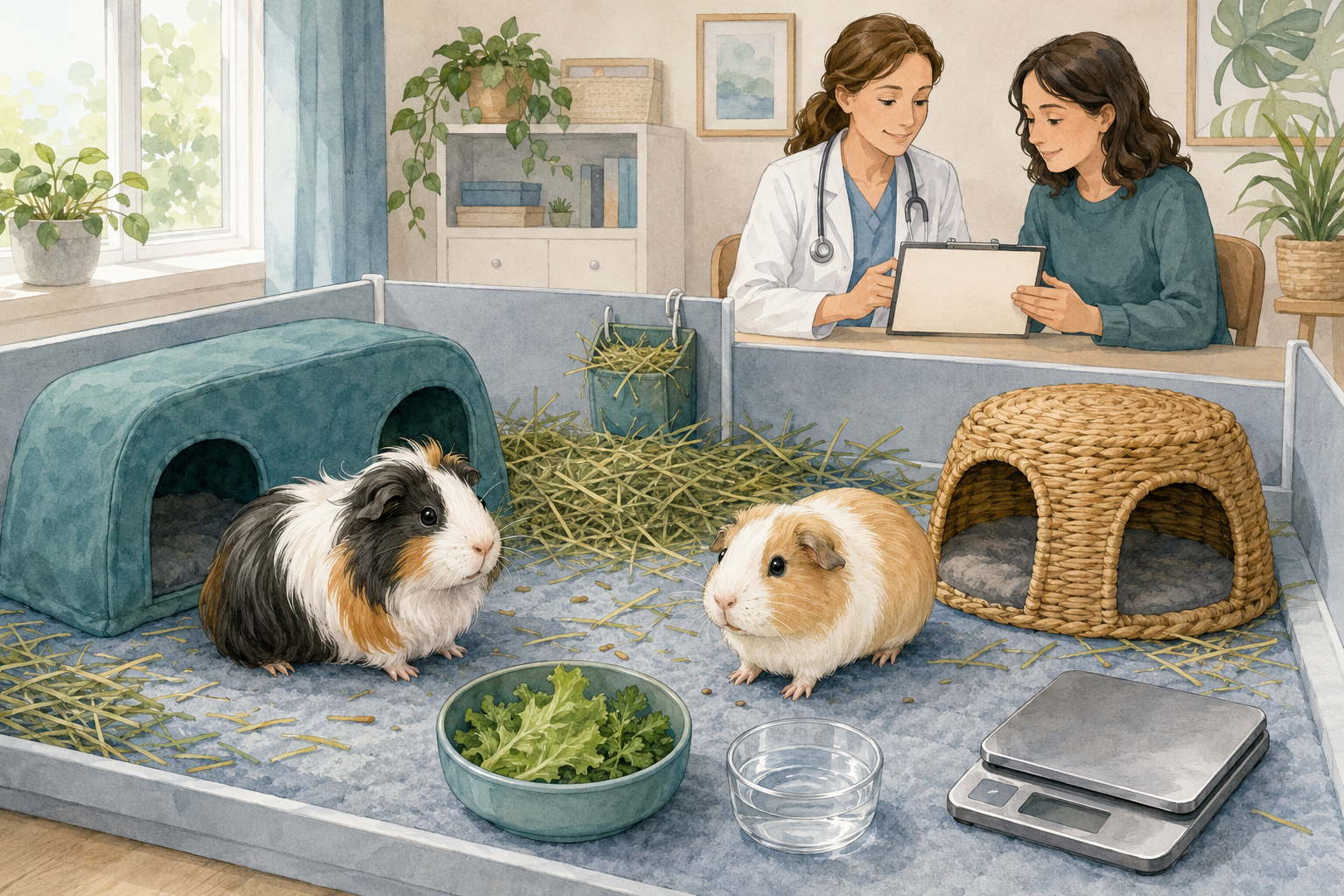
Guinea pigs are social, ground-dwelling rodents. They need compatible companionship, generous floor space, constant grass hay, measured fortified food and close monitoring because illness may initially look like simple quietness.
Dailyhay, water and appetite checkWeeklyweight trendUrgentreduced eating or stool
01 · NUTRITION
Build every day around grass hay
- Offer unlimited fresh grass hay such as timothy, orchard or meadow hay; alfalfa is generally reserved for growing, pregnant or specifically advised animals.
- Feed a measured amount of plain fortified guinea-pig pellets and replace them while vitamin C remains fresh.
- Offer veterinarian-approved leafy vegetables and a dependable vitamin C source; do not rely on drops in drinking water.
- Introduce foods gradually and limit fruit, sugary treats, seeds, nuts and colorful mixes.
- Fresh water must always be available; check bottle flow and offer a heavy bowl when appropriate.
02 · HOUSING & SOCIAL LIFE
Floor space matters more than cage height
- House with a compatible guinea pig when possible; introduce carefully and provide duplicated hides, food and water.
- Use solid nonslip flooring and dry low-dust bedding; avoid wire floors, exercise balls and wheels.
- Provide multiple shelters with more than one exit, tunnels, hay piles and safe floor time.
- Keep the enclosure cool, well ventilated and away from direct sun, drafts and predator access.
- Spot-clean daily and replace bedding before ammonia odor or dampness develops.
03 · COMMON HEALTH CONCERNS
Teeth, lungs, feet and urinary tract deserve attention
- Dental disease may cause dropping food, selective eating, a wet chin, smaller stool or weight loss even when front teeth look normal.
- Respiratory infection may appear as quieter behavior, eye or nose discharge, faster breathing or reduced appetite.
- Urinary stones can cause straining, squeaking, blood, frequent small urinations or a painful abdomen.
- Pododermatitis causes red, swollen or ulcerated feet and is influenced by flooring, moisture, weight and mobility.
- Females may develop ovarian cysts; hair loss, abdominal enlargement or reproductive changes warrant assessment.
04 · PREVENTIVE CARE
Create a baseline before disease
- Arrange an initial and at least annual examination with an exotics-experienced veterinarian.
- Record weight weekly on a gram scale and bring the trend, diet labels and enclosure photographs.
- Ask whether fecal testing, dental imaging, urine testing or other diagnostics fit the history.
- Trim nails as needed and inspect feet, eyes, nose, mouth, coat and genital area.
- Discuss sex confirmation, pregnancy prevention and whether reproductive surgery is appropriate for the individual.
05 · URGENT SIGNS
Do not wait for complete appetite loss
- Eating less, refusing favorite food or producing fewer or smaller droppings
- Labored breathing, open-mouth breathing, blue or very pale tissue
- A swollen painful abdomen, profound quietness or inability to stand
- Straining to urinate, little urine, blood in urine or vocalizing during urination
- Fly strike, major injury, uncontrolled bleeding, seizure or toxin exposure
Important: Call before syringe feeding. A blockage, swallowing problem, severe weakness or breathing distress can make force-feeding dangerous.
TRUSTED SOURCES
Sources behind this guide
Merck Veterinary ManualGuinea pig care and health ↗Association of Exotic Mammal VeterinariansExotic-mammal veterinary resources ↗
Source links are provided so readers can review the underlying guidance. Publication dates and recommendations can change; confirm individual plans with the treating veterinary team.