HAMSTERS · COMPLETE OWNER GUIDE
Hamster care
starts below the surface.
Species identification, solitary housing, burrowing, nutrition, preventive care and emergency signs in Syrian and dwarf hamsters.
IN THIS GUIDEKnow which hamster you haveSupport burrowing, foraging and safe runningWatch what is eaten—not only what disappearsSmall signs can become large emergenciesAct promptlyTrusted sources
SPECIES PROFILE
Syrian and dwarf hamsters have different social and medical considerations.
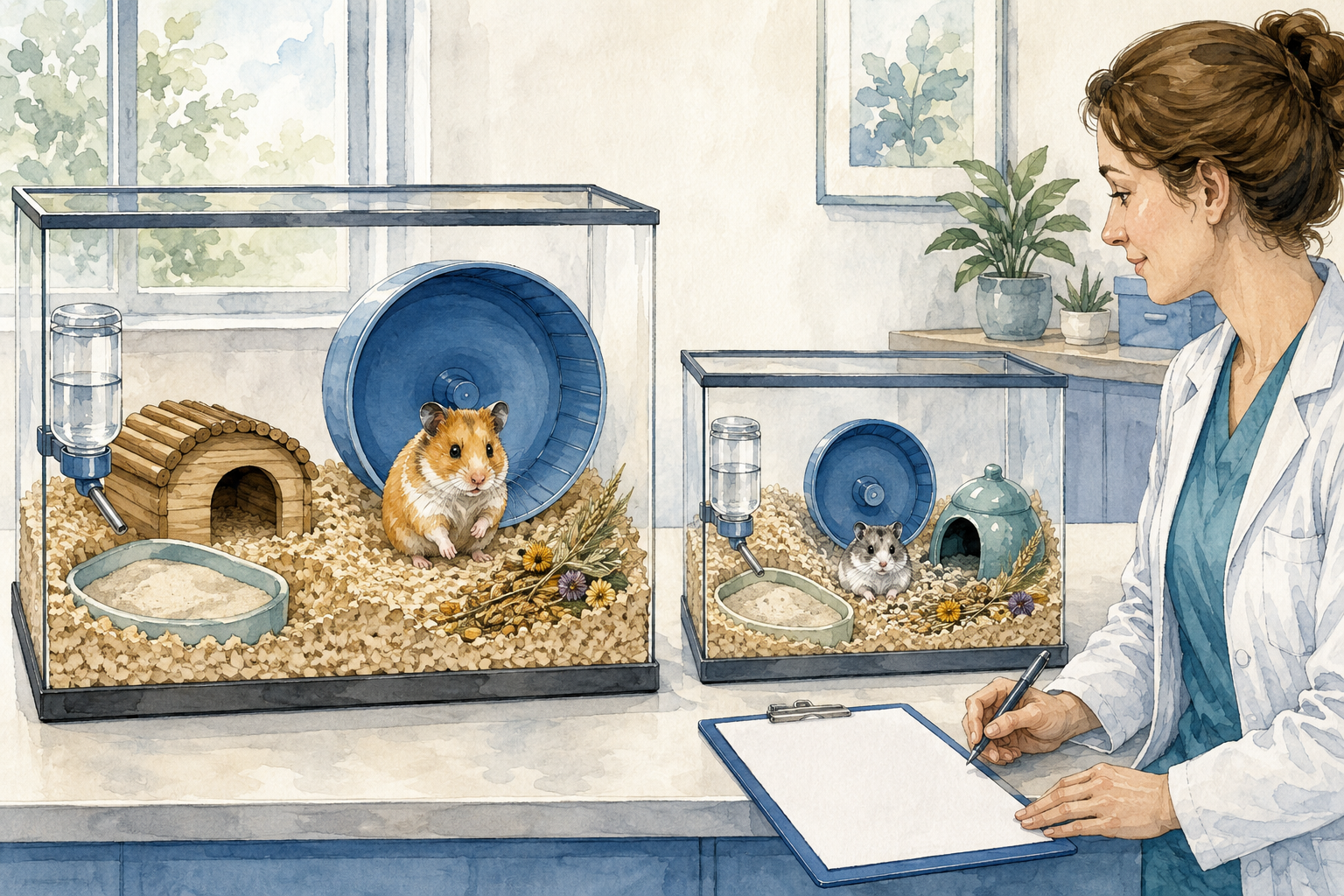
Common pets include Syrian, Campbell's dwarf, winter-white dwarf, Roborovski and Chinese hamsters. Confirm species and sex; safe cohabitation should never be assumed.
Deepcompactable burrowing substrateSolidcorrectly sized exercise wheelUsually soloespecially Syrian hamsters
01 · IDENTIFICATION
Know which hamster you have
- Syrian hamsters are larger and should generally live alone.
- Campbell's and winter-white dwarf hamsters may be confused or hybridized in the pet trade.
- Roborovski hamsters are very small and fast; handling and escape prevention require planning.
- Chinese hamsters are a distinct species with a more visible tail and different body shape.
- Do not use coat color alone to identify species or sex.
02 · HOUSING
Support burrowing, foraging and safe running
- Provide a spacious well-ventilated enclosure with deep compactable bedding.
- Use a solid wheel large enough that the spine remains level while running.
- Provide hides, nesting paper, tunnels, chew items, scatter feeding and a sand area when appropriate.
- Avoid cotton-fluff nesting, wire wheels, cedar, highly scented bedding and exercise balls.
- Secure lids and doors; hamsters climb, chew and squeeze through small gaps.
03 · FOOD & DAILY MONITORING
Watch what is eaten—not only what disappears
- Use a complete species-appropriate staple and limited veterinarian-approved fresh foods.
- Remove spoilable food from hoards without repeatedly destroying the entire nest.
- Verify water delivery every day.
- Observe nighttime emergence, grooming, breathing and movement.
- Weigh on a gram scale and note changes in food stores, stool and urine.
04 · COMMON CONCERNS
Small signs can become large emergencies
- Diarrhea or a wet soiled tail in a young hamster requires same-day veterinary care.
- Dental overgrowth or injury may cause drooling, food refusal or facial swelling.
- Respiratory disease may cause clicking, discharge, hunched posture or labored breathing.
- Skin disease, wounds, tumors and reproductive disease require diagnosis.
- Dwarf hamsters may have metabolic tendencies that influence diet and diagnostic planning.
05 · EMERGENCY SIGNS
Act promptly
- Diarrhea, profound quietness or rapid dehydration
- Labored breathing, collapse, seizure or inability to stand
- A swollen abdomen, prolapse or active bleeding
- Severe fight wounds or suspected fracture
- Not eating, inability to drink or a rapid weight decrease
Important: Do not bathe a sick hamster or administer leftover antibiotics; some medications are dangerous to hamsters.
TRUSTED SOURCES
Sources behind this guide
Merck Veterinary ManualHamster biology, care and disorders ↗Merck Veterinary ManualGerbil biology, care and disorders ↗
Source links are provided so readers can review the underlying guidance. Publication dates and recommendations can change; confirm individual plans with the treating veterinary team.