HEDGEHOGS · COMPLETE OWNER GUIDE
Hedgehog care
depends on warmth and observation.
Temperature, safe exercise, nutrition, handling, common disease, preventive care and emergencies in African pygmy-type pet hedgehogs.
IN THIS GUIDEPrevent chilling, overheating and entrapmentBalance calories with nighttime activityMouth, skin, nervous system and tumors need attentionExamine gently and consistentlyTorpor-like inactivity is dangerousTrusted sources
SPECIES PROFILE
Most pet hedgehogs are African pygmy-type Atelerix hybrids.
They are solitary nocturnal insectivore relatives—not porcupines. Stable warmth, a safe wheel, weight control, gentle handling and early tumor and dental checks are central to care.
Warmstable controlled environmentNightactive monitoring periodSolousually housed individually
01 · TEMPERATURE & HOUSING
Prevent chilling, overheating and entrapment
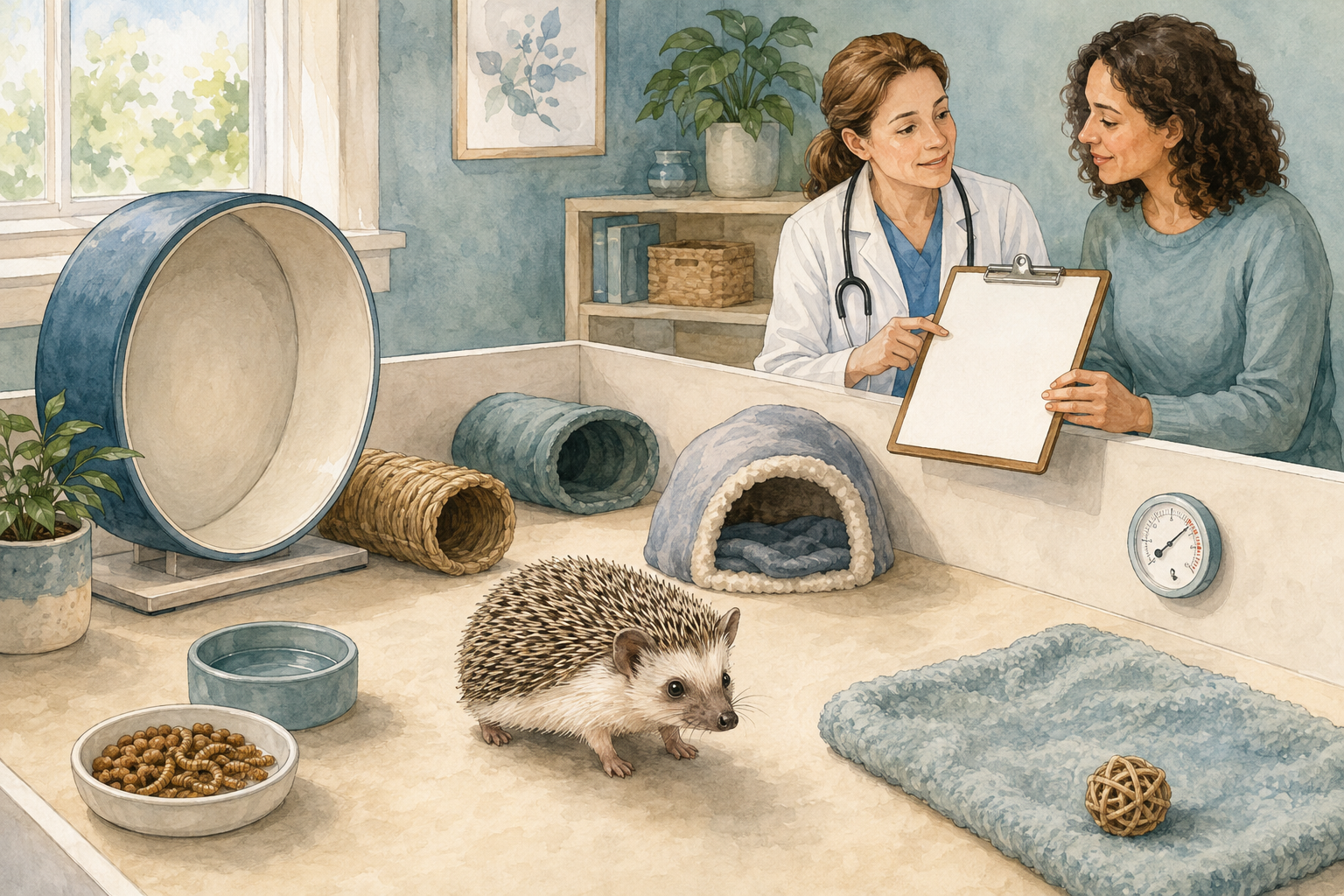
- Maintain a stable veterinarian-recommended temperature using thermostatically controlled equipment and independent thermometers.
- Provide a spacious solid-floor enclosure, hides, tunnels and a large solid running wheel without crossbars.
- Avoid wire flooring, loose threads, frayed fabric and wheels that bend the back or trap feet.
- Keep bedding dry, low dust and free of aromatic oils.
- Most hedgehogs should live alone; forced cohabitation can cause stress and injury.
02 · NUTRITION & WEIGHT
Balance calories with nighttime activity
- Use a veterinarian-recommended complete staple and controlled portions.
- Offer appropriate insects or enrichment foods within the nutritional plan rather than as an unbalanced majority.
- Avoid excessive fatty treats and sudden diet changes.
- Weigh regularly and assess body condition; obesity may limit the ability to fully roll or groom.
- Provide clean water and verify bottle or bowl function daily.
03 · COMMON HEALTH CONCERNS
Mouth, skin, nervous system and tumors need attention
- Oral masses, dental disease and infection may cause drooling, bad odor, bleeding or reduced eating.
- Skin disease can cause itching, crusting, odor or abnormal quill loss; mites are not the only cause.
- Tumors are common in adult hedgehogs and any new lump, swelling or weight change warrants examination.
- Progressive wobbling or weakness may have neurologic, nutritional, traumatic or systemic causes.
- Respiratory disease, uterine disease and gastrointestinal illness can initially appear as reduced nighttime activity.
04 · ROUTINE CARE
Examine gently and consistently
- Arrange an initial and at least annual examination with an exotics-experienced veterinarian.
- Track nighttime activity, appetite, stool, urine and weight.
- Inspect nails and feet; trim nails with training or professional help.
- Bring enclosure temperatures, diet labels and videos of unusual movement to appointments.
- Discuss reproductive status, oral examination, fecal testing, bloodwork or imaging based on age and findings.
05 · URGENT SIGNS
Torpor-like inactivity is dangerous
- Cool body, minimal response or failure to uncurl normally
- Labored breathing, collapse, seizure or inability to stand
- Repeated vomiting, severe diarrhea or a swollen painful abdomen
- Active bleeding, major trauma, prolapse or suspected toxin exposure
- Rapidly worsening wobbling, hind-limb weakness or self-injury
Important: Warm a chilled hedgehog gradually while contacting a veterinarian. Do not use direct high heat or assume the animal is safely hibernating.
TRUSTED SOURCES
Sources behind this guide
Merck Veterinary ManualHedgehog husbandry and health ↗Association of Exotic Mammal VeterinariansExotic-mammal veterinary resources ↗
Source links are provided so readers can review the underlying guidance. Publication dates and recommendations can change; confirm individual plans with the treating veterinary team.