HONEYBEES · COLONY HEALTH
Honeybee colony health
requires active monitoring.
Recognize healthy brood and adult bees, monitor Varroa mites, notice disease patterns and know when to involve an apiary inspector or bee-health professional.
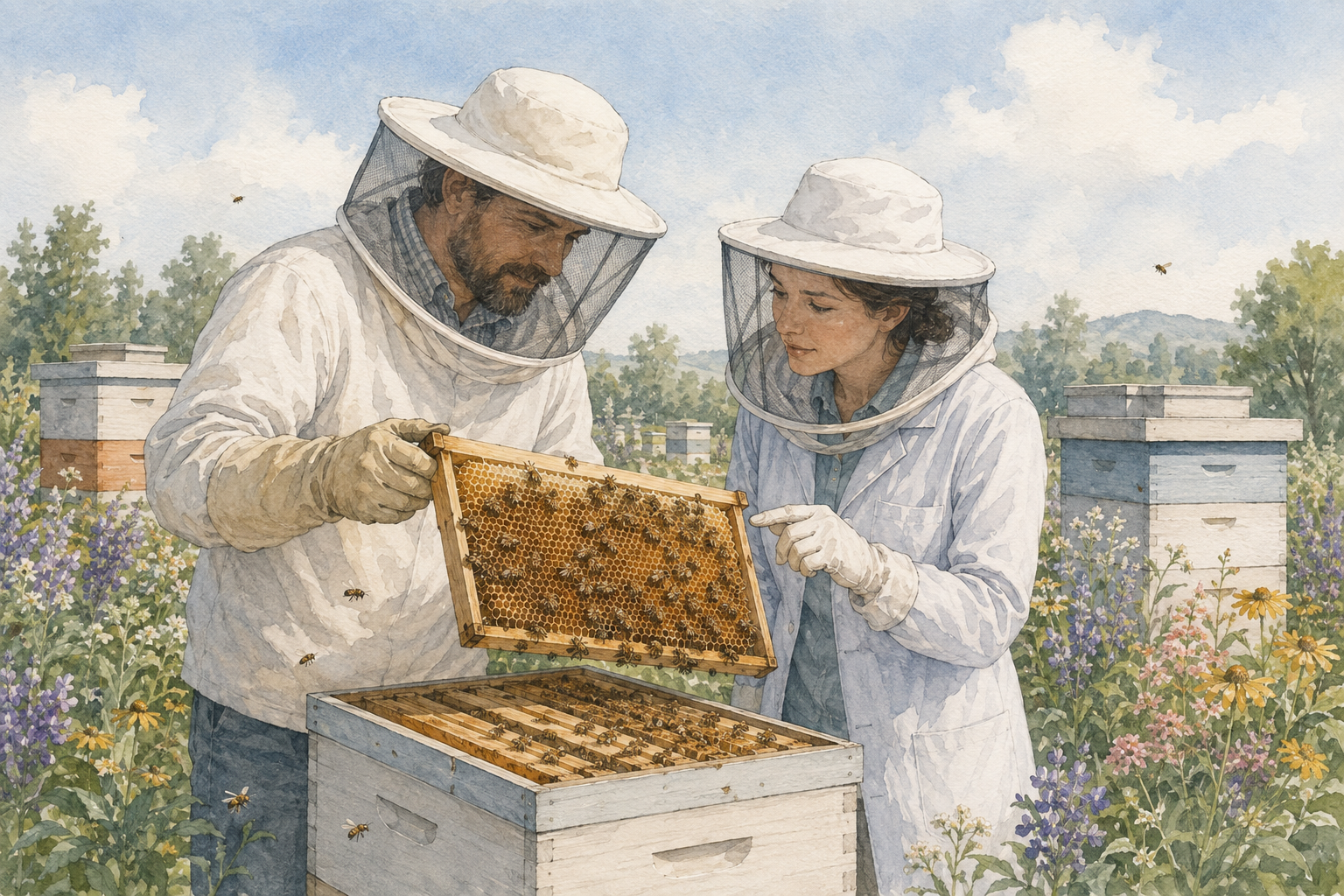
LOOK FOR PATTERNS
One unusual bee matters less than a changing colony pattern.
VMX 2026 honeybee medicine sessions emphasized brood pattern, adult appearance and behavior, debris, dead bees, population strength and seasonal context. Keep inspection records so a decline is visible early.
Know the expected seasonal picture
- A brood pattern appropriate for the queen, season and colony strength
- Pearly white, C-shaped larvae in open cells and normally capped brood
- Adults moving and flying appropriately, with normal wings and body hair
- Adequate food stores, clean hive surfaces and removal of debris and dead bees
- Population and activity that fit local weather and forage conditions
Use the same sequence so important clues are not missed
- Check weather, flight activity and the entrance before opening the hive.
- Confirm queen evidence through eggs, young larvae or direct queen identification.
- Assess brood amount and pattern, larval color, cappings and evidence of hygienic removal.
- Estimate adult population and food stores; note whether the colony can cover its brood.
- Inspect for pests, moisture, damaged equipment and adequate space.
- Record date, colony, weather, findings, mite result and every action taken.
Investigate changes rather than diagnosing by appearance alone
| Pattern | Possible concern | Next step |
|---|---|---|
| Spotty brood with sunken or perforated cappings | Brood disease, mites, queen or nutrition problem | Photograph, limit movement and seek diagnostic guidance. |
| Deformed wings or crawling adults | Varroa-associated viral disease | Quantify mites and contact an experienced adviser. |
| White, gray or black mummies | Chalkbrood | Review moisture, ventilation, colony strength and queen genetics. |
| Slime, webbing or damaged comb | Small hive beetle or wax moth pressure | Assess colony weakness and protect equipment. |
| Sudden dead bees or rapid depopulation | Pesticide, starvation, disease or environmental event | Preserve samples and contact extension or regulatory resources promptly. |
Monitor with a validated method—not visual inspection alone
Varroa destructor mites feed on developing and adult honeybees and transmit viruses, including deformed wing virus. Mites are present in most managed-colony areas, and infestation can rise quickly.
- Use an alcohol wash, soap wash or another locally validated quantitative method; a sticky board or casual visual check may not be sufficient by itself.
- Sample at meaningful points in the season and before and after a control measure.
- Record mites per number of bees tested, not only 'positive' or 'negative.'
- Choose only legally approved controls and follow the exact label, temperature limits, timing and honey-super restrictions.
- Check effectiveness rather than assuming treatment worked.
- Combine monitoring, brood interruption, resistant stock and legal treatments as appropriate in an integrated pest-management plan.
Colony needs change across the year
- Spring: confirm food, brood expansion, queen performance and adequate space without expanding faster than bees can defend.
- Summer: manage heat, water, ventilation, swarming pressure and local forage gaps.
- Late summer and fall: monitor Varroa closely, protect from robbing and confirm appropriate stores and colony strength for winter.
- Winter: minimize unnecessary disturbance, protect from moisture and wind and monitor stores using a locally appropriate method.
- Avoid feeding honey from an unknown source because it can transmit disease spores.
Some suspected diseases need confirmation and official guidance
- American foulbrood spores can persist for decades in contaminated equipment and the disease is regulated in many states.
- European foulbrood, chalkbrood, Nosema and viral disease can resemble queen, nutrition, pesticide or mite problems.
- Do not move, combine or sell suspect colonies, brood, bees or equipment until local guidance is obtained.
- Clean hive tools between colonies when disease is suspected and avoid transferring comb blindly.
- Contact the state apiary inspector, extension specialist or veterinarian familiar with honeybee medicine.
A useful apiary record follows each colony
- Colony identification, queen source and known queen age
- Inspection dates, brood status, adult population and food stores
- Varroa method, sample size, result and follow-up result
- Products used, lot, dose, date, temperature conditions and honey-super status
- Feeding, requeening, splits, combinations and equipment movement
- Photos, laboratory reports, losses and unusual pesticide or weather events
TRUSTED SOURCES
Sources behind this guide
Source links are provided so readers can review the underlying guidance. Publication dates and recommendations can change; confirm individual plans with the treating veterinary team.