HONEYBEE NUTRITION · OWNER GUIDE
Supporting honeybee colony nutrition
without masking colony disease.
Forage assessment, stored pollen and nectar, supplemental feeding, robbing prevention and colony-level warning signs.
IN THIS GUIDEBuild the diet around species biologyMake intake visible and repeatableRecalculate when the animal changesAsk questions marketing cannot answerAvoid well-intended imbalancesWeight is only one outcomeAppetite changes can be medical emergenciesTrusted sources
NUTRITION IS MEDICINE
A feeding plan should be complete, measurable and adjustable.
Write down every food, treat, supplement, forage, prey item and flavored medication. Review the full list with a veterinarian familiar with the species before making major changes.
Measurethe amount actually offeredTrackweight and body conditionChange slowlyunless urgent care directs otherwise
01 · DAILY FOUNDATION
Build the diet around species biology
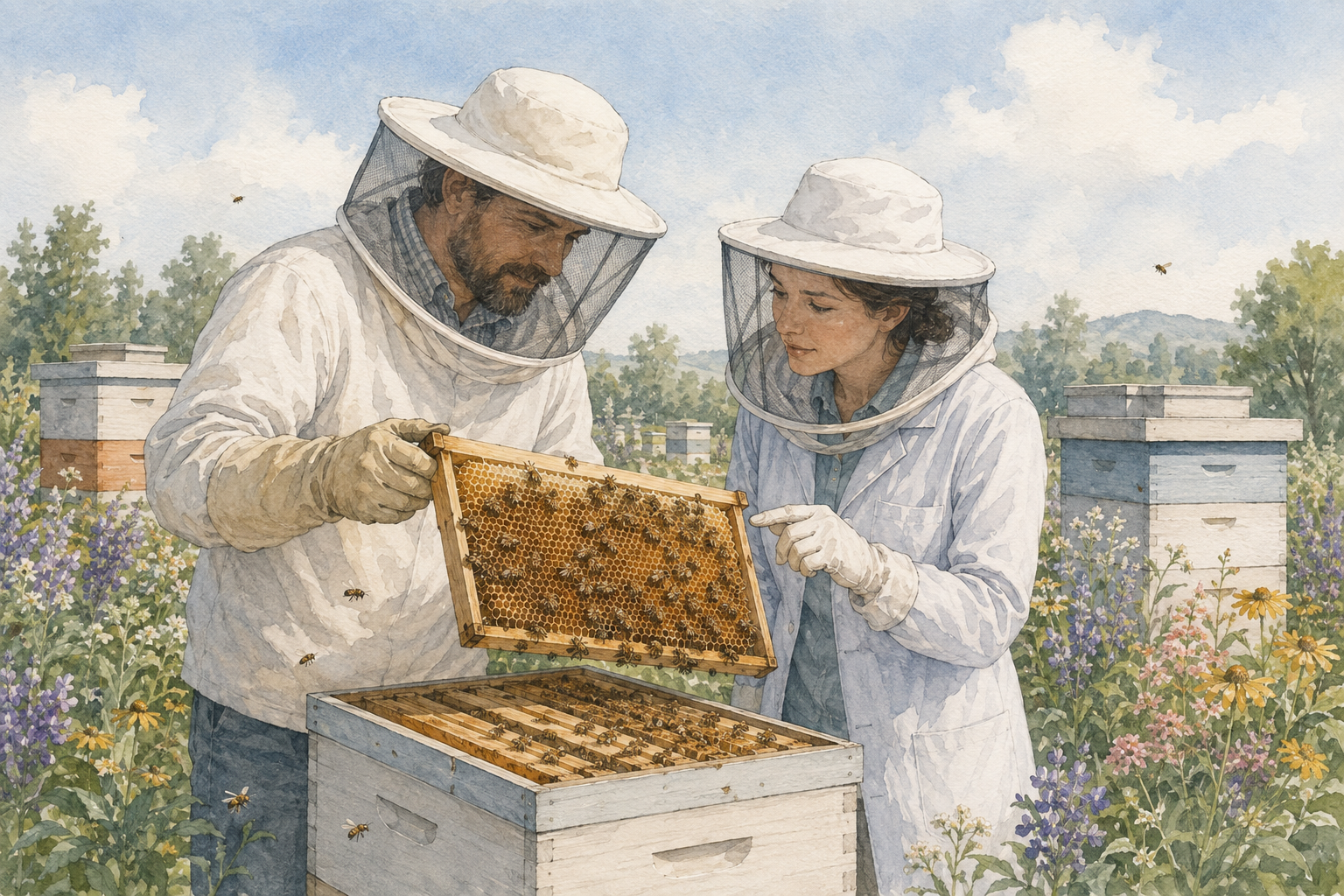
- Assess natural forage, season, weather, colony strength and stored nectar and pollen before supplementing.
- Use clean feed formulated and handled for honeybees when intervention is justified.
- Match carbohydrate or protein support to the actual deficit; feeding cannot replace diverse forage.
- Protect feed from fermentation, pests, robbing and contamination.
- Coordinate nutrition with queen status, brood pattern, Varroa monitoring and disease assessment.
02 · PORTIONS & ROUTINE
Make intake visible and repeatable
- Record hive weights or food-store estimates consistently.
- Document feed type, batch, amount and dates.
- Inspect consumption without opening colonies unnecessarily in poor weather.
- Reduce entrances or use internal feeding when robbing risk is high.
- Compare multiple colonies because one weak colony may have disease rather than a site-wide shortage.
03 · LIFE STAGE & HEALTH
Recalculate when the animal changes
- Growth, pregnancy, lactation and heavy work can change energy and nutrient needs substantially.
- Senior status does not automatically mean one particular food; appetite, teeth, muscle, organs and activity guide the plan.
- Weight loss should preserve muscle and should not be rushed.
- Dental, gastrointestinal, urinary, endocrine, kidney, liver and mobility disorders may require a veterinary therapeutic plan.
- Recheck the diet after a diagnosis, medication change, surgery, major weight change or prolonged appetite change.
04 · LABELS & CLAIMS
Ask questions marketing cannot answer
- Confirm the food is intended for the exact species and appropriate life stage.
- Look for a nutritional-adequacy statement when packaged complete diets are used.
- Ask who formulates the diet, what quality controls are used and whether nutrient analysis is available.
- An ingredient list alone cannot show digestibility, balance, safety or manufacturing consistency.
- Natural, premium, holistic and human-grade are not substitutes for nutritional adequacy or veterinary assessment.
05 · RISKS & COMMON MISTAKES
Avoid well-intended imbalances
- Feeding honey of unknown origin because it can transmit disease
- Open feeding that promotes robbing and disease spread
- Using supplements to postpone Varroa or disease control
- Contaminated, moldy or fermented feed
- Feeding during honey production when it could adulterate harvestable honey
Important: Never copy a therapeutic, homemade, raw, supplement or weight-loss plan from another animal without veterinary guidance.
06 · MONITORING
Weight is only one outcome
- Colony weight and stored nectar and pollen
- Brood pattern, queen status and adult population
- Foraging activity relative to weather and neighboring colonies
- Mites, brood disease and dysentery signs
- Dead bees, robbing pressure and unusual odors
07 · WHEN TO CALL
Appetite changes can be medical emergencies
- Rapid colony collapse or widespread adult mortality
- Suspected pesticide exposure
- American foulbrood or other reportable-disease concern
- Severe robbing, starvation or weather-related loss
- Multiple colonies affected at the same time
Important: Do not force-feed, syringe water, change insulin, give human remedies or delay emergency care unless a veterinary professional gives case-specific instructions.
TRUSTED SOURCES
Sources behind this guide
Honey Bee Health CoalitionEvidence-based colony health and management tools ↗United States Department of AgricultureHoneybee health and colony-loss information ↗
Source links are provided so readers can review the underlying guidance. Publication dates and recommendations can change; confirm individual plans with the treating veterinary team.