DOMESTIC EQUINE EMERGENCY · ACT EARLY
Emergency warning signs
in domestic equids.
How emergencies may appear in horses, donkeys and mules—including colic, hyperlipemia, choke, breathing distress, severe wounds, eye disease, neurologic signs and laminitis.
IN THIS GUIDESigns that should be treated as emergenciesCollect information without delaying careWell-intended action can make treatment harderBuild an equine emergency planTrusted sources
KNOW THE NORMAL INDIVIDUAL
Vital signs and behavior help the veterinarian triage.
Learn each equid’s normal temperature, heart rate, breathing, gum color, manure, water intake, appetite and attitude. Do not wait for dramatic rolling or obvious distress in a donkey or mule; illness can present as stillness, reduced interaction or loss of appetite.
Callbefore medicationSafeprotect people firstReadytransport and records
01 · CALL NOW
Signs that should be treated as emergencies
- Repeated rolling, pawing, flank-watching, sweating, lack of manure or persistent abdominal pain
- In a donkey or mule: unusual quietness, isolation, lowered head, reduced appetite or subtle behavior change—even without dramatic colic signs
- Any donkey that stops eating, especially if overweight, pregnant, stressed or already ill, because hyperlipemia can develop rapidly
- Severe breathing effort, blue or very pale gums, collapse or uncontrolled bleeding
- Choke signs such as feed or saliva from the nostrils, coughing and repeated swallowing
- Deep wounds, wounds near joints or eyes, punctures, degloving injuries or suspected fractures
- Sudden inability to bear weight, severe lameness, hoof heat with strong digital pulses or a shifted stance
- Eye closure, tearing, cloudiness, swelling or visible injury
- Seizures, circling, severe incoordination, inability to stand or sudden behavior change
- Foaling difficulty, retained placenta or a sick newborn foal
02 · WHILE CALLING
Collect information without delaying care
- Species, approximate weight, age and reproductive status
- Time signs began and whether they are worsening
- Temperature, heart rate and respiratory rate if safe and familiar
- Gum color and moisture, manure and urine output
- Recent feed, water, medications, travel, vaccination and deworming history
- Photos or short video when the veterinarian requests them
Important: Do not place yourself in danger to obtain a vital sign from a painful, panicked or neurologically abnormal equid.
03 · AVOID COMMON MISTAKES
Well-intended action can make treatment harder
- Do not copy a horse dose for a donkey or mule. Drug metabolism and safe dosing can differ; use the veterinarian’s exact directions.
- Do not give flunixin, phenylbutazone, sedatives or other medication unless the veterinarian directs the exact drug and dose.
- Do not force water, oil, feed or anything by mouth during choke or colic.
- Do not walk an exhausted equid continuously; follow the veterinarian’s instructions.
- Do not pull embedded objects from wounds.
- Do not trailer an unstable equid until the veterinarian advises whether transport is safe and where to go.
04 · PREPARE BEFORE THE CRISIS
Build an equine emergency plan
- Post veterinarian and referral-hospital numbers in the barn and phones.
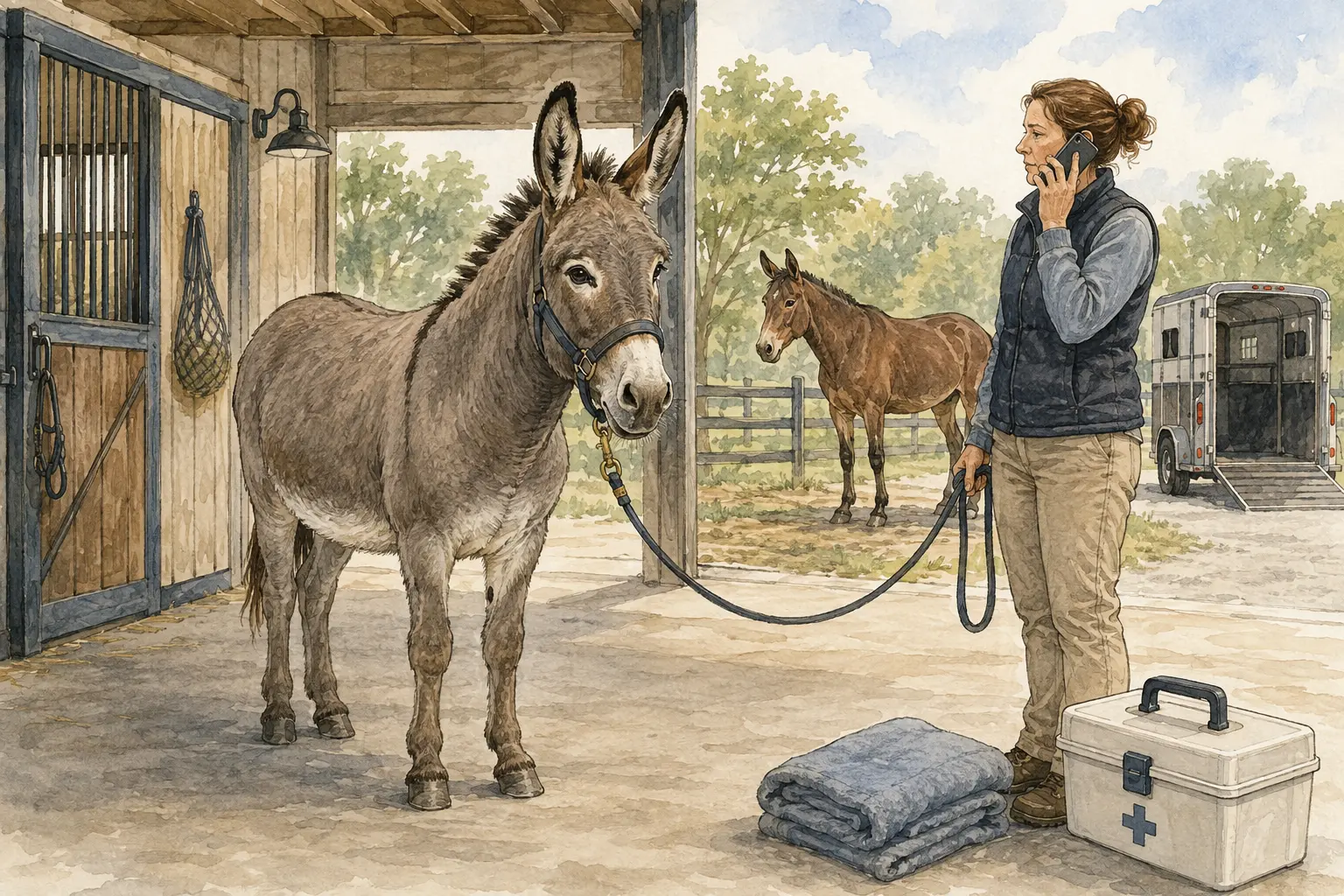
- Keep a stocked first-aid kit, clean towels, bandage materials, thermometer, flashlight and charged phone.
- Practice safe trailer loading and maintain access for a truck and trailer.
- Keep ownership, medication, vaccine and Coggins records accessible.
- Know who can assist if the owner is away and establish permission for emergency decisions.
TRUSTED SOURCES
Sources behind this guide
American Association of Equine PractitionersEmergency care, laminitis and infectious-disease resources ↗The Donkey SanctuaryRecognizing and responding to hyperlipemia in donkeys ↗Merck Veterinary ManualPreventive health and recognition of illness in equids ↗
Source links are provided so readers can review the underlying guidance. Publication dates and recommendations can change; confirm individual plans with the treating veterinary team.