DOMESTIC EQUINE · PREVENTIVE CARE

Equine wellness &
routine diagnostics.

A species-aware framework for examinations, vaccination, parasite control, dentistry, nutrition, hoof care, laboratory testing and monitoring in horses, donkeys and mules.
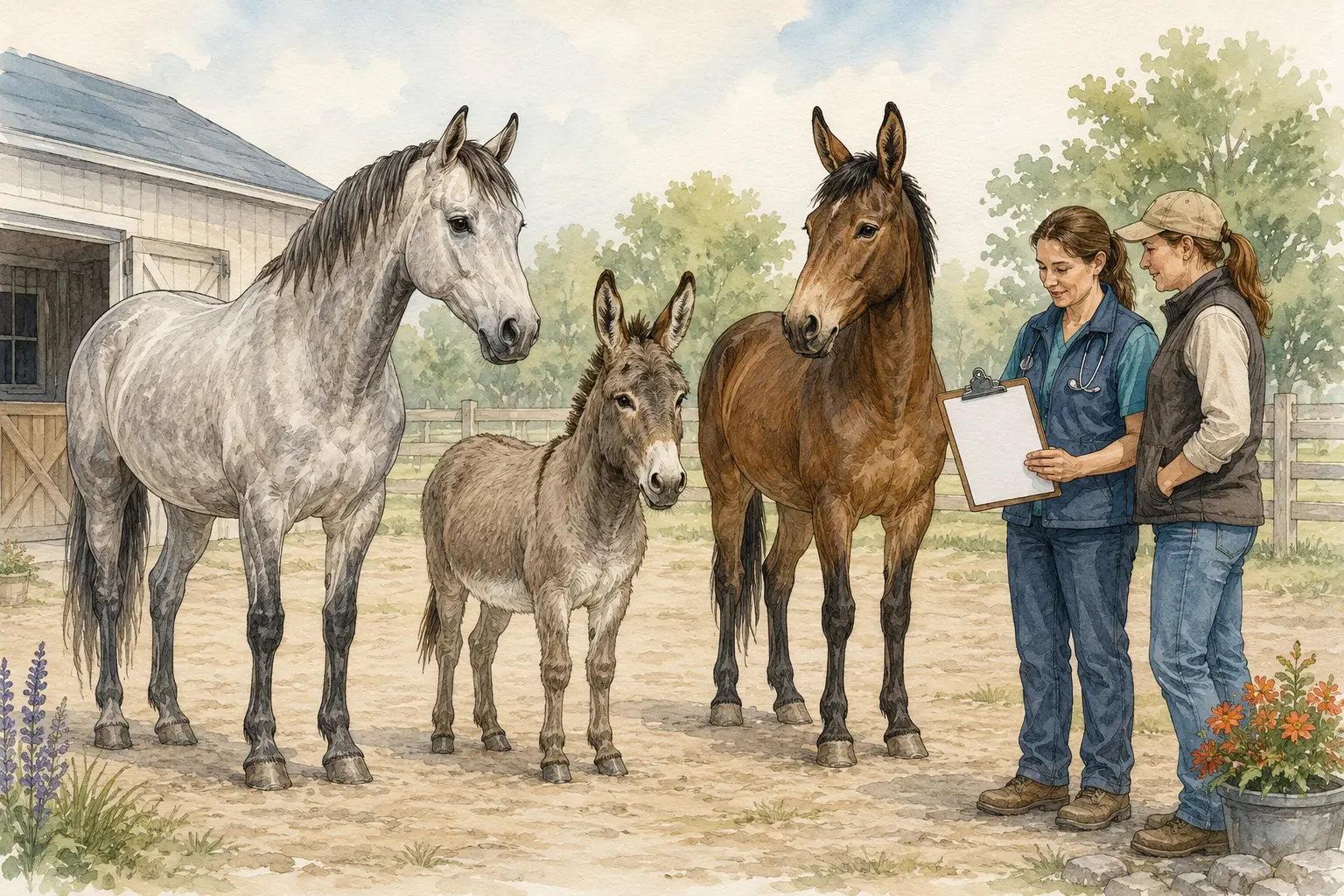
Equine veterinarian and caregiver reviewing a wellness plan beside a horse, donkey and mule
Original illustration created for Companion Health Library.

PREVENTION IS INDIVIDUAL

Species, use and environment all change the plan.

At least annual veterinary wellness care creates a baseline for weight, body condition, heart, lungs, eyes, skin, movement, mouth and feet. Foals, seniors, pregnant animals, working equids and those with chronic disease often need more frequent assessment. Confirm that the veterinarian and farrier are comfortable with the particular equid—not only horses.

3domestic equid groups coveredYearlyminimum wellness reviewTargetedparasite treatment

What the veterinarian evaluates

  • Accurate species identification, age, use, handling history and living conditions
  • Weight estimate, body condition and muscle condition using species-appropriate methods
  • Heart rate and rhythm, lungs, temperature and hydration
  • Eyes, skin, lymph nodes and subtle neurologic or behavioral changes
  • Gait, joints, back, feet, harness or tack areas and performance concerns
  • Mouth, chewing, quidding and dental history
  • Diet, pasture, water, manure, travel, herd contact and medication use

They are equids—but they are not simply small horses

Donkeys

Donkeys evolved for sparse forage and can become obese or metabolically ill on rich pasture and calorie-dense horse diets. Pain and illness may appear as quietness, reduced appetite or small behavior changes rather than dramatic signs.

Mules

Mules inherit traits from both a donkey and a horse. Body size, behavior, handling, drug response and nutritional needs vary, so dosing or management should not be assumed from appearance alone.

Species-specific teams

Hoof shape, dental patterns, normal laboratory values and medication metabolism can differ. Use veterinarians and farriers with donkey and mule experience whenever possible.

Important: Reduced appetite is particularly urgent in donkeys because negative energy balance can lead to dangerous hyperlipemia—excess fat in the blood—with liver and organ complications.

Core protection plus a risk-based plan

The American Association of Equine Practitioners identifies tetanus, Eastern and Western equine encephalomyelitis, West Nile virus and rabies as core vaccines for horses. Donkeys and mules can contract many of the same infectious diseases, but product labeling and species-specific evidence may be limited; the attending veterinarian must individualize use. Influenza, equine herpesvirus, strangles, leptospirosis, botulism and other vaccines depend on region, travel, age, pregnancy and exposure.

Important: Schedules differ for previously unvaccinated equids, youngstock and pregnant animals. Your veterinarian should select products and timing.

Move beyond automatic calendar deworming

  • Use quantitative fecal egg counts to identify shedding patterns and guide treatment frequency.
  • Perform fecal egg count reduction testing when appropriate to check whether a dewormer is still effective on that property.
  • Do not assume a negative fecal egg count excludes every parasite or life stage.
  • Consider lungworm when donkeys share pasture with horses, because donkeys may carry infection with few signs while horses develop respiratory disease.
  • Remove manure, avoid overstocking, rotate or rest areas when practical, and avoid underdosing.
  • Youngstock, seniors and equids with disease may require different strategies.
Important: Overuse of dewormers accelerates resistance. The goal is parasite control—not elimination of every egg.

Three systems that strongly influence comfort and longevity

Dental care

Regular veterinary oral examinations identify sharp enamel points, hooks, periodontal disease, fractured teeth and uneven wear. Frequency depends on age and findings; sedation and a full-mouth speculum are often needed for a complete examination.

Hoof care

Routine trimming or shoeing intervals depend on species, hoof shape, growth, season, use and disease. Donkey feet are not trimmed to an assumed horse shape. Sudden lameness, heat, strong digital pulses or a shifted stance can indicate laminitis.

Nutrition

Base the diet on species, forage quality, body condition, workload and medical needs. Donkeys often need lower-calorie, high-fiber forage and careful pasture access; mules vary. Make changes gradually and test hay when precision matters.

Testing is chosen for the individual equid—not ordered from a universal panel

  • Complete blood count and chemistry can establish baselines or investigate weight loss, fever, poor performance, organ disease and medication safety; interpret results against appropriate species reference intervals.
  • Coggins testing detects antibodies to equine infectious anemia and is commonly required for travel, events, sale or boarding; legal requirements apply to horses, donkeys and mules.
  • Fecal egg counts guide parasite programs but do not replace clinical assessment.
  • Older equids may need endocrine testing for pituitary pars intermedia dysfunction or insulin dysregulation when age, signs or laminitis risk warrant it.
  • Triglyceride testing is especially important when a donkey is ill, stressed, obese, pregnant or eating poorly because of hyperlipemia risk.
  • Imaging is selected for a defined clinical or performance question rather than performed on an automatic whole-body schedule.

Make the plan portable

  • Keep vaccine, Coggins, laboratory, dental, medication and farrier records together.
  • Record species, parentage when known, baseline temperature, body condition and normal behavior.
  • Isolate new or sick equids appropriately and avoid sharing water buckets, tack, harness or grooming equipment during disease concerns.
  • Maintain an emergency transport plan that safely accommodates the individual animal and confirm where after-hours equine care is available.

Sources behind this guide

American Association of Equine PractitionersCore and risk-based vaccination guidelinesAmerican Association of Equine PractitionersInternal parasite control and resistance guidanceMerck Veterinary ManualPreventive health and husbandry of equidsThe Donkey SanctuaryHyperlipemia risk, recognition and prevention in donkeysAmerican Association of Equine PractitionersEquine-owner health and emergency resources

Source links are provided so readers can review the underlying guidance. Publication dates and recommendations can change; confirm individual plans with the treating veterinary team.

CONTINUE EXPLORING

Use these connected guides to prepare informed questions for your veterinary team.

Interactive Symptom NavigatorStart with what you notice and understand when to seek help.Read resource →Diagnostic Testing LibraryUnderstand the tests your veterinarian may recommend.Read resource →Find Veterinary Care Near YouLocate general practices, urgent-care clinics, emergency hospitals and specialists.Read resource →When It Is an EmergencyRecognize signs that require immediate veterinary care.Read resource →Printable Owner ToolkitBring observations, medication details and questions to your appointment.Read resource →