LIZARDS · SPECIES-SPECIFIC GUIDE
Lizard care
begins with natural history.
Species identification, heat, ultraviolet light, humidity, nutrition, enrichment and emergency signs in common companion lizards.
IN THIS GUIDEStart with body form and ecologyMeasure surfaces, air and cyclesFeed the exact digestive strategySupport climbing, digging, hiding and choiceHusbandry history is part of diagnosisSeek prompt reptile careTrusted sources
SPECIES PROFILE
Identify the scientific species before buying equipment.
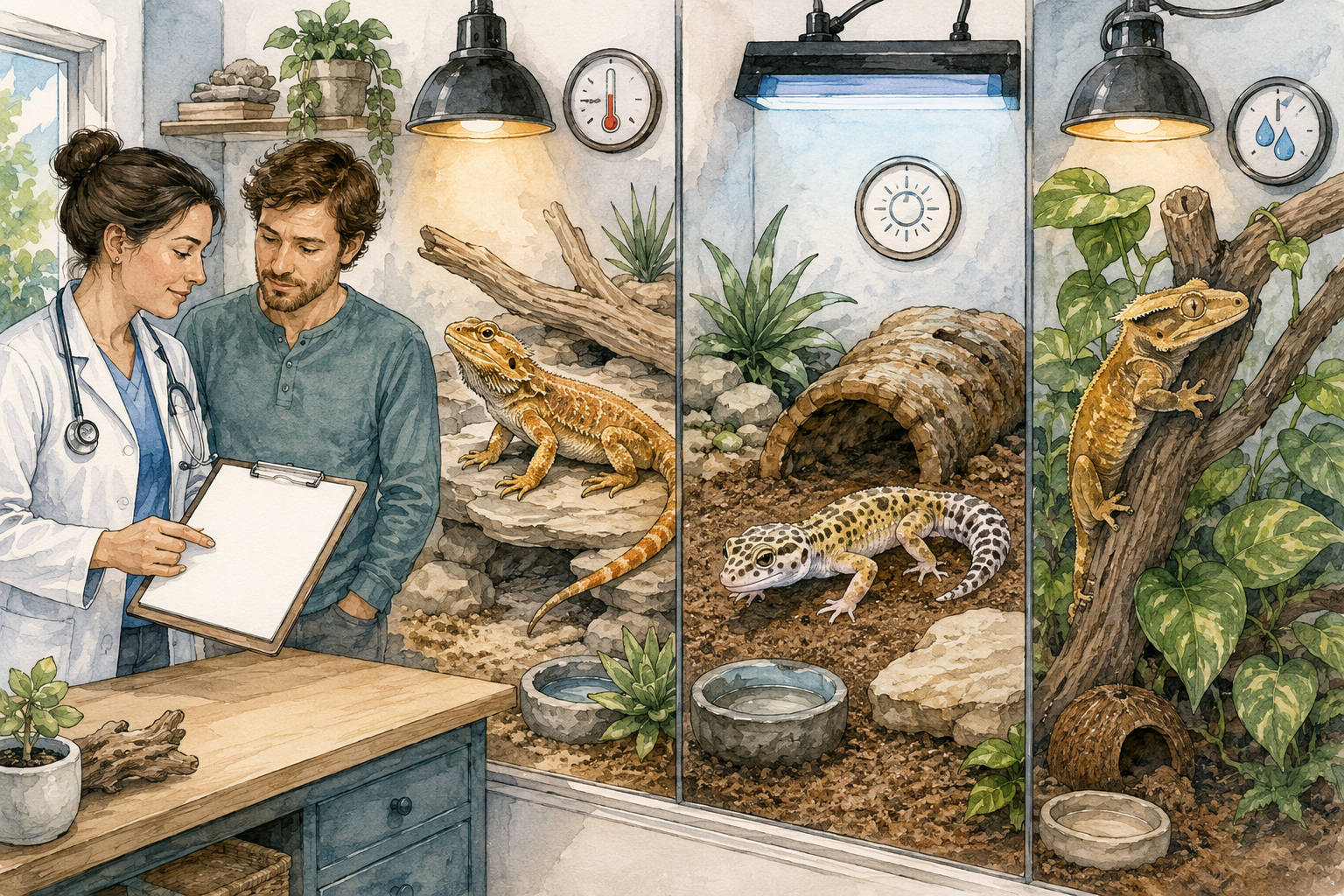
Common pets include bearded dragons, leopard and crested geckos, blue-tongued skinks, anoles, chameleons and monitors. Adult size and difficulty vary enormously.
Gradientmeasured heat choicesUltraviolet-BUVB exposure by speciesDietherbivore, insectivore or omnivore
01 · COMMON GROUPS
Start with body form and ecology
| Group | Examples | Planning issue |
|---|---|---|
| Arid ground lizards | Bearded dragon, leopard gecko, uromastyx | Basking, ultraviolet light, dry zones and diet differ even within arid species. |
| Tropical arboreal geckos | Crested, gargoyle and day geckos | Vertical space, ventilation, humidity cycles and delicate skin. |
| Skinks | Blue-tongued, fire and other skinks | Burrowing, adult space, humidity and omnivore balance. |
| Chameleons | Veiled, panther and Jackson's chameleons | Advanced ventilation, hydration, ultraviolet and low-stress visual barriers. |
| Monitors | Ackie and larger monitor species | High intelligence, digging, large space, intense heat and powerful anatomy. |
02 · HABITAT
Measure surfaces, air and cycles
- Create basking, warm and cool areas with guarded heat sources.
- Use a thermostat where appropriate and independent digital probes or infrared surface measurement.
- Select ultraviolet B equipment by species, distance and screen barrier and replace on schedule.
- Match humidity cycles, substrate depth, ventilation, hides and climbing to ecology.
- Recheck after seasonal, room, bulb or decor changes.
03 · NUTRITION
Feed the exact digestive strategy
- Confirm herbivore, insectivore, carnivore or omnivore needs by age.
- Use appropriate plant variety or safely sourced, gut-loaded feeder insects.
- Match prey size and remove uneaten insects that may injure the lizard.
- Use calcium and vitamins according to ultraviolet exposure and veterinary plan.
- Track weight, body condition, stool, urates, appetite and shedding.
04 · ENRICHMENT & HANDLING
Support climbing, digging, hiding and choice
- Provide multiple hides and visual cover.
- Use stable branches and ledges that support the animal fully.
- Allow digging or burrowing where natural.
- Handle only species and individuals that tolerate it, supporting the whole body.
- Never restrain or lift by the tail; some species can drop it.
05 · COMMON PROBLEMS
Husbandry history is part of diagnosis
- Metabolic bone disease, weakness or fractures
- Burns from unguarded heat or unregulated rocks
- Retained shed around toes, tail or eyes
- Respiratory disease from inappropriate temperature, humidity or ventilation
- Parasites, impaction, reproductive disease and nutritional imbalance
Important: Do not change several habitat variables or begin multiple treatments before recording the original conditions and contacting an experienced veterinarian.
06 · URGENT SIGNS
Seek prompt reptile care
- Open-mouth breathing outside normal basking, severe effort or discharge
- Collapse, marked weakness, tremor, seizure or inability to climb
- Prolapse, egg-laying difficulty or major abdominal swelling
- Burn, deep wound, fracture or animal bite
- Persistent refusal of food with weight loss or major stool change
TRUSTED SOURCES
Sources behind this guide
Merck Veterinary ManualReptile management and husbandry ↗Association of Reptile and Amphibian VeterinariansOwner resources and veterinarian directory ↗
Source links are provided so readers can review the underlying guidance. Publication dates and recommendations can change; confirm individual plans with the treating veterinary team.