PARASITE LIBRARY · MITES
Mites in dogs and cats
require the right diagnosis.
Sarcoptic mange, demodicosis and ear mites can look alike to owners but differ in contagiousness, host biology, testing and treatment.
IN THIS GUIDEThe key differencesA small mite can cause disproportionate itchingLocalized and generalized disease are not the sameDark debris is not automatically ear mitesUse the exact product and species planPain, neurologic signs and infection should not waitTrusted sources
SIMILAR ITCH · DIFFERENT BIOLOGY
Do not treat every crust, hairless patch or dirty ear as the same mite.
Veterinarians combine lesion pattern, exposure history, skin scrapings, hair examination, tape preparations, ear cytology and response to treatment. A negative test does not exclude every mite.
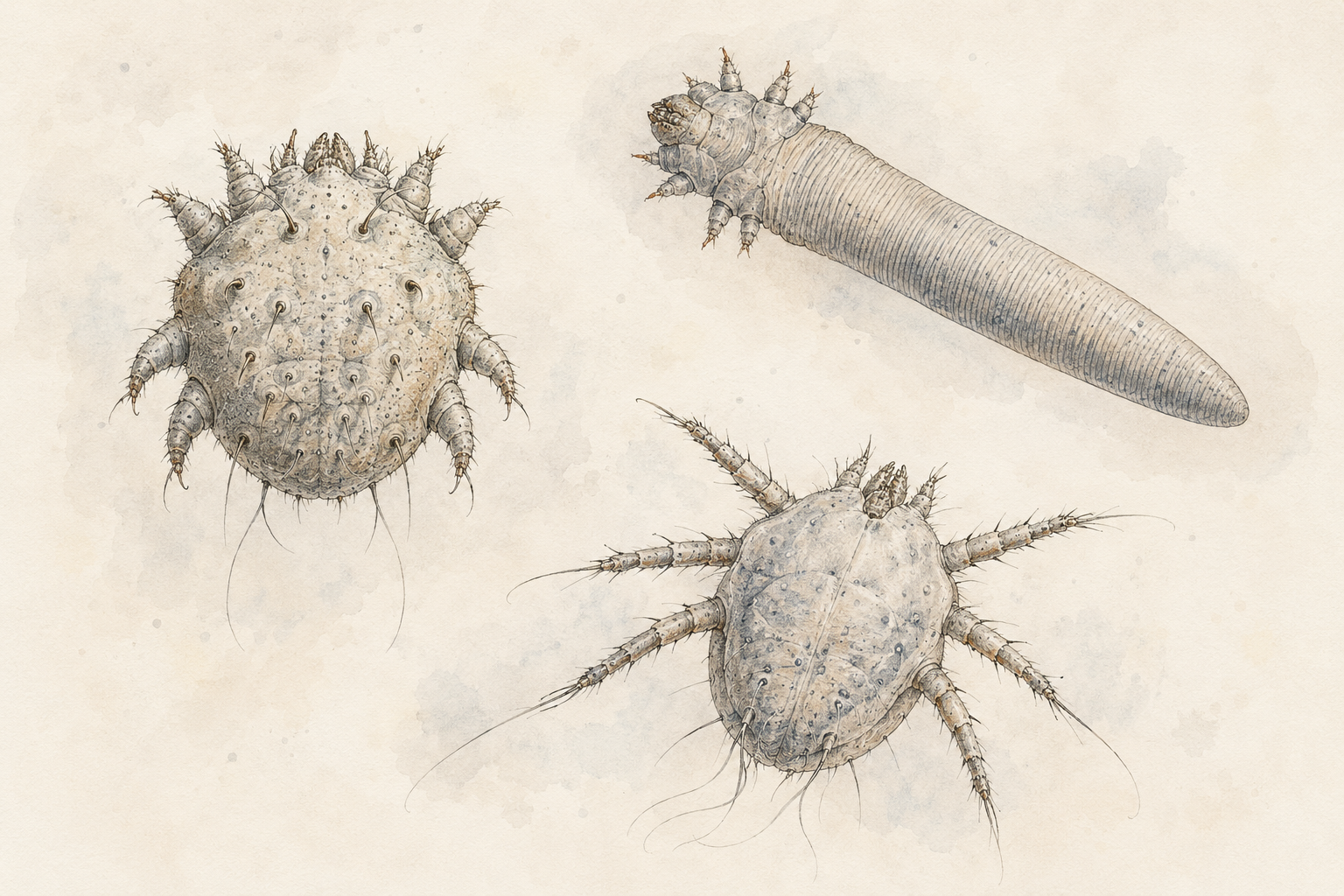
Sarcoptesoften intensely contagiousDemodexlives in folliclesOtodectesusually affects ears
01 · THREE COMMON MITE PROBLEMS
The key differences
| Mite problem | Typical pattern | Contagious? |
|---|---|---|
| Sarcoptic mange (Sarcoptes scabiei) | Sudden severe itch, crusts and hair loss; ear edges, elbows and underside are common sites | Yes—readily between susceptible animals; people may develop temporary itchy lesions |
| Demodicosis (Demodex species) | Patchy or generalized hair loss, comedones and secondary infection; itch may be mild unless infection is present | Usually not managed as a routine contagious disease; species and immune status matter |
| Ear mites (Otodectes cynotis) | Dark debris, head shaking, ear scratching and inflammation | Yes—especially among cats, kittens, dogs and ferrets in close contact |
Important: Cheyletiella, harvest mites, walking dandruff, nasal mites and species-specific mites also occur. Rabbits, birds and exotic mammals need separate diagnostic and treatment plans.
02 · SARCOPTIC MANGE
A small mite can cause disproportionate itching
- Mites burrow in superficial skin and can spread through close contact and contaminated items.
- Affected animals may scratch before mites are easy to find.
- Skin scrapings can be negative because few mites produce severe signs.
- Household contact animals may need coordinated treatment even if they look normal.
- People with itchy lesions should contact a healthcare professional; animal treatment alone is not personal medical care.
03 · DEMODEX
Localized and generalized disease are not the same
- Demodex mites inhabit hair follicles and sebaceous structures.
- Small localized areas in a young dog may behave differently from widespread disease in an adult.
- Generalized or adult-onset demodicosis can justify investigation for immune suppression or underlying illness.
- Deep skin scrapings, hair plucks and other tests may be repeated to monitor clearance.
- Secondary bacterial infection may require separate diagnosis and treatment.
Important: In the United States, treatment may involve extra-label veterinary use. Do not copy online dosing for livestock or canine products.
04 · EAR MITES
Dark debris is not automatically ear mites
- Yeast, bacteria, foreign material, polyps and allergy can produce similar signs.
- Veterinarians examine the canal and debris before choosing medication.
- The eardrum’s condition affects which cleaners and treatments are safe.
- All susceptible contact animals may need evaluation.
- Untreated inflammation can lead to painful infection, blood-filled ear swelling or balance problems.
05 · TREATMENT & HOME SAFETY
Use the exact product and species plan
- Confirm every animal’s species, age, weight and health status before treatment.
- Treat the complete course and attend recommended rechecks even when itching improves early.
- Wash or replace bedding and clean grooming tools as directed for contagious mites.
- Do not place parasite products into an ear unless the label and veterinarian specifically direct it.
- Keep dog-only products away from cats and exotic animals.
06 · WHEN TO CALL
Pain, neurologic signs and infection should not wait
- Head tilt, loss of balance, circling or abnormal eye movement
- A swollen ear flap, severe ear pain or bleeding
- Fever, lethargy, pus, spreading redness or deep wounds
- A rapidly worsening puppy, kitten or immunocompromised animal
- Drooling, tremors, vomiting, weakness or seizure after a product
Important: Bring every product used—including cleaners, oils, farm products and over-the-counter drops—to the visit.
TRUSTED SOURCES
Sources behind this guide
Companion Animal Parasite CouncilVeterinary guidelines for mites, worms and protozoal parasites ↗Merck Veterinary ManualVeterinary reference for mite infestations and mange ↗Centers for Disease Control and PreventionHealthy Pets, Healthy People zoonotic-disease information ↗
Content last reviewedAugust 16, 2026Review statusVeterinary-informed; independent veterinarian review not yet completed.
Source links are provided so readers can review the underlying guidance. Publication dates and recommendations can change; confirm individual plans with the treating veterinary team.