MULES · COMPLETE OWNER GUIDE
Mule care
combines two species thoughtfully.
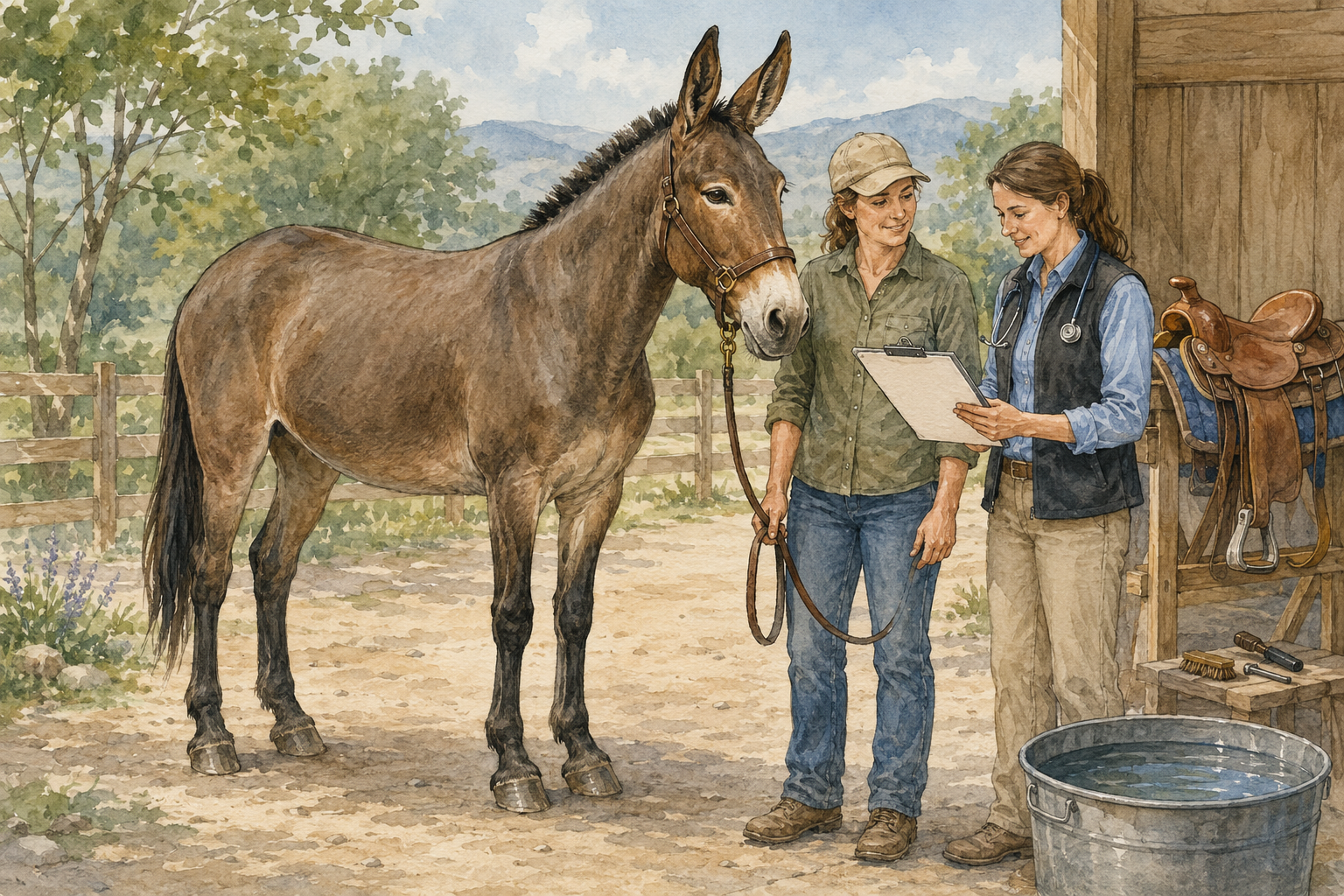
Behavior, nutrition, preventive care, hoof and dental health, work conditioning and emergency recognition in mules and hinnies.
IN THIS GUIDEBuild cooperation before restraint is neededFeed the individual—not the workload stereotypeHybrid conformation changes fitCreate an equine plan with mule-specific dosing awarenessSoundness includes willingness and recoveryUse horse and donkey warning signsTrusted sources
SPECIES PROFILE
A mule has a donkey sire and horse dam; a hinny has the reverse cross.
Mules are usually sterile but require full preventive and reproductive-health awareness. Their intelligence and self-preservation reward clear, gradual, trust-based training.
Hybridtraits vary by individualTrainwith clarity and consentFittack and workload precisely
01 · BEHAVIOR & HANDLING
Build cooperation before restraint is needed
- Use positive reinforcement, consistent cues and short progressive sessions.
- Train haltering, leading, hoof handling, injections, oral medication and trailer loading.
- Avoid force escalation; a frightened mule may learn to resist the entire context.
- Provide compatible equine companionship and turnout.
- Observe ear, tail, posture and avoidance signals before conflict develops.
02 · NUTRITION & WEIGHT
Feed the individual—not the workload stereotype
- Base the diet on forage quality, body condition, metabolism and actual work.
- Many mules maintain weight on fewer calories than comparable horses.
- Monitor neck crest and regional fat for insulin dysregulation risk.
- Introduce changes gradually and avoid unrestricted rich pasture when risk is present.
- Provide clean water, salt and correctly balanced minerals.
03 · FEET, TEETH & EQUIPMENT
Hybrid conformation changes fit
- Use a farrier comfortable with mule hoof shape and limb conformation.
- Schedule dental care based on age, mouth findings and feed response.
- Fit saddles, collars, harness and packs to the individual's back and shoulder shape.
- Check skin after work for heat, rubs, swelling and pressure injury.
- Condition gradually and match workload to terrain, heat and fitness.
04 · PREVENTIVE MEDICINE
Create an equine plan with mule-specific dosing awareness
- Review vaccines, fecal testing, parasite control and travel documents.
- Track baseline temperature, pulse, respiration, weight and body condition.
- Discuss medication and anesthesia differences rather than assuming horse dosing.
- Maintain quarantine and biosecurity for travel and new arrivals.
- Use bloodwork, imaging or metabolic testing based on age, work and findings.
05 · WORK & WELFARE
Soundness includes willingness and recovery
- Watch gait, stride, breathing, sweating and recovery during and after work.
- Provide rest, shade, water and surface-appropriate hoof protection.
- Do not interpret reluctance as stubbornness before evaluating pain, fit and comprehension.
- Increase distance, load and terrain difficulty gradually.
- Record subtle performance change and obtain veterinary assessment early.
06 · EMERGENCIES
Use horse and donkey warning signs
- Colic, reduced manure or refusal of food
- Choke, labored breathing, collapse or neurologic change
- Severe lameness, laminitis signs, fracture or deep wound
- Eye pain, cloudiness or trauma
- Heat illness, tying-up signs or poor recovery after work
- Uncontrolled bleeding or toxin exposure
Important: Call before medicating or transporting. Stoic behavior can conceal severe disease.
TRUSTED SOURCES
Sources behind this guide
American Association of Equine PractitionersEquine owner health resources ↗Merck Veterinary ManualHorse-owner health information ↗
Source links are provided so readers can review the underlying guidance. Publication dates and recommendations can change; confirm individual plans with the treating veterinary team.