Cats
Some canine flea products contain permethrin at concentrations dangerous to cats. Always confirm the exact label.
EXTERNAL PARASITE OWNER GUIDE
Ctenocephalides felis and related species
Fast-moving, biting insects whose eggs, larvae and pupae can persist throughout a household—not just on an animal.
THE IMPORTANT DIFFERENCE
Many parasites produce similar signs, and some are microscopic or hidden inside the body. A veterinarian can choose the right examination, testing and species-safe prevention plan.
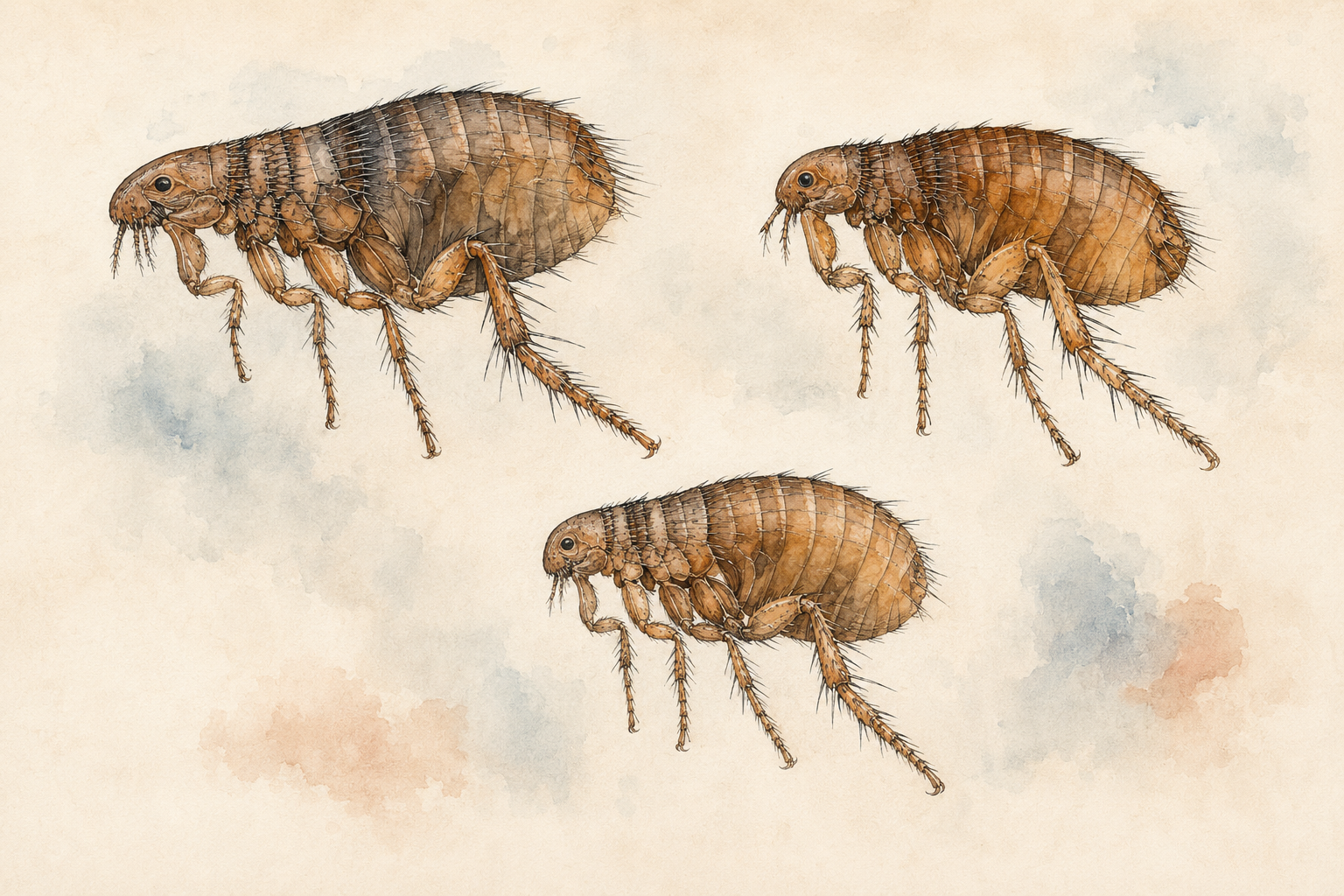
Adults are tiny, dark reddish-brown, flattened insects that move quickly through fur. Flea dirt looks like black pepper and may turn rust-red on a damp white towel. Eggs and immature stages are usually in the environment and can be difficult to see.
The exact parasite species, exposure route and appropriate treatment may differ between these animals.
Some canine flea products contain permethrin at concentrations dangerous to cats. Always confirm the exact label.
Rabbit, ferret and rodent product safety differs substantially; obtain species-specific veterinary guidance before treatment.
Animals can have a parasite without showing every listed sign. Difficulty breathing, collapse, severe weakness, pale gums or rapidly worsening illness require urgent veterinary attention.
Diagnostic choices depend on the suspected parasite, stage of infection, animal species and clinical history.
Fleas can bite people, and some flea-associated organisms can affect human health. People can rarely acquire the common flea tapeworm by accidentally swallowing an infected flea; children warrant particular supervision.
Speak with a physician about personal medical concerns, especially during pregnancy, immune suppression or significant exposure. Ask your veterinarian what precautions are appropriate for the animal and household.
This educational guide does not replace veterinary examination, diagnostic testing, individualized treatment or human medical advice.