Small mammals
Guinea pigs and rabbits can develop painful or severe mite disease, sometimes with dramatic itching or skin injury.
EXTERNAL PARASITE OWNER GUIDE
Sarcoptes, Demodex, Otodectes and related mites
Usually microscopic arachnids that can affect skin, ears, feather follicles or other tissues, with very different behavior between mite species.
THE IMPORTANT DIFFERENCE
Many parasites produce similar signs, and some are microscopic or hidden inside the body. A veterinarian can choose the right examination, testing and species-safe prevention plan.
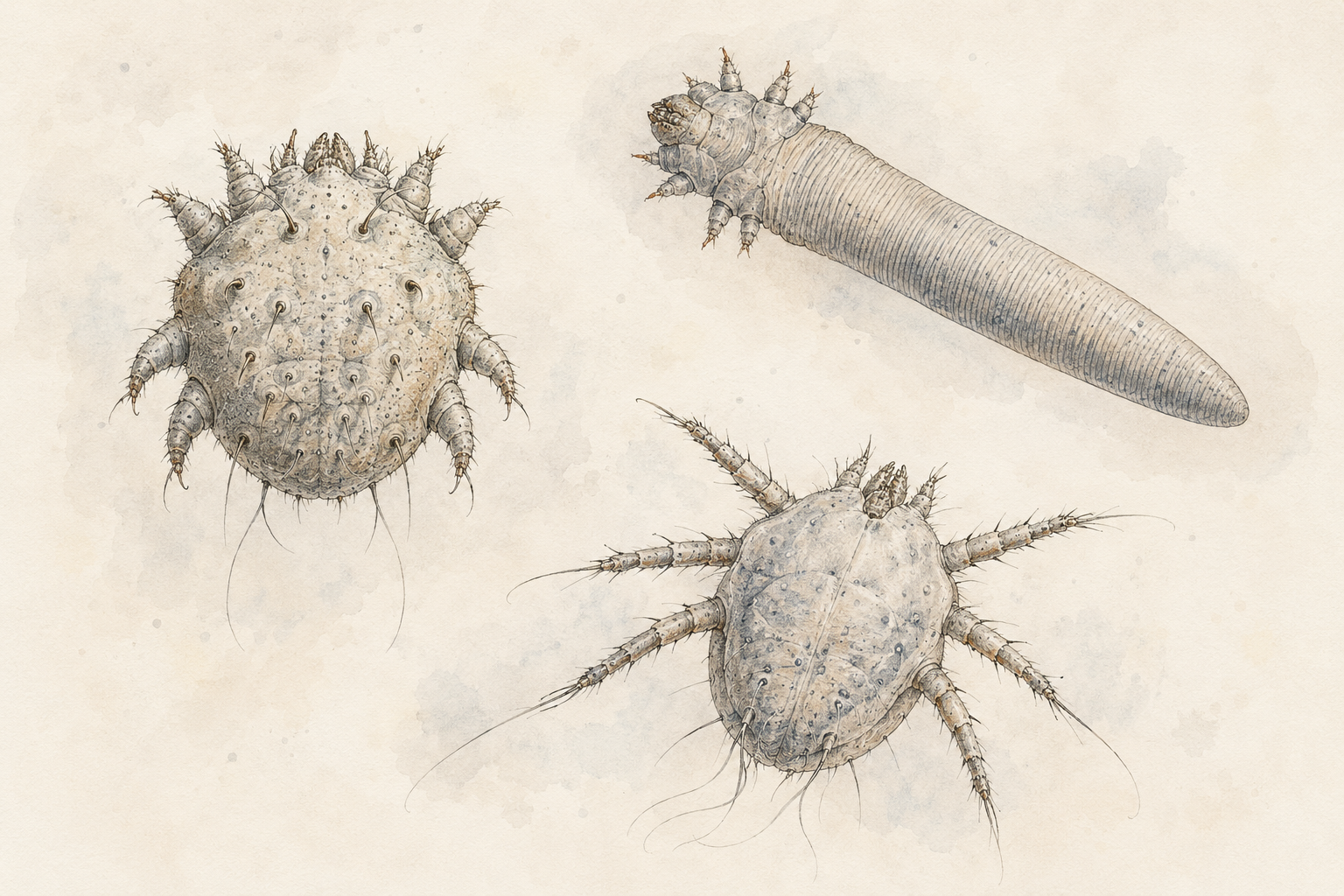
Most mites cannot be identified with the naked eye. Ear mites may create dark, crumbly discharge; sarcoptic mange can cause crusting and intense itch; Demodex may cause patchy hair loss. These signs do not establish a diagnosis without examination.
The exact parasite species, exposure route and appropriate treatment may differ between these animals.
Guinea pigs and rabbits can develop painful or severe mite disease, sometimes with dramatic itching or skin injury.
Scaly-face or leg mites and feather-associated mites require avian-specific diagnosis and treatment.
Animals can have a parasite without showing every listed sign. Difficulty breathing, collapse, severe weakness, pale gums or rapidly worsening illness require urgent veterinary attention.
Diagnostic choices depend on the suspected parasite, stage of infection, animal species and clinical history.
Some animal-associated sarcoptic mites can temporarily irritate human skin. Other mites, including many Demodex species, are strongly host-adapted. Persistent human symptoms should be discussed with a medical professional.
Speak with a physician about personal medical concerns, especially during pregnancy, immune suppression or significant exposure. Ask your veterinarian what precautions are appropriate for the animal and household.
This educational guide does not replace veterinary examination, diagnostic testing, individualized treatment or human medical advice.