
Cats
Many canine tick-control products are unsafe for cats. Choose a specifically feline-labeled option.
EXTERNAL PARASITE OWNER GUIDE
Ixodes, Amblyomma, Dermacentor and other genera
Blood-feeding arachnids that can transmit different infectious organisms depending on tick species, region and attachment history.
THE IMPORTANT DIFFERENCE
Many parasites produce similar signs, and some are microscopic or hidden inside the body. A veterinarian can choose the right examination, testing and species-safe prevention plan.
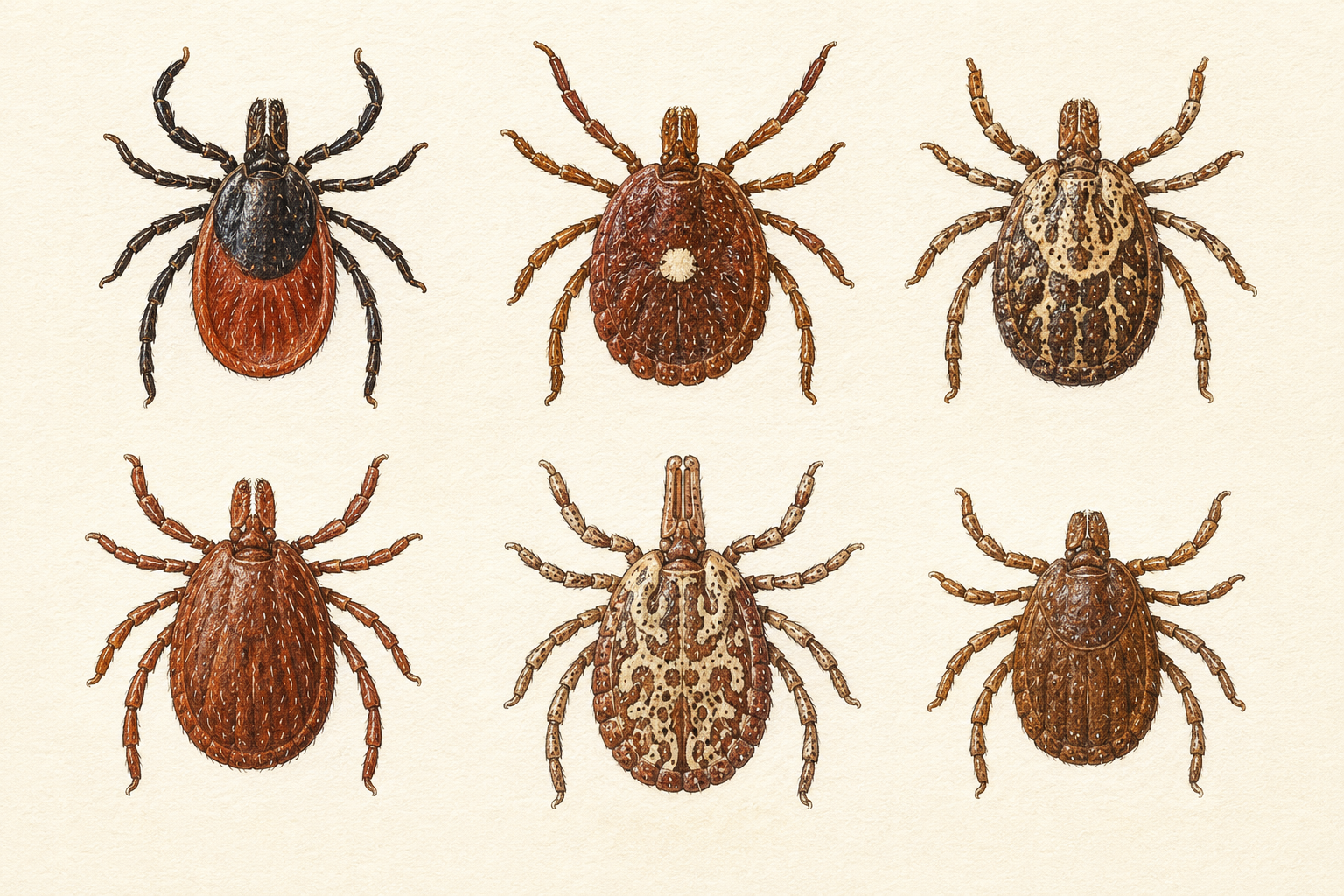
An unfed tick may resemble a small flat seed with eight legs; an engorged tick can become rounded, pale or gray. Larval ticks have six legs. Size, color and markings vary, and a photograph alone cannot reliably establish disease risk.
A tick bite can create a local skin problem and expose the animal to certain infectious agents. The risk depends on the tick, location, attachment, and organism involved. Tick identification and travel history can be useful, but they do not diagnose infection by themselves. Prevention products differ in coverage and instructions. After removal, monitor the site and report illness, while discussing whether testing is indicated rather than automatically using antibiotics after every bite.
The exact parasite species, exposure route and appropriate treatment may differ between these animals.
Many canine tick-control products are unsafe for cats. Choose a specifically feline-labeled option.
Check ears, under the tail, between the legs and other concealed attachment sites; regional tick-borne diseases vary.
Animals can have a parasite without showing every listed sign. Breathing difficulty or rapidly worsening illness requires urgent care from a veterinarian experienced with the species.
Similar-looking skin changes can arise from parasites, infection, allergy, injury, or another underlying problem. Sampling the affected area can help separate those possibilities. Depending on the lesion, the veterinarian may examine cells, take scrapings, culture organisms, or obtain tissue for a pathologist. The purpose is to identify what is driving the damage, not just describe the redness or hair loss. Previous creams, cleaners, and medications are worth reporting because they can change the appearance and sometimes the usefulness of samples.
Diagnostic choices depend on the suspected parasite, stage of infection, animal species and clinical history.
Parasite control depends on the organism, its life cycle, and the host species. A medicine effective against one parasite may not cover another, and a product safe for one species may be dangerous for a different animal. Testing may be needed before treatment and again when assessing response or ongoing exposure. Environmental stages and untreated contacts can contribute to reinfection. The plan therefore may combine a specific medicine with cleaning, husbandry, and prevention instead of relying on a single dose.
A preventive plan depends on the product's labeled species, age, weight, target organisms, route, and administration interval. Similar names or packaging do not establish that products are interchangeable. Some cover parasites that another does not. Review the current label and patient history with the veterinarian, including previous reactions and other medicines. Record actual administration rather than purchase dates. If a dose is missed or given incorrectly, obtain product-specific advice instead of doubling, combining, or substituting a treatment independently.
Risk can involve contact animals, vectors, travel, boarding, new arrivals, equipment, food, water, or wildlife, depending on the organism. Indoor housing or a fenced property may reduce some exposures without eliminating all of them. Conversely, prevention should still be tailored rather than chosen without regard to the actual setting. Describe the household or group accurately and review changes over time. Geographic summaries and maps are useful context, but cannot establish an individual animal's infection status or exact risk by themselves.
People and pets can encounter the same infected ticks. An animal does not generally transmit Lyme disease directly to a person, but ticks brought into a shared environment can create human exposure.
Speak with a physician about personal exposure concerns. Ask a veterinarian what precautions are appropriate for the animal and household.
This educational guide does not replace veterinary examination, diagnostic testing, individualized treatment or human medical advice.