PIGS · COMPLETE OWNER GUIDE
Pig care
requires livestock-informed planning.
Nutrition, weight, skin, feet, behavior, heat safety, biosecurity and emergencies in farm and companion pigs.
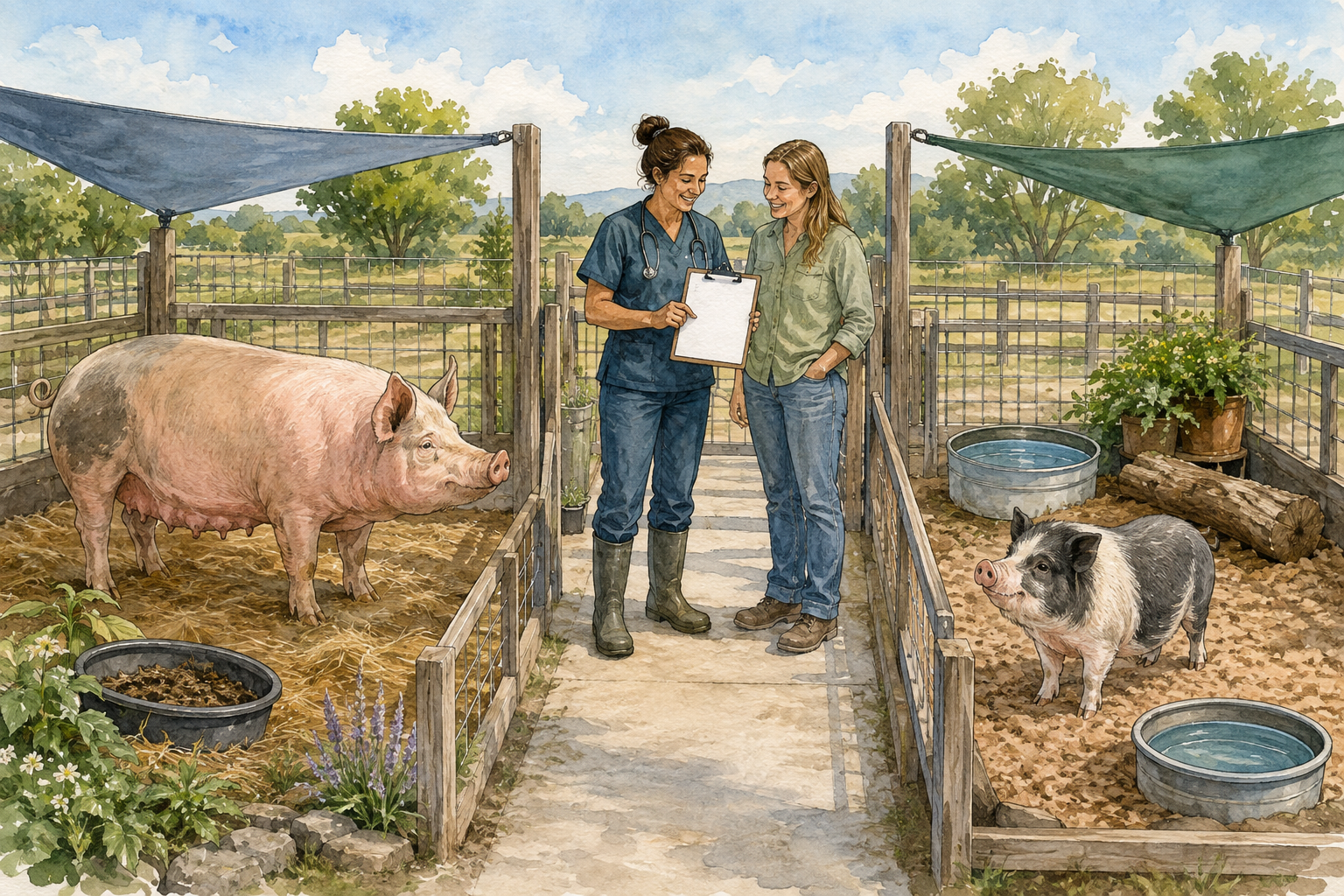
IN THIS GUIDEObserve appetite, posture and social behaviorUse a complete ration—not leftoversRooting and training prevent conflictPlan feet, tusks, skin, vaccines and parasitesPigs can overheat rapidlyCall immediatelyTrusted sources
SPECIES PROFILE
Domestic pigs are intelligent social omnivores with poor heat tolerance.
Commercial, heritage and companion pigs differ in scale and purpose but share rooting, social, nutritional and handling needs. Train calmly before size makes care difficult.
Measuredcomplete pig dietRootdaily behavioral outletCoolheat protection is essential
01 · DAILY CARE
Observe appetite, posture and social behavior
- Check feed, water, manure, urine, breathing and willingness to rise.
- Notice hunching, dog-sitting, isolation, lameness or reluctance to compete.
- Inspect skin, eyes, ears, feet and body condition.
- Confirm shade, cooling and dry resting space.
- Use records for growth, weight, reproduction, treatments and behavior.
02 · NUTRITION & WEIGHT
Use a complete ration—not leftovers
- Feed a measured complete pig diet for life stage and size.
- Do not use dog food, unrestricted grain, bread or sweets as the staple.
- Provide safe produce and treats only within the calorie plan.
- Prevent access to garbage, compost, moldy food and toxic plants.
- Use a weight and body-condition plan before obesity limits movement.
03 · HOUSING & BEHAVIOR
Rooting and training prevent conflict
- Provide secure fencing, shade, ventilation, bedding and species-safe cooling.
- Offer rooting, foraging, scratching and manipulable enrichment.
- Train stationing, crate or trailer entry and hoof handling with rewards.
- Use compatible social housing and multiple resources.
- Do not rely on punishment for food guarding or fearful behavior.
04 · PREVENTIVE MEDICINE
Plan feet, tusks, skin, vaccines and parasites
- Arrange routine care with a pig-experienced veterinarian.
- Review vaccines and parasites by location and exposure.
- Check hooves, joints, skin folds, eyes, ears and teeth or tusks.
- Discuss reproductive management and spay or neuter planning early.
- Maintain legal identification, movement and medication records.
05 · HEAT & BIOSECURITY
Pigs can overheat rapidly
- Provide shade and multiple reliable water sources before hot weather.
- Use fans, ventilation, sprinklers or wallows appropriately.
- Avoid transport and handling during peak heat.
- Quarantine arrivals and prevent contact with feral pigs and wildlife.
- Treat sudden group fever, cough, skin discoloration or deaths as a biosecurity event.
06 · EMERGENCIES
Call immediately
- Open-mouth breathing, heat stress, weakness or collapse
- A swollen abdomen, repeated vomiting, severe diarrhea or inability to pass manure
- Neurologic signs, seizure or inability to stand
- Straining to urinate, prolapse or prolonged labor
- Major trauma, uncontrolled bleeding or sudden group illness
Important: These animals are legally food-producing species in many jurisdictions even when kept as pets. Use veterinarian-directed medication, permanent identification and withdrawal records.
TRUSTED SOURCES
Sources behind this guide
Merck Veterinary ManualLivestock preventive care and husbandry ↗United States Department of Agriculture Animal and Plant Health Inspection ServiceLivestock disease and biosecurity resources ↗Merck Veterinary ManualRoutine care of companion pigs ↗
Source links are provided so readers can review the underlying guidance. Publication dates and recommendations can change; confirm individual plans with the treating veterinary team.