RABBIT HEALTH · DENTAL CARE
Dental disease
in rabbits.
Why continuously growing teeth can cause hidden pain, which signs owners may notice, and why clipping teeth at home is unsafe.
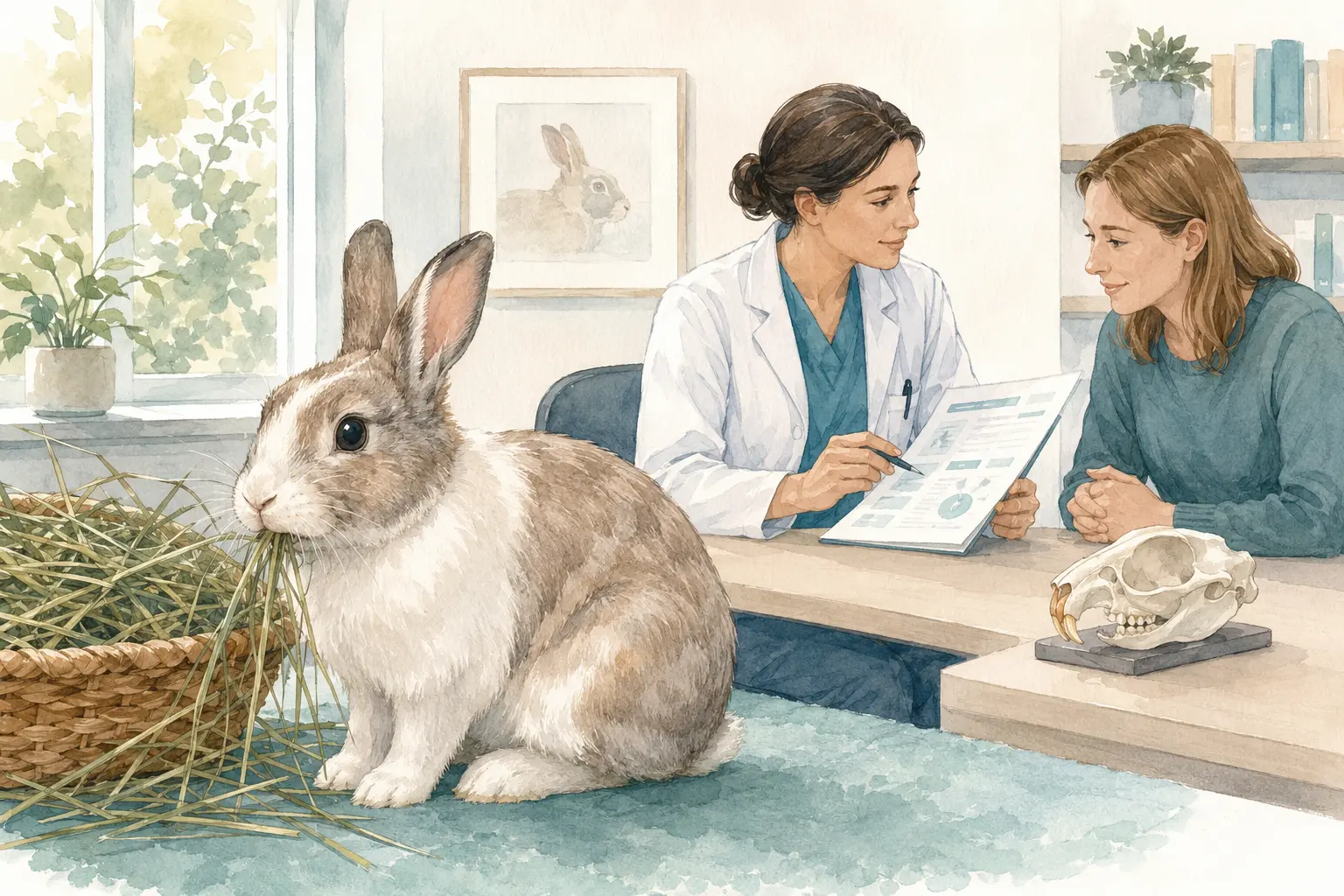
RABBIT TEETH GROW CONTINUOUSLY
Normal chewing and alignment matter for life.
Rabbit incisors, premolars and molars grow continuously. Genetics, jaw alignment, trauma, diet and other disease can produce sharp points, overgrowth, root changes, abscesses and chronic pain.
Dental pain does not always look like a mouth problem
- Dropping food, chewing slowly or choosing soft foods
- Reduced hay intake or appetite
- Drooling or a wet chin and forelegs
- Weight loss or smaller droppings
- Eye or nasal discharge, facial swelling or a protruding eye
- Visible incisor overgrowth or inability to close the mouth normally
A complete assessment may require more than an awake look
A veterinarian may use an oral speculum, sedation, skull imaging or other diagnostics to evaluate cheek teeth and roots safely. Treatment depends on which teeth and surrounding tissues are affected.
Home trimming can fracture teeth and miss deeper disease
- Never cut incisors with nail clippers or household tools.
- Do not delay because the rabbit still eats treats; softer foods can mask pain.
- Do not assume wood chews can correct malocclusion.
- Provide abundant appropriate grass hay, but recognize that diet cannot repair every alignment problem.
Some rabbits need repeated monitoring
Congenital malocclusion, tooth-root disease and prior abscesses may require ongoing imaging, dental procedures, pain control, nutritional support or extraction planning with a rabbit-experienced veterinarian.
TRUSTED SOURCES
Sources behind this guide
Source links are provided so readers can review the underlying guidance. Publication dates and recommendations can change; confirm individual plans with the treating veterinary team.