RABBIT EMERGENCY · DIGESTIVE HEALTH

Gastrointestinal
stasis.

Why reduced appetite and droppings are urgent, what may cause the slowdown, and what to do while arranging rabbit-experienced veterinary care.
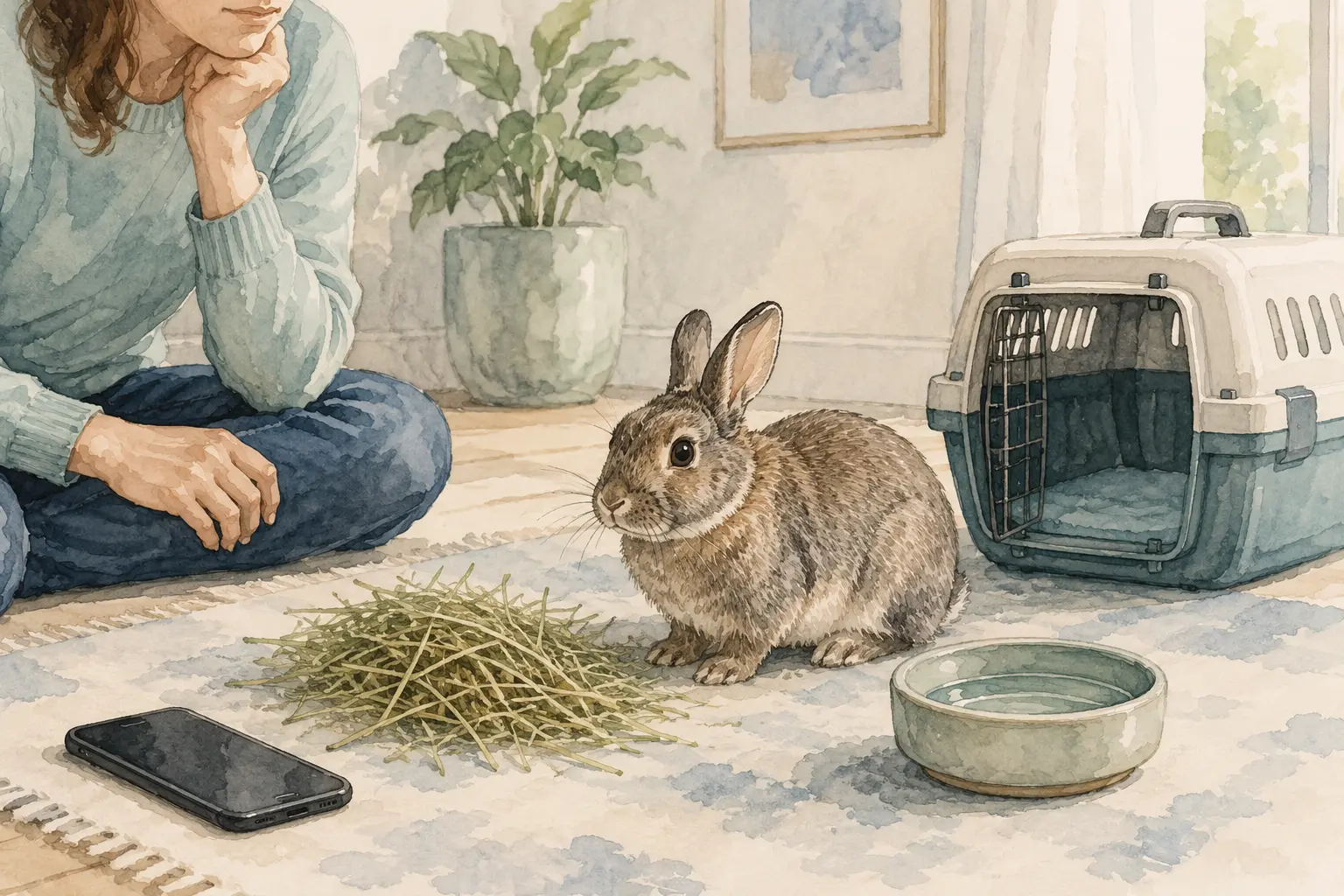
Caregiver preparing to call a veterinarian for a quiet rabbit beside untouched hay
Original illustration created for Companion Health Library.

GASTROINTESTINAL MEANS THE STOMACH AND INTESTINES

Stasis is a sign—not a complete diagnosis.

Gastrointestinal stasis means the digestive tract has slowed or stopped moving normally. Pain, dental disease, dehydration, low-fiber diet, stress, another illness or an intestinal blockage can look similar at home. The underlying cause determines treatment.

Urgentreduced appetiteTrackdropping size and numberExaminefind the underlying cause

Act on changes early

  • Eating less or refusing food, especially hay
  • Fewer, smaller, misshapen or absent droppings
  • Hunched posture, hiding, tooth grinding or reluctance to move
  • A tense, painful or enlarged abdomen
  • Weakness, low body temperature or unusual quietness
Important: A rabbit that has stopped eating, stopped passing normal droppings, appears painful or seems weak needs urgent veterinary assessment. Twelve hours without eating is never a normal wait-and-see situation.

The slowdown may begin somewhere else

Pain

Dental disease, arthritis, urinary disease, surgery and many other painful conditions can suppress eating.

Diet and dehydration

Insufficient long-stem fiber, abrupt food changes and inadequate water can contribute.

Obstruction or illness

Foreign material, compression, organ disease, infection or other emergencies can resemble uncomplicated stasis and require different treatment.

Call a rabbit-experienced veterinarian now

  • Describe the last normal meal and droppings, posture, activity and any possible exposure.
  • Keep the rabbit quiet, comfortably warm and transport in a secure carrier with a towel and familiar hay.
  • Bring medication and diet information.
  • Do not give human medicines, leftover gut-motility drugs or home remedies.
Important: Do not force-feed unless a veterinarian who has assessed the situation directs you. Feeding against an obstruction can be dangerous.

Support normal movement every day

  • Unlimited appropriate grass hay
  • Fresh water and gradual diet changes
  • Daily exercise and enrichment
  • Routine dental and wellness assessment
  • Early treatment of pain and illness
  • Regular grooming during heavy shedding without relying on hairball remedies

Sources behind this guide

University of California, Davis School of Veterinary MedicineRabbit care, housing, dental and preventive guidanceMerck Veterinary ManualNutrition and the importance of dietary fiberMerck Veterinary ManualCommon disorders and diseases of rabbitsHouse Rabbit SocietyCompanion-rabbit care and welfare resourcesMerck Veterinary ManualDigestive disorders and gastrointestinal stasis

Source links are provided so readers can review the underlying guidance. Publication dates and recommendations can change; confirm individual plans with the treating veterinary team.

CONTINUE EXPLORING

Use these connected guides to prepare informed questions for your veterinary team.

Interactive Symptom NavigatorStart with what you notice and understand when to seek help.Read resource →Diagnostic Testing LibraryUnderstand the tests your veterinarian may recommend.Read resource →Find Veterinary Care Near YouLocate general practices, urgent-care clinics, emergency hospitals and specialists.Read resource →When It Is an EmergencyRecognize signs that require immediate veterinary care.Read resource →Printable Owner ToolkitBring observations, medication details and questions to your appointment.Read resource →