Foraging
Stuff hay into paper tubes, boxes or multiple feeding stations and scatter appropriate greens.
RABBIT WELFARE · HOME CARE
How to create a roomy, nonslip, chew-safe environment that supports movement, hiding, foraging and normal rabbit behavior.
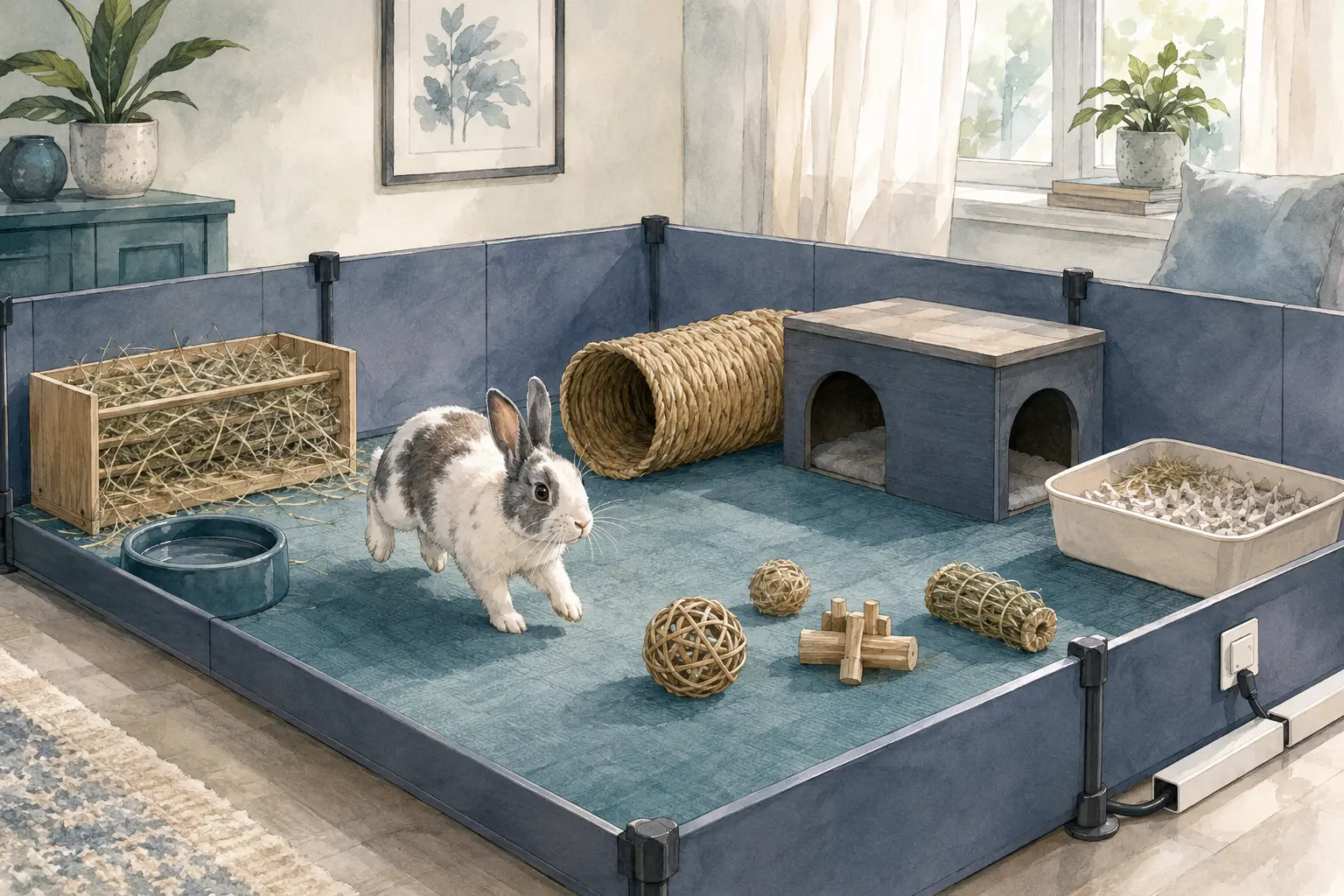
THE ENCLOSURE IS A HOME BASE
Rabbits are active prey animals. A secure exercise pen or rabbit-proofed room with solid footing, hiding places and daily social interaction supports physical and behavioral health better than prolonged confinement.
Stuff hay into paper tubes, boxes or multiple feeding stations and scatter appropriate greens.
Provide tunnels, cardboard castles, low platforms and hide boxes with more than one exit when rabbits share space.
Offer untreated rabbit-safe materials and a dig box while protecting household surfaces.
TRUSTED SOURCES
Source links are provided so readers can review the underlying guidance. Publication dates and recommendations can change; confirm individual plans with the treating veterinary team.
Companionship requires planning
Many rabbits benefit from compatible rabbit companionship, but introductions must be gradual and supervised. Spay or neuter status, health, territory and personality affect bonding. Never place unfamiliar rabbits together and hope they work it out.