RABBIT HEALTH · NUTRITION

What rabbits
should eat.

A fiber-first guide to hay, greens, pellets, treats, water, cecotrophs, and safe diet changes.
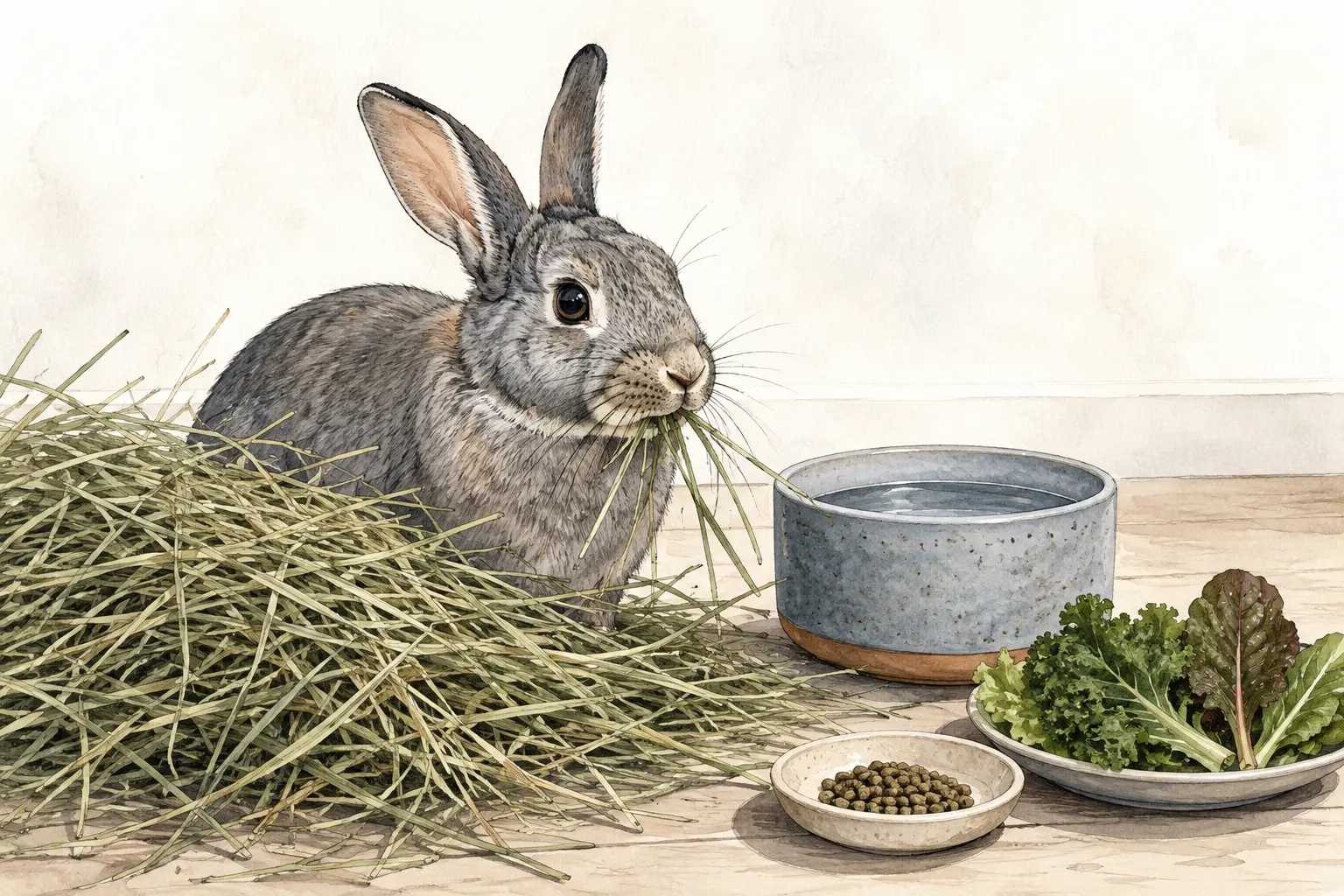
Healthy rabbit eating grass hay beside leafy greens, water and a small measured portion of pellets
Original illustration created for Companion Health Library.

THE DIGESTIVE SYSTEM NEEDS FIBER

Hay is food, dental care and enrichment.

Rabbits are hindgut-fermenting herbivores. Long-stem fiber supports intestinal movement, healthy microbial populations, normal chewing and natural foraging. Diet must be individualized for age, growth, pregnancy, illness, weight and dental function.

Unlimitedappropriate grass hayFreshwater every dayMeasuredpellets and treats

Build the bowl around hay and water

Grass hay

Offer fresh timothy, orchard, meadow or another appropriate grass hay continuously. Replace stale or soiled hay and offer it in multiple inviting locations.

Fresh water

Provide clean water at all times. Many rabbits drink well from a heavy bowl; bottles must be checked for blockage and cleanliness.

Leafy greens

Introduce rabbit-safe greens gradually and rotate varieties. Sudden large changes can upset digestion.

Plain pellets are concentrated—not the whole diet

Choose a uniform, high-fiber rabbit pellet rather than mixes containing seeds, nuts, dried fruit or colorful pieces. The correct amount depends on size, age and health.

  • Young, growing rabbits and some pregnant or nursing rabbits have different needs from healthy adults.
  • Alfalfa-based feeds may be appropriate in selected young or medically managed rabbits but are not the default for every adult.
  • Reduce or change pellets gradually and only with veterinary guidance when illness or weight loss is present.

Sweet and starchy foods should stay exceptional

  • Fruit and root vegetables are sugary; offer only tiny portions if appropriate.
  • Avoid candy, chocolate, bread, crackers, cereal, yogurt drops, seeds and nuts.
  • Do not feed lawn clippings, which can ferment rapidly and may contain chemicals.
  • Never make a sudden diet change because the rabbit ignored hay for tastier food.
Important: A rabbit refusing hay may have dental pain or another illness. Do not assume pickiness.

Soft cecotrophs are a normal part of rabbit nutrition

Rabbits normally eat nutrient-rich cecotrophs directly. Uneaten sticky clusters around the rabbit are not the same as ordinary round fecal pellets and may signal obesity, pain, dental disease, an unbalanced diet or reduced mobility.

Important: True watery diarrhea is an emergency, especially in a young rabbit. Contact a veterinarian immediately.

Sources behind this guide

University of California, Davis School of Veterinary MedicineRabbit care, housing, dental and preventive guidanceMerck Veterinary ManualNutrition and the importance of dietary fiberMerck Veterinary ManualCommon disorders and diseases of rabbitsHouse Rabbit SocietyCompanion-rabbit care and welfare resources

Source links are provided so readers can review the underlying guidance. Publication dates and recommendations can change; confirm individual plans with the treating veterinary team.

CONTINUE EXPLORING

Use these connected guides to prepare informed questions for your veterinary team.

Nutrition and Feeding GuidesFind feeding guidance appropriate to your animal’s species.Read resource →Not EatingRecognize appetite changes that should not wait.Read resource →Unexplained Weight LossUnderstand concerning changes in body weight and muscle.Read resource →Overweight and ObesityDiscuss body condition and safe weight planning.Read resource →Printable Owner ToolkitBring observations, medication details and questions to your appointment.Read resource →