Complete blood count
Evaluates red cells, platelets and white-cell patterns. Rabbits have heterophils rather than the neutrophil terminology commonly used in dogs and cats, so species-specific interpretation is essential.
RABBIT HEALTH · DIAGNOSTIC TESTING
How rabbit examinations, bloodwork, urine and fecal testing, dental assessment and imaging differ from dog-and-cat screening.
START WITH NORMAL
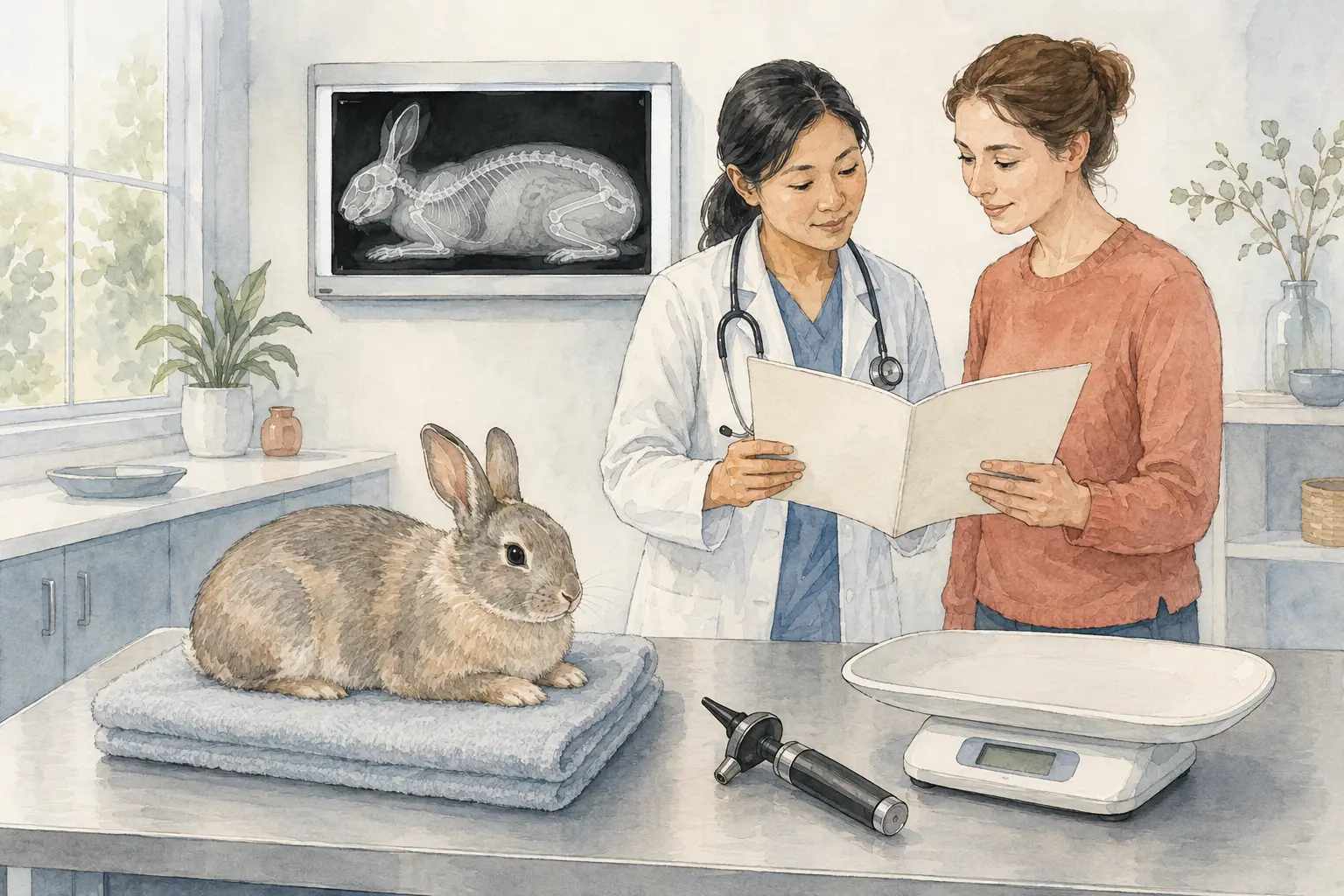
For rabbits, subtle changes at home often guide testing. Routine examinations establish body weight, dental, respiratory, abdominal, skin, foot and mobility baselines. Additional tests are individualized because there is no single universally required annual laboratory panel for every healthy rabbit.
Evaluates red cells, platelets and white-cell patterns. Rabbits have heterophils rather than the neutrophil terminology commonly used in dogs and cats, so species-specific interpretation is essential.
Assesses markers related to liver, kidneys, glucose, proteins, electrolytes and hydration. Results are interpreted with diet, stress, muscle condition and rabbit-specific reference intervals.
Urine concentration, sediment, blood, protein, glucose and crystals may help assess urinary and systemic disease. Rabbit urine can normally vary in color and contain calcium sediment, so appearance alone is not a diagnosis.
May look for parasites or abnormal organisms when exposure, age, origin, diarrhea, weight loss or group housing makes them relevant. Normal cecotrophs should not be mistaken for diarrhea.
TRUSTED SOURCES
Source links are provided so readers can review the underlying guidance. Publication dates and recommendations can change; confirm individual plans with the treating veterinary team.