RABBIT HEALTH · REPRODUCTIVE CARE
Spaying & neutering
rabbits.
Health, behavior, bonding, preparation and recovery considerations for discussing reproductive surgery with a rabbit-experienced veterinarian.
MORE THAN POPULATION CONTROL
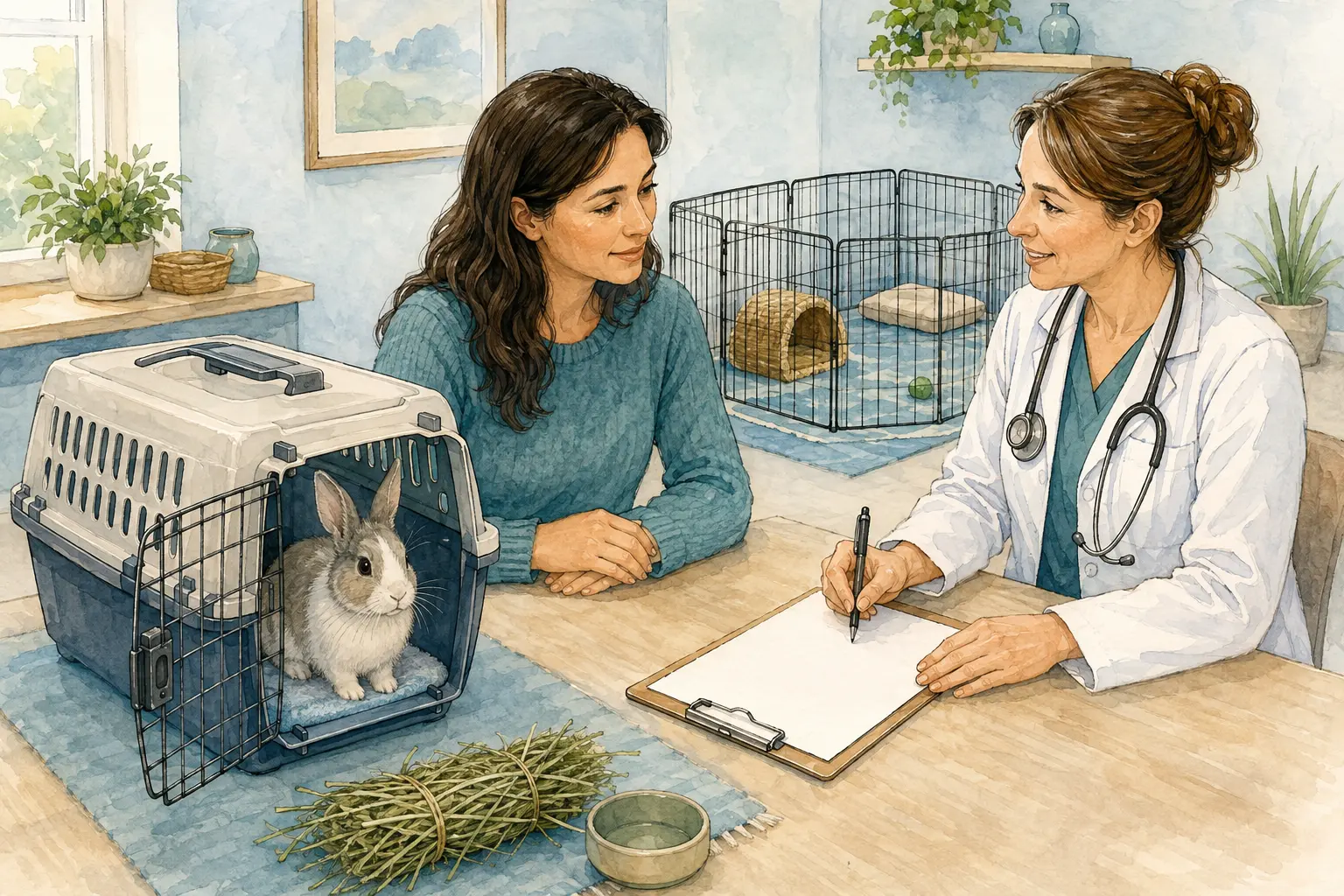
Reproductive surgery can support long-term health and home life.
Spaying prevents uterine and ovarian disease and greatly reduces the risk of uterine cancer. Neutering prevents testicular disease and can reduce hormone-driven spraying, mounting and aggression. Altered rabbits are often easier to litter train and safely bond.
Why many companion rabbits are altered
- Prevents pregnancy and reduces accidental litters
- Prevents uterine, ovarian or testicular disease
- Greatly reduces the high risk of uterine cancer in intact females
- May reduce urine spraying and hormone-driven aggression
- Can make rabbit-to-rabbit bonding safer and more successful
Age is only one part of surgical planning
Timing varies with sex, size, maturity, health and the veterinarian’s assessment. Ask about the surgeon’s rabbit experience, anesthesia monitoring, pain plan and emergency support.
Do not apply dog-and-cat fasting rules
- Rabbits cannot vomit and generally should continue eating before surgery unless the rabbit veterinarian gives a specific instruction.
- Bring familiar hay, pellets, greens and current medications.
- Ask when to stop or continue any prescribed medicine.
- Prepare a clean, quiet recovery space with nonslip flooring.
Eating and pain control are immediate priorities
- Confirm when pain medication is due and how to give it.
- Monitor appetite, water intake, droppings, urine, posture and the incision.
- Prevent licking, chewing, jumping and rough interaction as directed.
- Call promptly for reduced eating, few droppings, bleeding, swelling, opening of the incision, marked lethargy or uncontrolled pain.
TRUSTED SOURCES
Sources behind this guide
Source links are provided so readers can review the underlying guidance. Publication dates and recommendations can change; confirm individual plans with the treating veterinary team.