REPTILES · HUSBANDRY & PREVENTIVE CARE
Reptile wellness
starts with the habitat.
Species-specific guidance for heat, ultraviolet light, humidity, nutrition, routine monitoring and early signs of illness in snakes, lizards, turtles and tortoises.
IN THIS GUIDECommon pets span very different reptile groupsBuild around the animal's natural historyFeed the species—not a generic reptile dietRecord numbers, equipment and maintenance—not only productsNormal hydration looks different among reptilesHeat must be useful without being reachableReduce contamination without leaving chemical residueEstablish normal before the reptile looks sickTrusted sources
HUSBANDRY IS MEDICINE
The enclosure affects digestion, immunity, hydration, bones, skin and behavior every day.
VMX 2026 sessions emphasized that nutrition and medical care cannot be separated from temperature, humidity, lighting and stress. Record actual measurements rather than relying on how the enclosure feels.
Speciesidentify before planning careGradientwarm and cool choicesRoutineweight and habitat records
SPECIES DIRECTORY
Common pets span very different reptile groups
| Group | Common companion examples | Key distinction |
|---|---|---|
| Geckos | Leopard, African fat-tailed, crested, gargoyle, tokay and day geckos | Arid versus tropical habitat, climbing style, ultraviolet needs and handling tolerance differ. |
| Other lizards | Bearded dragon, blue-tongued skink, anole, chameleon and monitor species | Adult size, diet, basking intensity, humidity, ventilation and enclosure complexity vary greatly. |
| Snakes | Corn and king snakes, ball python, rosy and Kenyan sand boas, western hognose and boa constrictor | Prey size, humidity, temperature, adult space and defensive behavior are species-specific. |
| Turtles and tortoises | Red-eared slider and other aquatic turtles; box turtles; Russian, Greek and sulcata tortoises | Aquatic filtration versus terrestrial housing, ultraviolet exposure, diet, longevity and adult size. |
| Advanced or restricted | Large monitors, giant constrictors, venomous reptiles and some native species | Legal restrictions, specialized facilities and serious public-safety or welfare risks. |
Important: This orientation list reflects common pet-trade animals, including examples from The Bio Dude resource supplied by the library's creator. Confirm the scientific name; similar common names may describe animals from different climates.
01 · HABITAT
Build around the animal's natural history
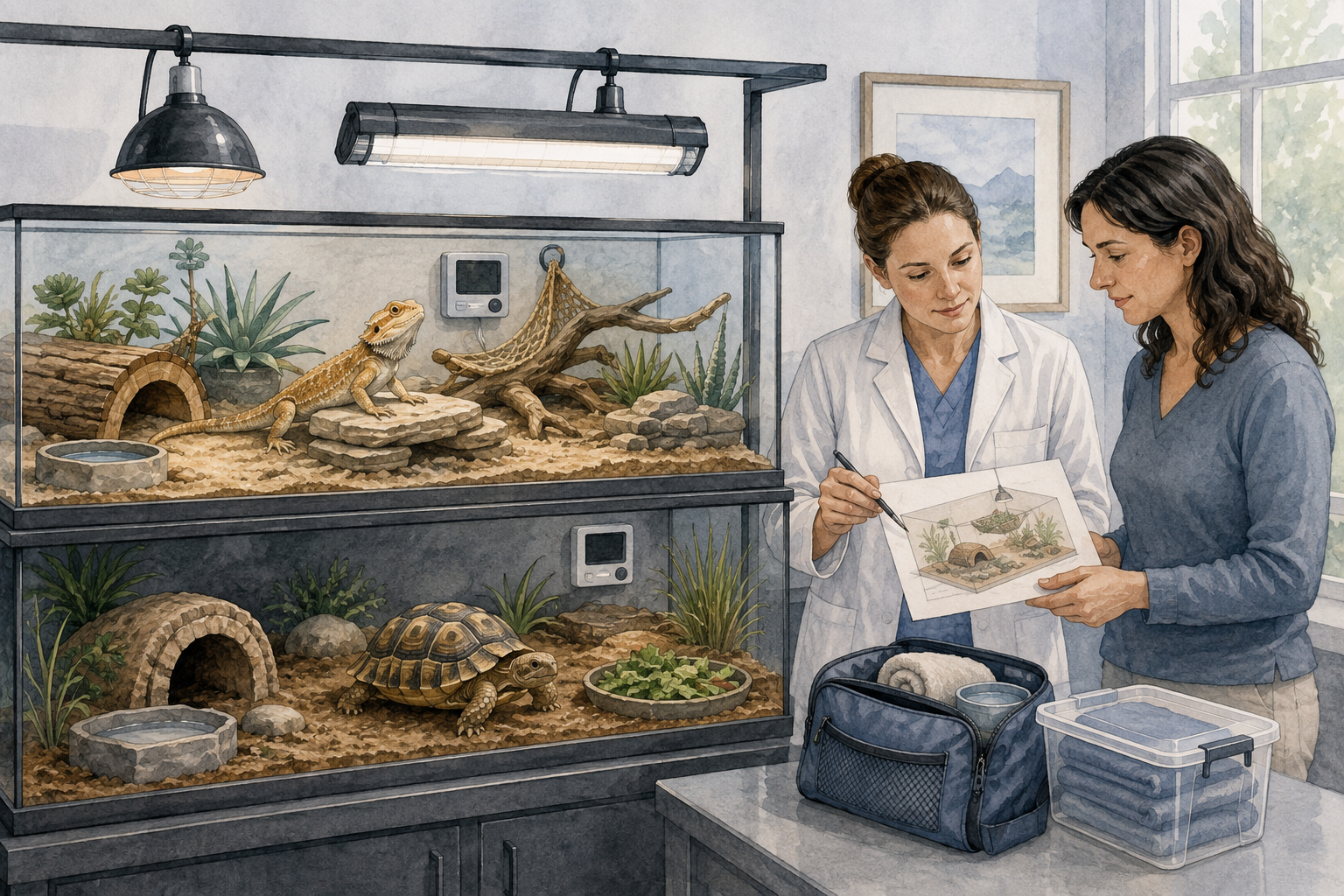
- Provide a measured thermal gradient and an appropriate day-night cycle.
- Use thermostatic controls and separate digital probes; adhesive dials alone may miss dangerous hot or cool areas.
- Select ultraviolet B lighting when the species requires it, follow fixture-distance guidance and replace bulbs on schedule.
- Match humidity, ventilation, substrate, hides, climbing space and water access to the species.
- Quarantine new reptiles separately and use dedicated equipment during the quarantine period.
02 · NUTRITION
Feed the species—not a generic reptile diet
- Confirm whether the animal is herbivorous, insectivorous, carnivorous or omnivorous and how needs change with age.
- Use appropriately sized, nutritionally suitable prey or a varied plant plan rather than repetitive treats.
- Gut-load and supplement feeder insects according to veterinary guidance.
- Avoid guessing at calcium or vitamin dosing; both deficiency and excess can cause disease.
- Track body weight, body condition, appetite, shedding and stool over time.
03 · OWNER SETUP CHECKLIST
Record numbers, equipment and maintenance—not only products
| Area | What to document | Why it matters |
|---|---|---|
| Temperature | Basking surface, warm-side air, cool-side air, overnight low | Reptiles need choices; one enclosure temperature is not enough. |
| Humidity | Warm and cool zones, hides and seasonal variation | Humidity that is too high or low can affect skin, sheds and respiratory health. |
| Lighting | Bulb type, distance, screen barrier, daily schedule and replacement date | Useful ultraviolet output declines before a bulb looks burned out. |
| Diet | Foods, prey size, frequency, supplements and feeding response | A complete history helps identify imbalance, obesity or undernutrition. |
| Cleaning | Daily spot cleaning and scheduled deep cleaning | Waste and damp organic material can increase pathogen exposure. |
Important: Use a reptile-experienced veterinarian or credible species-care source to establish target ranges. A target for one species may be dangerous for another.
04 · HYDRATION, SKIN & SHEDDING
Normal hydration looks different among reptiles
- Provide drinking and soaking opportunities appropriate to the species; not every reptile recognizes a bowl as its main water source.
- Keep water clean and stable so it cannot tip, flood the enclosure or trap a small animal.
- Review humidity, hydration, nutrition and enclosure surfaces when sheds are repeatedly incomplete.
- Retained shed around toes, tail tips or eyes can restrict circulation or hide disease.
- Do not pull attached shed, force-open retained eye caps or use oils without veterinary instruction.
05 · BURN PREVENTION
Heat must be useful without being reachable
- Guard bulbs and ceramic emitters so the animal cannot touch or coil around them.
- Avoid unregulated heated rocks and exposed heating elements.
- Verify surface and air temperatures at basking, warm-side and cool-side locations.
- Recheck the setup after moving decor, changing bulbs or changing seasons.
- Test thermostats, probes and alarms routinely; secure cables outside the animal's reach.
Important: Burn damage can become visible days after exposure. Discoloration, blisters, oozing, black or pale tissue, lethargy or suspected contact with a heat source needs prompt veterinary assessment; do not apply ice or household creams.
06 · CLEANING & FAMILY SAFETY
Reduce contamination without leaving chemical residue
- Remove the reptile before using a cleaning product and follow its contact time and rinsing instructions.
- Never clean habitat equipment in a kitchen sink or food-preparation area.
- Wash hands after touching the reptile, enclosure, water, waste or feeder animals.
- Children under five, adults over sixty-five and people with weakened immune systems have greater risk from Salmonella.
- Do not attempt to eliminate Salmonella from a healthy reptile with antibiotics; this is ineffective and promotes resistance.
07 · VETERINARY CARE
Establish normal before the reptile looks sick
- Schedule an initial examination with a reptile-experienced veterinarian.
- Bring enclosure photographs, temperature and humidity logs, diet details and supplement labels.
- Ask whether fecal testing, bloodwork, imaging or other screening fits the species and history.
- Transport in a secure ventilated container with stable species-appropriate temperature; do not place a heat pack directly against the animal.
- Seek care for appetite loss, repeated abnormal sheds, swelling, discharge, open-mouth breathing, weakness, prolapse, trauma or sudden behavior change.
TRUSTED SOURCES
Sources behind this guide
Merck Veterinary ManualManagement and husbandry of reptiles ↗Association of Reptile and Amphibian VeterinariansOwner resources and reptile-experienced veterinarian directory ↗The Bio DudeCommon pet-trade reptile and amphibian examples used for orientation ↗
Source links are provided so readers can review the underlying guidance. Publication dates and recommendations can change; confirm individual plans with the treating veterinary team.