SHEEP · COMPLETE OWNER GUIDE
Sheep care
is flock-level medicine.
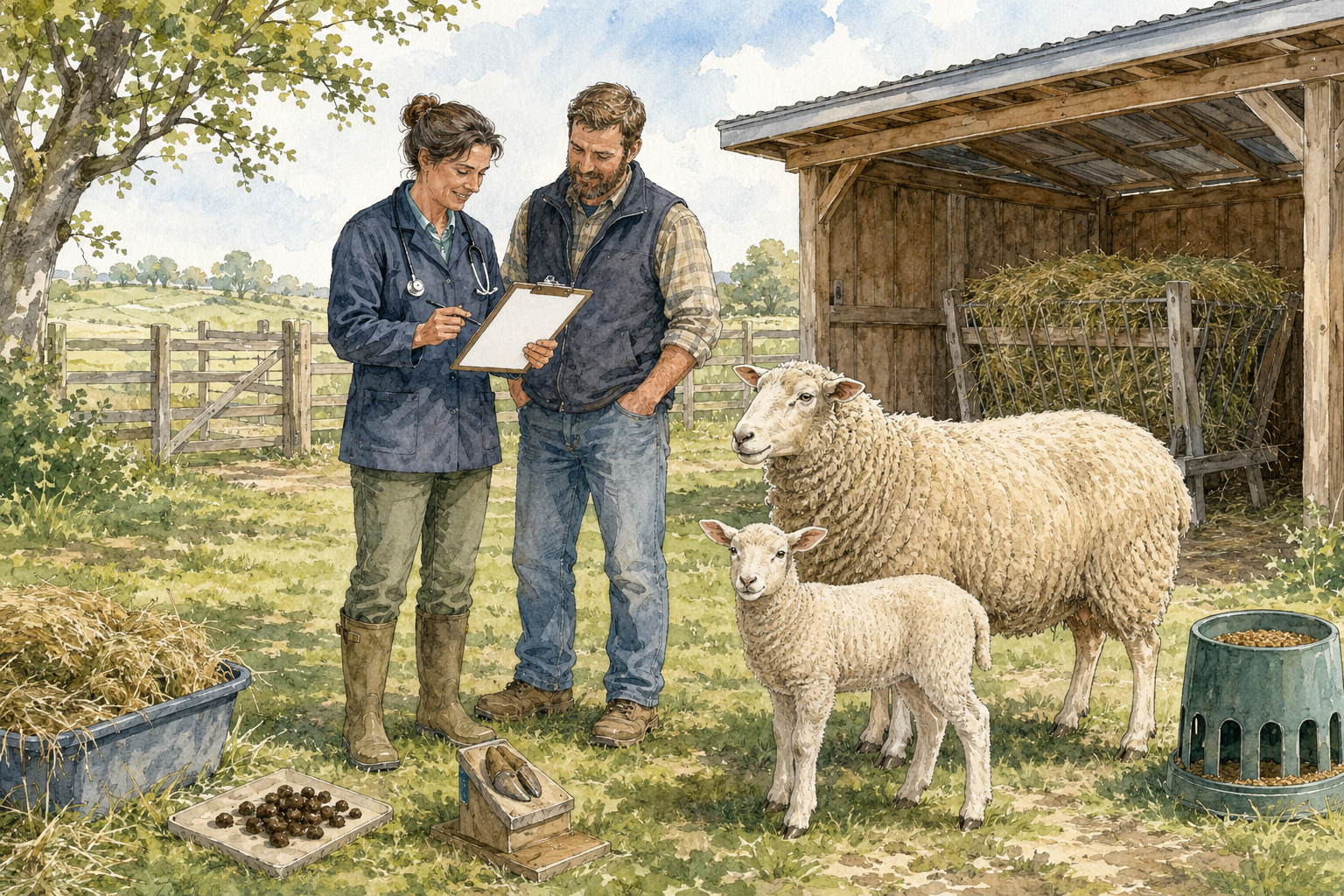
Nutrition, minerals, parasites, feet, wool, reproduction, biosecurity and emergency signs in sheep.
IN THIS GUIDELook before gathering the flockUse sheep-labeled mineralsProtect drug effectivenessLameness and fleece changes need diagnosisPlan before the due dateCall for individual or flock changeTrusted sources
SPECIES PROFILE
Breed, wool type, climate and production purpose reshape the plan.
Hair sheep, fine-wool breeds, dairy sheep and companion sheep differ, but all benefit from daily flock observation, forage-centered nutrition and evidence-based parasite control.
Flockobserve individuals within the groupFAMACHAtrained anemia assessment toolCoppersheep are sensitive to excess
01 · DAILY OBSERVATION
Look before gathering the flock
- Notice animals that lag, isolate, stop chewing cud or miss feed.
- Check breathing, manure, gait, posture, wool, eyes and body condition.
- Confirm clean water, forage and mineral access for low-ranking animals.
- Count animals and check fences, shade, shelter and predator protection.
- Record births, treatments, losses and movement.
02 · NUTRITION & MINERALS
Use sheep-labeled minerals
- Base the diet on tested forage and life stage.
- Avoid goat or cattle mineral unless formulated and prescribed for sheep because copper can accumulate toxically.
- Increase nutrition appropriately for late pregnancy, lactation and growth without abrupt grain changes.
- Prevent access to toxic plants, moldy feed and improperly stored grain.
- Track body condition under the fleece rather than judging visually.
03 · PARASITES
Protect drug effectiveness
- Use fecal egg counts, clinical risk and local season rather than automatic calendar deworming.
- Learn FAMACHA scoring from a qualified trainer for Haemonchus anemia monitoring.
- Watch for pale eyelids, bottle jaw, weight loss, diarrhea and poor growth.
- Weigh accurately, dose correctly and perform fecal egg count reduction testing.
- Use pasture management and refugia principles with veterinary guidance.
04 · FEET, WOOL & SKIN
Lameness and fleece changes need diagnosis
- Inspect feet and trim only as needed; over-trimming can injure the hoof.
- Separate and evaluate contagious foot disease before moving animals.
- Schedule shearing for climate and welfare while protecting newly shorn sheep from weather.
- Check for fly strike, lice, mites, wounds and moisture under wool.
- Do not treat every lameness as foot rot; joints, trauma and abscesses also occur.
05 · LAMBING & PREVENTION
Plan before the due date
- Review vaccines, nutrition, selenium status and parasite strategy before breeding.
- Know expected labor stages and when assistance becomes unsafe to delay.
- Confirm lamb warmth, breathing, standing, nursing and colostrum intake.
- Treat navels and identification according to the flock plan.
- Quarantine additions and investigate abortion clusters promptly.
Important: Wear gloves around birth materials and aborted fetuses; several sheep reproductive diseases can infect people, including pregnant people.
06 · EMERGENCIES
Call for individual or flock change
- Severe bloat, choking, breathing distress or neurologic signs
- Recumbency, collapse, profound anemia or inability to stand
- Prolonged labor, prolapse, heavy bleeding or a weak cold lamb
- Sudden lameness, fracture, deep wound or fly strike
- Multiple abortions, sudden deaths or rapid group illness
Important: These animals are legally food-producing species in many jurisdictions even when kept as pets. Use veterinarian-directed medication, permanent identification and withdrawal records.
TRUSTED SOURCES
Sources behind this guide
Merck Veterinary ManualLivestock preventive care and husbandry ↗United States Department of Agriculture Animal and Plant Health Inspection ServiceLivestock disease and biosecurity resources ↗
Source links are provided so readers can review the underlying guidance. Publication dates and recommendations can change; confirm individual plans with the treating veterinary team.