RABBITS & SMALL MAMMALS · URGENT SIGNS

Loss of appetite
is not a diagnosis.

Why rabbits, guinea pigs, ferrets and hedgehogs that stop eating need prompt species-experienced veterinary assessment.
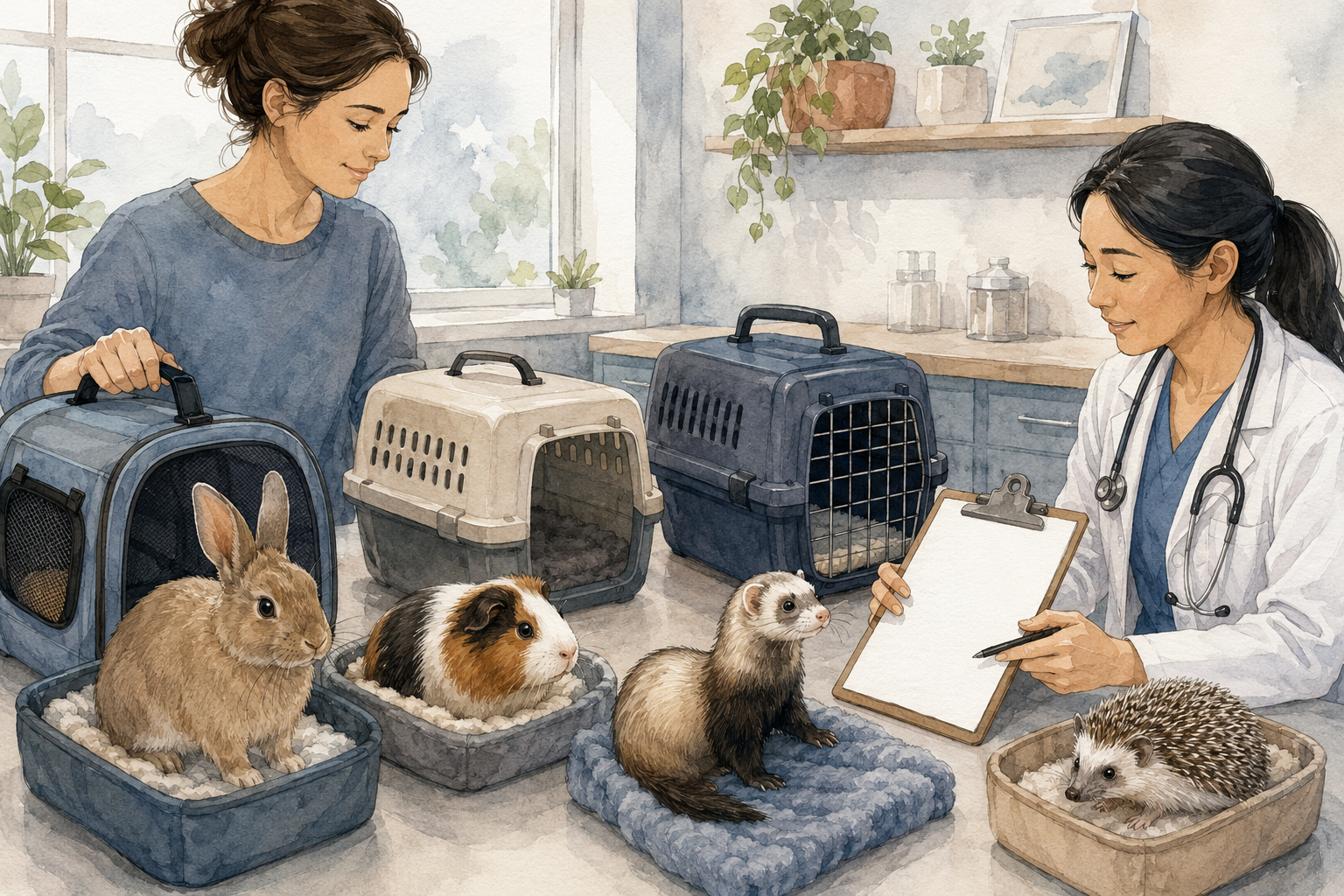
Rabbit, guinea pig, ferret and hedgehog at a veterinary consultation with secure carriers
Original illustration created for Companion Health Library.

TIME MATTERS

Small mammals can deteriorate quickly when intake falls.

Reduced appetite may be the first visible sign of serious disease. In rabbits and guinea pigs, reduced fiber intake can worsen gastrointestinal movement; in ferrets and hedgehogs, low intake may accompany obstruction, infection, organ disease, pain or cancer.

Urgentsame-day assessmentDroppingssize and number matterSpeciesexperienced veterinarian

Useful information for the veterinary team

  • Time of the last normal meal and what foods are refused
  • Number, size and appearance of droppings
  • Urination, straining or blood
  • Weight change, posture, grinding teeth or hiding
  • Vomiting or retching in species capable of vomiting
  • Recent diet changes, chewing, trauma, heat exposure and medications

Appetite loss can begin outside the digestive tract

Rabbits and guinea pigs

Dental disease, urinary pain, respiratory disease, reproductive disease, obstruction, altered motility, infection and other pain are important possibilities.

Ferrets

Foreign material, gastrointestinal disease, insulinoma, infection, adrenal or other systemic disease may reduce appetite.

Hedgehogs

Dental disease, infection, organ disease, tumors, inappropriate temperature and other husbandry or medical problems may contribute.

Do not let home care hide a dangerous cause

  • Do not force-feed when obstruction, severe bloating, choking or inability to swallow is possible.
  • Do not give dog, cat or human medications.
  • Do not wait for complete cessation of droppings.
  • Keep the patient warm but not overheated and transport securely.
  • Bring the diet, medication list, recent weights and photos of droppings when possible.
Important: A quiet rabbit or guinea pig that refuses food, produces markedly fewer droppings, has a swollen abdomen or appears painful needs urgent veterinary care.

Sources behind this guide

Merck Veterinary ManualRabbit disease and emergency informationAssociation of Exotic Mammal VeterinariansExotic companion mammal veterinary resources

Source links are provided so readers can review the underlying guidance. Publication dates and recommendations can change; confirm individual plans with the treating veterinary team.

CONTINUE EXPLORING

Use these connected guides to prepare informed questions for your veterinary team.

Interactive Symptom NavigatorStart with what you notice and understand when to seek help.Read resource →Diagnostic Testing LibraryUnderstand the tests your veterinarian may recommend.Read resource →Find Veterinary Care Near YouLocate general practices, urgent-care clinics, emergency hospitals and specialists.Read resource →When It Is an EmergencyRecognize signs that require immediate veterinary care.Read resource →Printable Owner ToolkitBring observations, medication details and questions to your appointment.Read resource →