SMALL MAMMALS · SPECIES-SPECIFIC CARE
Small mammal wellness
is never one-size-fits-all.
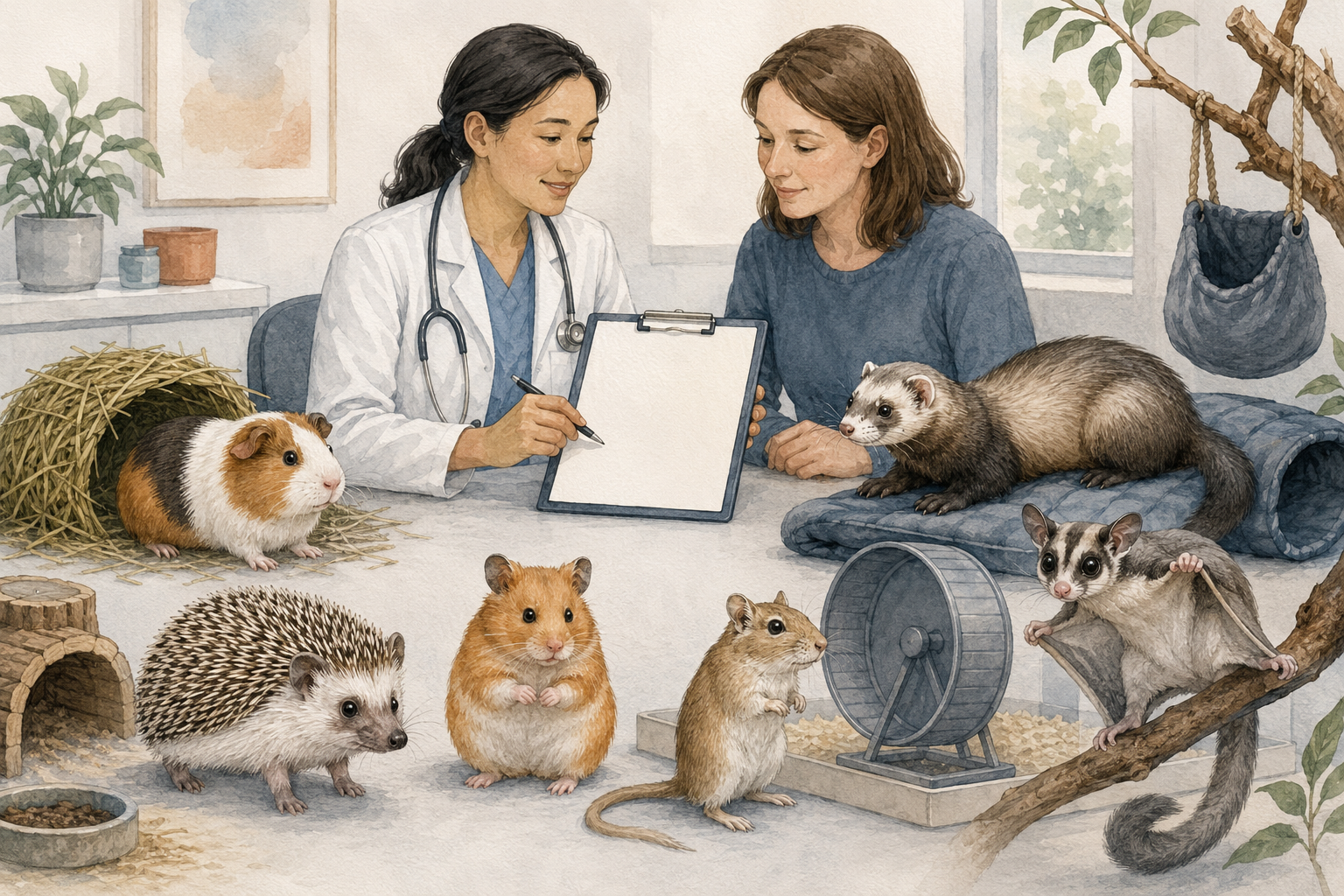
Detailed owner guidance for guinea pigs, ferrets, hedgehogs, hamsters, gerbils and sugar gliders—including nutrition, housing, preventive care and urgent warning signs.
IN THIS GUIDEMatch the care plan to the speciesVitamin C, hay, companionship and early dental care matterPlan for a carnivore with preventive-care needsWarmth, weight control and gentle observation protect healthSpecies, sex and social structure determine housingStable social groups and digging space are central needsA nocturnal marsupial requires specialized social and nutritional careEstablish a normal baseline before illnessSmall bodies can lose stability quicklyTrusted sources
IDENTIFY BEFORE YOU PLAN
A guinea pig is not a large hamster—and a sugar glider is not a rodent.
Guinea pigs, hamsters and gerbils are rodents; ferrets are carnivores; hedgehogs are insectivore relatives; and sugar gliders are marsupials. Their care cannot be safely combined into a generic small-pet routine.
6 groupsdifferent biological needsDailyappetite and stool checkExotics vetestablish care early
01 · WHICH ANIMAL?
Match the care plan to the species
| Companion | Common identification | Defining care issue |
|---|---|---|
| Guinea pig | Domestic guinea pig (Cavia porcellus); tailless, rounded body | Requires dietary vitamin C and continuous grass hay; dental and gastrointestinal disease can progress quickly. |
| Ferret | Domestic ferret (Mustela putorius furo); long-bodied mustelid | Obligate carnivore with species-specific vaccination, parasite, endocrine and gastrointestinal risks. |
| Hedgehog | Most U.S. pets are African pygmy-type hedgehogs (Atelerix hybrids) | Nocturnal insectivore relative requiring warmth, safe exercise and weight, dental and tumor monitoring. |
| Hamster | Syrian, Campbell's dwarf, winter-white dwarf, Roborovski or Chinese hamster | Mostly solitary or species-sensitive housing; deep burrowing substrate and escape prevention are essential. |
| Gerbil | Usually Mongolian gerbil (Meriones unguiculatus) | Social desert-adapted rodent needing compatible companions, deep substrate and dry ventilation. |
| Sugar glider | Sugar glider (Petaurus breviceps complex); nocturnal gliding marsupial | Highly social, arboreal animal with specialized nutrition, large vertical space and major welfare needs. |
Important: Confirm species, sex, age, origin and legal status before choosing diet, housing or companions.
02 · GUINEA PIGS
Vitamin C, hay, companionship and early dental care matter
- Provide unlimited grass hay, fresh water, measured fortified guinea-pig pellets and veterinary-approved vegetables; guinea pigs cannot make vitamin C.
- Use a fresh stable vitamin C source in food or as directed; adding it to water can alter taste and potency and may reduce drinking.
- House with a compatible guinea pig when possible, with enough floor space, hides and duplicated resources to reduce conflict.
- Use solid nonslip flooring with dry low-dust bedding; wire floors injure feet and exercise balls are unsafe.
- Track weight weekly. Dropping food, a wet chin, smaller stool, reduced appetite, noisy breathing, blood in urine or swollen feet needs prompt care.
- Females can develop ovarian disease; males may accumulate debris around the genital area, and both sexes need dental and urinary monitoring.
Important: A guinea pig eating less or producing fewer droppings can deteriorate quickly. Do not wait for complete appetite loss.
03 · FERRETS
Plan for a carnivore with preventive-care needs
- Feed a veterinarian-approved complete ferret diet with high-quality animal protein and fat; avoid high-sugar treats and fruit-based feeding.
- Discuss rabies and canine distemper vaccination with a ferret-experienced veterinarian, including observation for vaccine reactions and local law.
- Review heartworm, flea and other parasite prevention using only products and doses confirmed safe for ferrets.
- Ferret-proof rooms against rubber, foam, earbuds, recliners, appliances and small openings; swallowed objects commonly obstruct the intestine.
- Provide daily supervised exploration, tunnels, digging and social play while allowing long quiet sleep periods.
- Routine examinations should address teeth, weight, skin and coat, heart, abdomen, adrenal disease, insulinoma and other age-related conditions.
Important: Collapse, weakness, pawing at the mouth, staring, drooling or seizures may indicate dangerously low blood sugar and require emergency care.
04 · HEDGEHOGS
Warmth, weight control and gentle observation protect health
- Maintain a stable species-appropriate warm environment with a thermostat; cold exposure can trigger dangerous torpor-like inactivity.
- Offer a balanced veterinarian-recommended diet with appropriate insects rather than fatty treats or an unbalanced homemade mixture.
- Provide a large solid-surface wheel without crossbars, hides, tunnels and nighttime foraging; avoid wire floors and loose threads.
- Most hedgehogs are solitary. Handle gently on the animal's schedule and never force an unrolled hedgehog open.
- Weigh regularly and examine feet, nails, mouth and skin. Obesity can hide because a hedgehog still curls into a ball.
- Lumps, oral bleeding, weight loss, wobbling, weakness, persistent quill loss, diarrhea or breathing changes require assessment.
Important: An unusually cool, tightly curled, minimally responsive hedgehog is not simply 'hibernating.' Warm gradually and contact a veterinarian immediately.
05 · HAMSTERS
Species, sex and social structure determine housing
- Syrian hamsters should generally live alone. Dwarf species can still fight severely, so do not assume littermates will remain compatible.
- Provide a spacious ventilated enclosure with deep compactable bedding, a correctly sized solid wheel, hides and scatter feeding.
- Avoid cotton-fluff nesting material, wire exercise wheels, cedar or strongly scented bedding and rolling exercise balls.
- Offer a complete species-appropriate staple with controlled extras; remove fresh food before spoilage and monitor hoards without destroying every cache.
- Confirm sex accurately and separate unintended breeding pairs; hamsters can reproduce very young and pregnancy may not be obvious.
- Seek care for wet or soiled tail, diarrhea, hunched posture, labored breathing, wounds, overgrown teeth, swelling or failure to emerge normally.
Important: Diarrhea in a young hamster—often called wet tail—can become fatal rapidly and requires same-day veterinary care.
06 · GERBILS
Stable social groups and digging space are central needs
- Mongolian gerbils usually benefit from a compatible same-sex pair or stable group, but introductions require a safe method because fighting can be severe.
- Provide deep mixed substrate that holds tunnels, chew-safe nesting material, a solid wheel, sand bath and secure lid.
- Keep the habitat dry and ventilated; excessive humidity or dirty bedding can contribute to illness.
- Lift with cupped hands or a container—never by the tail, which can suffer degloving injury.
- Use a balanced gerbil diet and monitor food stores, water function and body weight.
- Watch for facial soreness, seizures, abdominal scent-gland masses, dental problems, diarrhea, wounds or a sudden social split.
Important: Persistent chasing, boxing or biting requires safe separation and experienced guidance—not repeated forced reunion.
07 · SUGAR GLIDERS
A nocturnal marsupial requires specialized social and nutritional care
- Keep compatible sugar gliders together when possible; prolonged solitary housing can contribute to severe stress and self-trauma.
- Provide a tall secure enclosure with safe branches, sleeping pouches, foraging opportunities and supervised nighttime activity.
- Use an established veterinarian-guided diet balancing protein, produce, calcium, phosphorus and micronutrients; fruit alone is not adequate.
- Avoid loose threads, unsafe pouch seams, open toilets, ceiling fans, toxic plants and unsupervised contact with other pets.
- Discuss reproductive management and neutering of males with an experienced veterinarian; scent marking and social behavior are not corrected by punishment.
- Monitor weight, appetite, stool, urine, movement, coat and social behavior. Hind-limb weakness can reflect serious disease.
Important: Self-biting, genital injury, inability to glide or climb, hind-limb weakness, collapse or marked dehydration is an emergency.
08 · ROUTINE VETERINARY CARE
Establish a normal baseline before illness
- Schedule a new-pet examination with a veterinarian experienced in that species and bring source, diet, housing and supplement information.
- Ask how often examinations, fecal testing, dental assessment, vaccination, parasite prevention, bloodwork or imaging are appropriate.
- Track weight on a gram scale at a consistent time and keep habitat photographs and food labels.
- Confirm sex and reproductive status; accidental litters and reproductive disease are common reasons for urgent care.
- Prepare a secure ventilated carrier and emergency transport plan before the animal is sick.
- Never use dog, cat, livestock or over-the-counter parasite products without species-specific veterinary approval.
09 · URGENT WARNING SIGNS
Small bodies can lose stability quickly
- Labored or open-mouth breathing, blue or very pale tissue
- Not eating, markedly reduced stool or a swollen painful abdomen
- Collapse, seizure, severe weakness, abnormal body temperature or inability to stand
- Straining or inability to urinate, blood in urine or prolapsed tissue
- Major trauma, uncontrolled bleeding, deep bite wounds or possible toxin exposure
- Fly strike, severe diarrhea, repeated vomiting in a ferret or rapid weight loss
Important: Call before force-feeding. An obstruction, breathing problem, swallowing problem or severe weakness can make unsupervised syringe feeding dangerous.
TRUSTED SOURCES
Sources behind this guide
Merck Veterinary ManualGuinea pig biology, care and health ↗Merck Veterinary ManualRoutine health care of ferrets ↗Merck Veterinary ManualSugar glider care and disease ↗Association of Exotic Mammal VeterinariansExotic-mammal veterinary resources ↗
Source links are provided so readers can review the underlying guidance. Publication dates and recommendations can change; confirm individual plans with the treating veterinary team.