SNAKES · SPECIES-SPECIFIC GUIDE
Snake care
depends on secure measured choices.
Species identification, enclosure security, heat, humidity, feeding, shedding, quarantine and emergency signs in companion snakes.
IN THIS GUIDEAdult size and ecology change everythingOffer control without escapePrey, frequency and handling should be plannedA complete shed is a husbandry signalSeparate arrivals and equipmentCall for rapid or severe changeTrusted sources
SPECIES PROFILE
Confirm identity, adult size and source before acquisition.
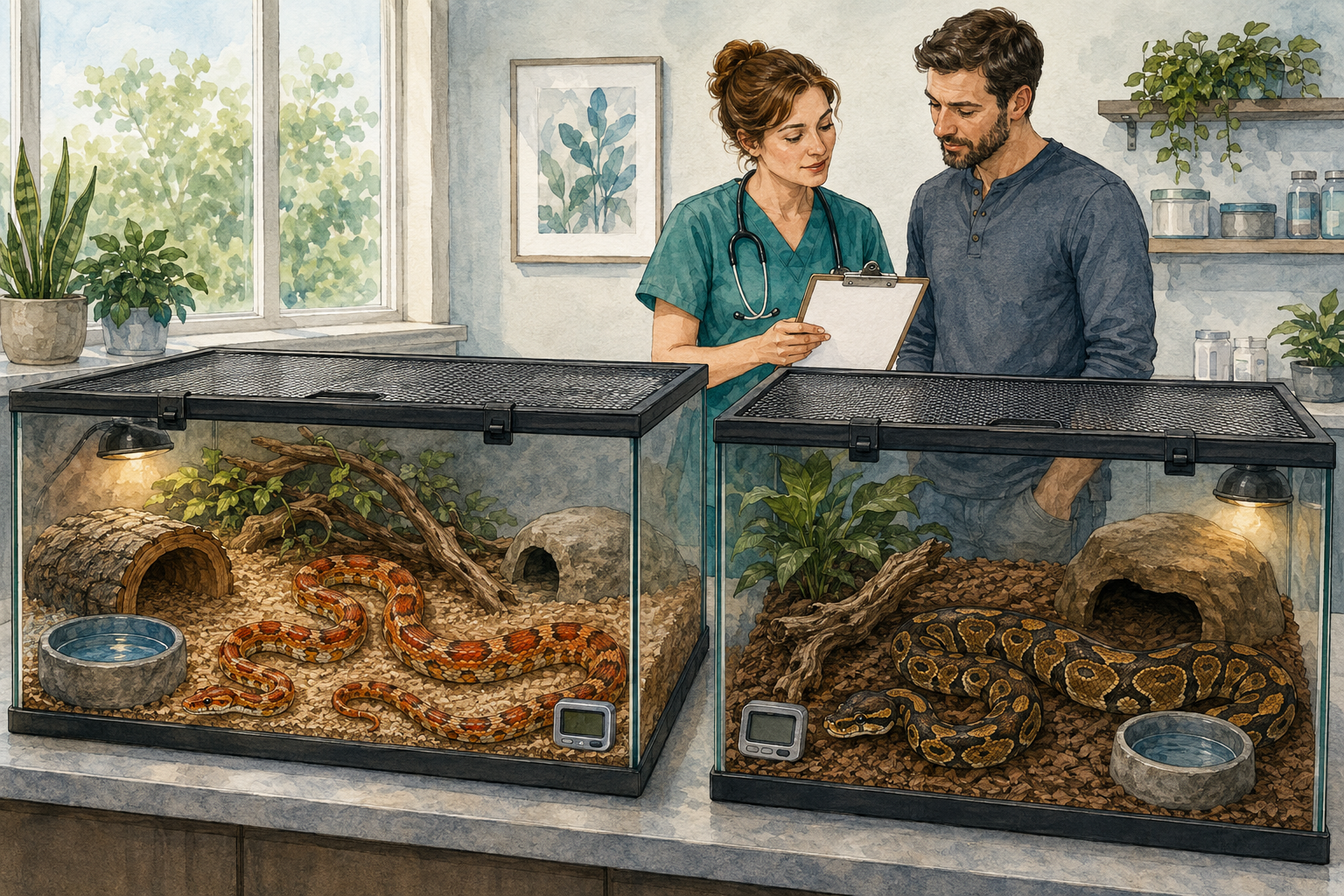
Common nonvenomous pets include corn and king snakes, ball pythons, rosy and sand boas and western hognose snakes. Giant constrictors and venomous species require advanced legal and safety planning.
Secureevery lid and openingTwo hideswarm and cool choicesRecordfeeding, shed and weight
01 · COMMON GROUPS
Adult size and ecology change everything
- North American colubrids such as corn and king snakes are active and skilled escape artists.
- Ball pythons need stable humidity, security and careful evaluation of repeated food refusal.
- Rosy and Kenyan sand boas have different burrowing and humidity needs.
- Western hognose snakes have species-specific behavior and rear-fanged venom considerations.
- Boa constrictors and larger pythons need advanced space, handling and public-safety planning.
02 · ENCLOSURE
Offer control without escape
- Use a locked secure enclosure with no head-sized gaps.
- Provide warm and cool hides, measured gradient and guarded heat.
- Match humidity and substrate to species and life stage.
- Provide fresh water, climbing or burrowing options as appropriate.
- Avoid adhesive surfaces, exposed bulbs and unregulated heat rocks.
03 · FEEDING
Prey, frequency and handling should be planned
- Use appropriately sized, safely sourced prey and veterinarian-guided frequency.
- Frozen-thawed prey avoids many injuries associated with live prey.
- Feed individually and supervise; remove uneaten prey.
- Track meals, refusals, regurgitation, weight and body condition.
- Do not handle immediately after feeding and investigate repeated regurgitation.
04 · SHEDDING & HYDRATION
A complete shed is a husbandry signal
- Provide species-appropriate humidity and a humid hide when indicated.
- Confirm eye caps and tail tip shed completely.
- Do not pull retained shed or use oil without direction.
- Review dehydration, mites, scarring and enclosure surfaces after abnormal sheds.
- Keep water clean and large enough for safe species-appropriate use.
05 · QUARANTINE & HEALTH
Separate arrivals and equipment
- Quarantine new snakes in a separate room where possible.
- Use dedicated tongs, bowls and cleaning tools.
- Record source, weight, feeding, shed, stool and treatments.
- Seek diagnosis for mites, oral plaques, nasal discharge, wheezing or skin lesions.
- Never release a captive snake or enclosure contents outdoors.
06 · URGENT SIGNS
Call for rapid or severe change
- Open-mouth breathing, severe wheeze or mucus
- Regurgitation with weakness or repeated episodes
- Prolapse, egg-laying difficulty or marked swelling
- Burn, deep wound, animal bite or spinal trauma
- Neurologic signs, inability to right or severe weakness
TRUSTED SOURCES
Sources behind this guide
Merck Veterinary ManualReptile management and husbandry ↗Association of Reptile and Amphibian VeterinariansOwner resources and veterinarian directory ↗
Source links are provided so readers can review the underlying guidance. Publication dates and recommendations can change; confirm individual plans with the treating veterinary team.