SUGAR GLIDERS · COMPLETE OWNER GUIDE
Sugar glider care
requires a specialized commitment.
Social housing, vertical space, balanced nutrition, reproductive planning, preventive care and emergencies in sugar gliders.
IN THIS GUIDECompanionship is a health needThink vertically and inspect every seamFruit alone causes serious imbalancePlan before breeding or illnessSelf-trauma and weakness cannot waitTrusted sources
SPECIES PROFILE
Petaurus breviceps-complex sugar gliders are nocturnal, arboreal and highly social.
They communicate through scent and vocalization, sleep in groups and travel through complex three-dimensional space. Welfare depends on compatible companionship, secure height, foraging and a precisely balanced diet.
Socialcompatible companionsVerticallarge secure enclosureBalancedcalcium and nutrient plan
02 · HOUSING
Think vertically and inspect every seam
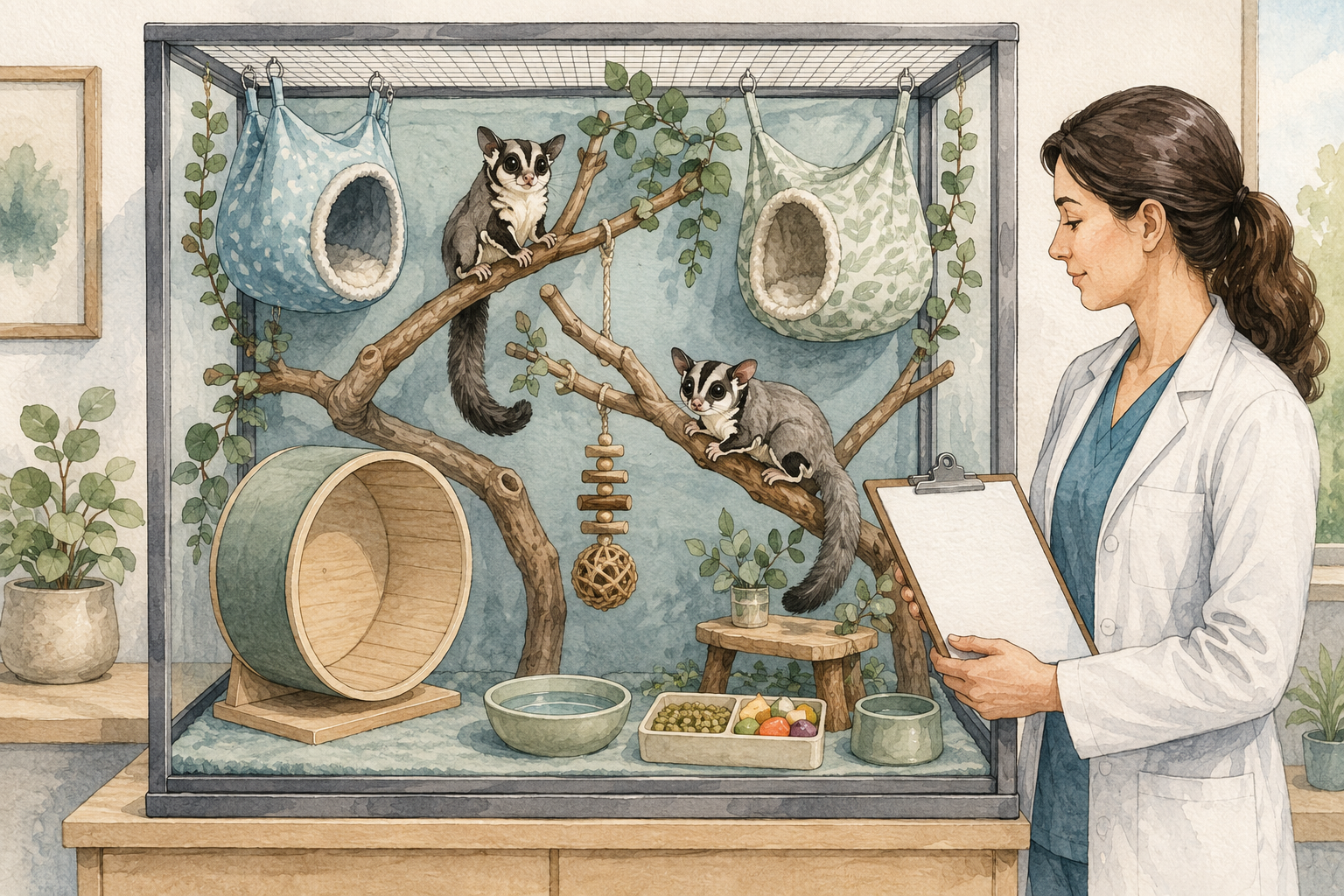
- Provide a tall secure enclosure with safe branches, climbing routes and foraging stations.
- Use sleeping pouches with intact seams and no loose threads that can wrap toes or limbs.
- Provide a solid appropriate exercise wheel designed to prevent tail and limb injury.
- Keep away from ceiling fans, toilets, open windows, toxic plants, cords and other pets.
- Maintain clean food areas while preserving safe familiar scent and sleeping spaces.
03 · SPECIALIZED NUTRITION
Fruit alone causes serious imbalance
- Follow an established veterinarian-directed feeding plan with appropriate protein, produce, calcium, phosphorus and micronutrients.
- Measure ingredients accurately and do not combine pieces from unrelated diet plans.
- Limit sugary foods and do not use treats as the dietary foundation.
- Provide clean water and remove perishable food before daytime spoilage.
- Review weight, body condition, dental health and the complete recipe at veterinary visits.
04 · PREVENTIVE & REPRODUCTIVE CARE
Plan before breeding or illness
- Arrange an initial and at least annual examination with a sugar-glider-experienced veterinarian.
- Confirm sex and discuss neutering males, group composition and pregnancy prevention.
- Ask about fecal testing, dental assessment, bloodwork or imaging based on history.
- Track weight, appetite, stool, urine, gait, coat and social behavior.
- Prepare a secure ventilated transport pouch or carrier and identify emergency care in advance.
05 · EMERGENCY SIGNS
Self-trauma and weakness cannot wait
- Self-biting, cloacal or genital injury, open wounds or active bleeding
- Hind-limb weakness, inability to climb or glide, tremors or seizure
- Collapse, marked dehydration or abnormal body temperature
- Labored breathing, choking or blue-gray tissue
- Not eating, severe diarrhea, abdominal swelling or prolapse
Important: Use an emergency collar only with professional direction and immediate veterinary care; an improperly fitted device can obstruct breathing or cause additional injury.
TRUSTED SOURCES
Sources behind this guide
Merck Veterinary ManualSugar glider biology, care and disease ↗Association of Exotic Mammal VeterinariansExotic-mammal veterinary resources ↗
Source links are provided so readers can review the underlying guidance. Publication dates and recommendations can change; confirm individual plans with the treating veterinary team.
Companionship is a health need